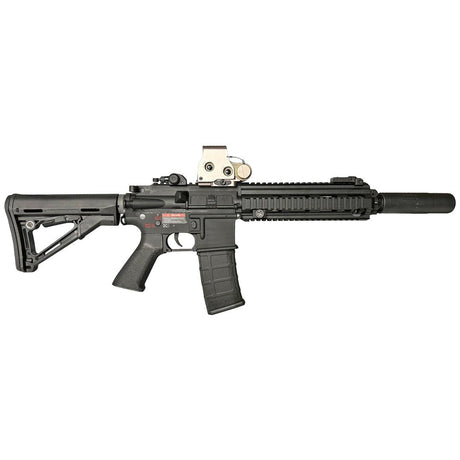
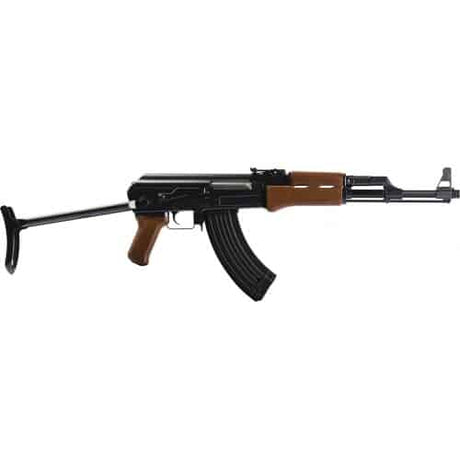
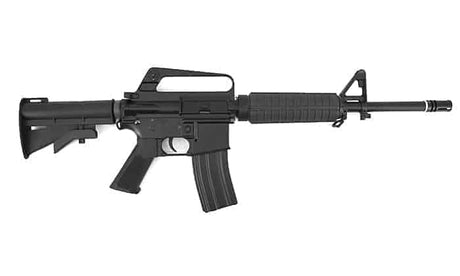
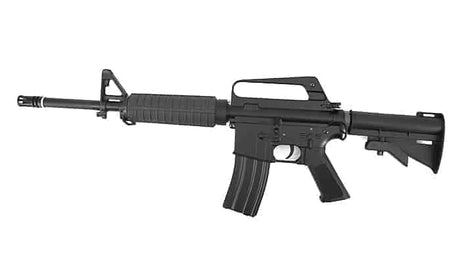
Imagine you're hunkered down in a rain-slicked trench during a high-stakes weekend event in the heart of the UK countryside, the adrenaline is surging, and you finally have a clear line of sight on the opposing objective. You pull the trigger, but instead of a crisp cycle, you're met with the dreaded sound of a stripped piston or a jammed hop-up. It's a scenario every seasoned player has faced; that sinking feeling when your equipment fails whilst you're at the centre of the action. We all agree that there's nothing more frustrating than an unreliable RIF that lacks the range or consistency to compete with the heavy hitters. Optimising your airsoft parts is the difference between a tactical victory and a long walk back to the safe zone.
This guide will help you master the technical nuances of internal and external components so you can build a platform that's truly field-ready. You'll learn how to eliminate mechanical failures and achieve pinpoint accuracy at range. We'll preview the essential upgrades, from high torque motors to the latest 2026 Diamond hop-up buckings, ensuring your kit performs with absolute precision during every engagement. It's time to stop worrying about your gearbox and start focusing on your mission.
Key Takeaways
- Learn to distinguish between internal "engine" components and the external chassis to help you prioritise your next high-performance build.
- Discover how specific airsoft parts like high torque motors and precision inner barrels work in unison to deliver a crisp trigger response and pinpoint accuracy.
- Turn mechanical failures into tactical advantages by identifying exactly when to replace a broken component with a superior aftermarket upgrade.
- Master the art of external customisation to improve weapon handling and durability whilst transitioning from plastic to rugged metal receivers.
- Implement a professional maintenance routine to extend the longevity of your equipment and ensure total reliability during intense weekend events.
Understanding Airsoft Parts: Internals vs. Externals
Think of your RIF as more than just a single piece of equipment; it's a modular platform where every choice you make dictates your success on the field. In the community, we define airsoft parts as the individual components that either drive the mechanical performance or define the aesthetic profile of your replica. This modularity is easily the greatest strength of our hobby. It allows you to take a base platform and evolve it into a specialised tool tailored to your specific playstyle, whether you're a high-speed CQB specialist or a patient woodland marksman.
Every build starts with a fundamental understanding of Airsoft gun mechanisms. Whether you are running an Automatic Electric Gun (AEG), a Gas Blowback (GBB) system, or a bolt-action spring sniper, the logic remains the same. You have the "engine" that propels the BB and the "chassis" that houses it. Selecting the right airsoft parts is about finding the perfect equilibrium between these two halves to ensure your kit is always ready for a high-stakes engagement.
Internal Parts: The Heart of the Action
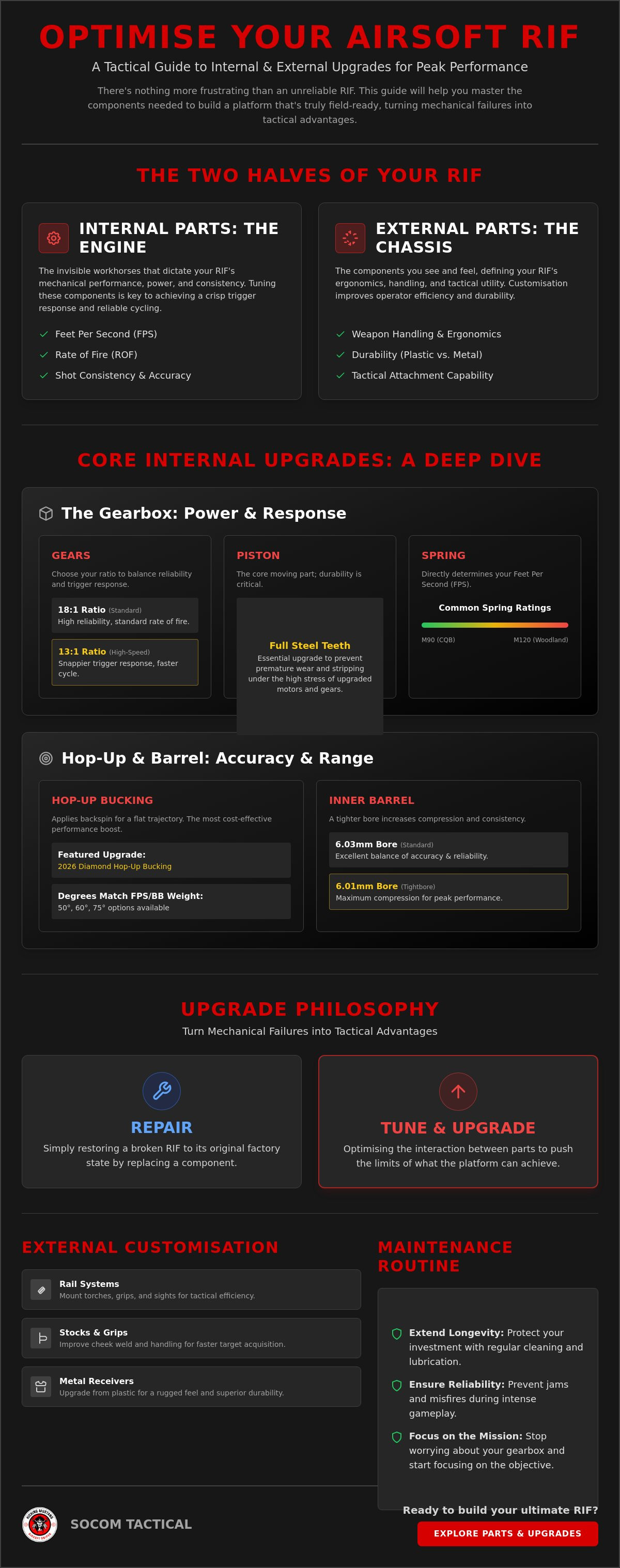
Internal components are the invisible workhorses. They dictate your Feet Per Second (FPS), your rate of fire, and the consistency of your shot groups. For most players, the focus is on the gearbox, typically a Version 2 or Version 3, which acts as the mechanical brain of an AEG. When you open up a replica, you're looking at a delicate ecosystem of gears, pistons, and triggers. Understanding these internals allows you to move beyond basic repairs. Whilst a repair simply restores a broken RIF to its factory state, tuning involves optimising the interaction between these parts to push the limits of what the platform can achieve.
External Parts: Ergonomics and Tactical Utility
Whilst the internals handle the power, external parts define how you interface with your gear. These are the components you can see and feel: the rails, stocks, handguards, and receivers. Customising your externals isn't just about looking the part; it's about operator efficiency. A well-chosen stock provides a better cheek weld for faster target acquisition, whilst a modular rail system allows you to mount tactical torches or grips exactly where you need them. Many veterans prioritising durability will swap out standard plastic receivers for metal alternatives, providing a rugged feel that stands up to the grit and pressure of intense events.
The Core Internal Airsoft Parts That Drive Performance
Opening up a gearbox for the first time can feel like peering into a Swiss watch, but understanding these airsoft parts is vital for anyone serious about field dominance. Every pull of the trigger initiates a high-speed mechanical sequence where timing and durability are everything. To truly optimise your RIF, you must look at how AEG internal parts work in synergy. A high-torque motor is useless if your gears can't handle the strain, and a powerful spring will simply shatter a weak piston. Reliability comes from balanced tension and high-quality materials.
The Gearbox: Gears, Pistons, and Springs
The gearbox is where the magic happens. Standard 18:1 gear ratios are designed for general reliability, but players looking for a snappier response often switch to 13:1 high-speed sets. This change reduces the time between the trigger pull and the BB leaving the barrel. You must pair these with a piston featuring full steel teeth to prevent premature wear under high stress. Your choice of spring, typically ranging from M90 for CQB to M120 for woodland sites, dictates your final FPS. Balancing these components ensures a smooth cycle without stripping your internals mid-game.
Hop-Up and Barrels: Achieving Maximum Range
If the gearbox is the heart, the hop-up is the brain. It applies the backspin required for a flat trajectory over long distances. Upgrading to a high-quality rubber, such as the new 2026 Diamond Hop up Bucking from Maple Leaf, is the most cost-effective way to boost performance. These buckings now come in various degrees like 50, 60, or 75 to match your specific FPS and BB weight. Pairing this with a precision inner barrel is essential. A 6.03mm bore is the industry standard for a balance of accuracy and reliability, whilst a tighter 6.01mm barrel offers maximum compression, provided you keep it spotlessly clean to avoid jams.
Electrical Components: MOSFETs and LiPo Ready Builds
Modern airsoft demands modern electronics. A MOSFET is a critical addition that protects your trigger contacts from electrical arcing, especially when using high-voltage 11.1v LiPo batteries. This component allows for advanced features like active braking and programmable fire modes. High-quality silver-plated wiring further improves electrical efficiency, ensuring more power reaches your motor with less heat buildup. If you are looking to overhaul your current setup, exploring our range of specialised internal components is the first step toward a bulletproof build.
Repairing vs. Tuning: How to Prioritise Your Upgrades
Every mechanical failure on the field is a tactical crossroads. When your RIF stops firing mid-game, you have two choices: restore it to its original state or evolve it into something better. A stripped gear or a torn hop-up bucking shouldn't be seen as a disaster; it's a prime opportunity to install superior airsoft parts that prevent the same issue from recurring. However, you must respect the "Balance of Stress". If you drop in a high-speed gear set without upgrading your piston or motor, you're simply shifting the point of failure to the next weakest link in the chain. Reliability comes from a holistic approach to your build.
Before you start ordering new components, you need to diagnose the root cause of your performance drop. Buying parts blindly is a quick way to waste money and time. Use this checklist to narrow down the problem before you crack open the gearbox:
- Inconsistent FPS: Check for air leaks at the nozzle, cylinder head, or the hop-up interface.
- Grinding Sounds: This often indicates poor motor height or teeth wear on your spur or sector gears.
- Poor Range: Inspect the hop-up rubber for tears, hardening, or excess silicone oil contamination.
- Sluggish Response: Verify your battery health and look for carbon buildup on your trigger contacts.
When to Simply Replace (The Repair Path)
Some components are purely sacrificial. O-rings, nozzles, and hop-up rubbers are high-wear items that eventually fail regardless of how well you maintain your kit. In these instances, a direct replacement is often the most sensible route to get you back in the game. For proprietary systems where tolerances are incredibly tight, using OEM components from our Parts & Upgrades section ensures you maintain factory-spec reliability. This "Repair Path" is about restoring the baseline performance you've come to trust without introducing new compatibility headaches.
When to Invest in Tuning (The Performance Path)
Tuning is a different beast altogether; it's the mindset of taking a platform that works and making it exceptional. Your primary goals here are crisp trigger response and absolute shot-to-shot consistency. Whilst standard gears are adequate for casual skirmishing, a high-speed 13:1 set paired with a high-torque motor transforms an AEG into a dominant CQB tool. This isn't just about raw power. It's about reducing the mechanical lag between your brain's decision and the BB leaving the barrel. Tuning requires a methodical approach, ensuring every part is shimmed to perfection and every air seal is airtight.
By prioritising upgrades based on actual field data rather than just "shiny new part" syndrome, you build a more resilient RIF. Whether you're repairing a broken piston or tuning for a faster cycle, every modification should serve a specific purpose during your next engagement. Focus on the parts that solve your immediate pains first, and the performance will follow naturally.
External Airsoft Parts: Ergonomics and Tactical Customisation
Whilst internal upgrades provide the raw power, your choice of external airsoft parts defines the "operator interface". This is where your RIF stops being a factory-spec machine and starts becoming an extension of your own body. Effective external customisation isn't just about looking the part for the "gram"; it's about reducing fatigue, improving target acquisition speeds, and ensuring your kit can survive the grit of a weekend-long event. From the ruggedness of a metal receiver to the modularity of a modern rail system, every external change should serve a functional purpose.
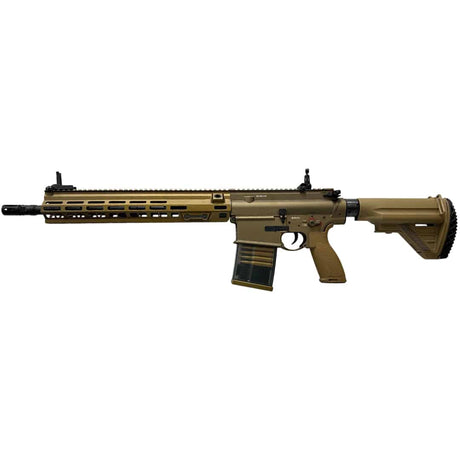
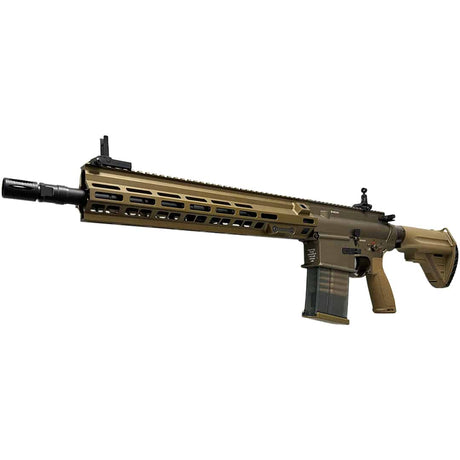
Many players begin their journey with polymer-bodied replicas, but as you progress, the transition to metal receivers becomes a priority for both realism and durability. A metal chassis eliminates the "flex" often found in cheaper plastics, which helps maintain the alignment of your barrel and hop-up unit. Beyond the receiver, the rail system is the backbone of your build. Whether you prefer the classic quad-rail RIS or the sleek, lightweight profiles of KeyMod and M-LOK, these systems allow you to mount the essential tools required for specific situational challenges. M-LOK has quickly become the community favourite for its ability to keep the front-end light whilst providing a rock-solid mounting point for torches and grips.
Stocks and Grips: Improving Operator Control
Control is everything in a high-stakes engagement. An adjustable stock is vital for tailoring your length of pull, especially if you're switching between a slim chest rig and a bulky plate carrier. It allows you to maintain a consistent cheek weld regardless of your gear. Similarly, your choice of foregrip dictates how you manage the RIF's weight. Vertical grips offer excellent leverage for driving the muzzle between targets in CQB, whilst angled foregrips provide a more natural wrist angle for long-range woodland play. Don't overlook the pistol grip either; an ergonomic upgrade can significantly reduce hand cramp during those intense eight-hour skirmish days.
Optics and Sights: Acquiring Targets Faster
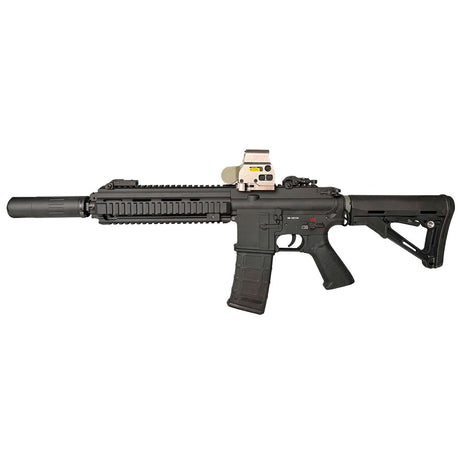
Speed wins fights. Whilst iron sights are reliable and never run out of batteries, they can't compete with the rapid target acquisition offered by modern Airsoft Red Dot & Holo Sights. These optics allow you to keep both eyes open, maintaining your peripheral awareness whilst placing a precise dot on your objective. However, a high-quality optic is a significant investment. Always pair your sights with a polycarbonate lens protector. It's a small, inexpensive addition that can save your expensive glass from being shattered by a stray BB strike at close range.
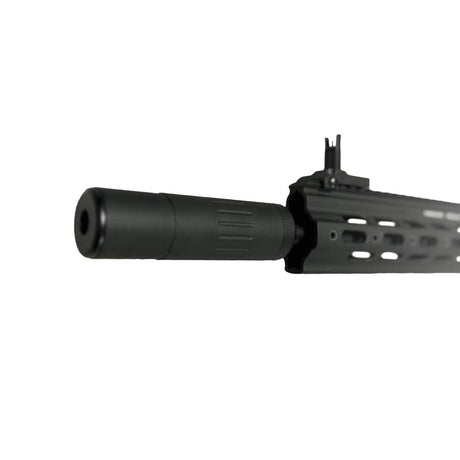
Custom muzzle devices and suppressors provide the final tactical touch. Beyond the aesthetic appeal, many suppressors now house tracer units, which are essential for low-light or night games. If you're ready to overhaul your external setup, browse our full range of airsoft RIF accessories to find the perfect fit for your platform. Remember, every gram you add to your RIF should buy you a measurable advantage on the field.
Professional Maintenance: Getting the Most from Your Airsoft Parts
Success on the field is built at the workbench long before the first BB is fired. You've invested in high-quality airsoft parts, but without a rigorous maintenance schedule, even the most expensive build will eventually falter. In the UK, we operate within specific technical standards, with most sites enforcing a 350 FPS limit for AEGs and up to 500 FPS for bolt-action snipers. Regular maintenance ensures you stay within these legal and site-specific brackets whilst maintaining the pinpoint accuracy you need to dominate the opposition. Neglecting your kit doesn't just lead to poor performance; it leads to catastrophic mechanical failure mid-game.
Whilst customising your platform, you must also stay mindful of the legal landscape. For those without a valid UKARA or similar defence, the law requires RIFs to be "two-toned", meaning at least 51% of the replica must be finished in a bright, non-military colour. Whether you're running a bright blue receiver or a standard RIF, the internal care remains the same. A well-maintained RIF is a reliable RIF, and reliability is the only thing that matters when the stakes are high.
DIY Maintenance Tips for Every Skirmisher
You don't need to be a master technician to keep your gear in top shape. Following a simple post-game routine can significantly extend the life of your airsoft parts. Follow these four essential steps after every event:
- Step 1: Clean your inner barrel using a lint-free cloth and a cleaning rod. Dirt and residue are the primary enemies of consistency.
- Step 2: Lubricate your Gas Blowback valves and O-rings with high-quality silicone oil. Dry seals are the number one cause of leaky magazines.
- Step 3: Check for loose external screws, especially around the rail system and motor plate. High-vibration AEGs can shake attachments loose over time.
- Step 4: Inspect your LiPo batteries for any signs of swelling and ensure your connectors are free from carbon buildup or fraying.
Why Use a Professional Technician?
Some tasks require a level of precision that goes beyond basic DIY. Shimming gears to perfection or correcting the Angle of Engagement (AOE) on a piston are delicate operations that can make or break a high-performance build. A professional technician has the tools and the experience to diagnose subtle faults before they turn into expensive repairs. If you're looking for a bespoke upgrade or need a reliable fix for a complex issue, feel free to Contact Us to discuss your requirements with our expert team.
Before you head out to your next skirmish, run through this quick "Field Readiness" checklist. Chronograph your RIF to ensure it's site-legal, verify your magazines are feeding correctly, and double-check your optics are zeroed. When your equipment is professionally tuned and meticulously maintained, you can step onto the field with absolute confidence in your kit. Don't let a simple maintenance oversight be the reason you're heading back to the safe zone early.
Master Your Build for the Next Engagement
Mastering your platform is a continuous journey that bridges the gap between a standard replica and a high-performance tool. We've explored how a balanced approach to your internals prevents mechanical failure whilst ensuring your externals provide the ergonomic edge needed for long skirmish days. Whether you're prioritising a snappier trigger response or achieving pinpoint accuracy at range, selecting the right airsoft parts is the foundation of your success on the field.
At Socom Tactical Airsoft, we don't just sell gear; we live the hobby. Our team of active UK skirmishers provides authoritative advice backed by years of gritty field experience. We stock a wide selection of top industry brands like Tokyo Marui and SHS, ensuring you have access to the most reliable components on the market. If the technical side feels daunting, our expert technical labour and repair services are always available to help you realise your dream build with precision and care.
Browse our full range of high-performance Airsoft Parts and Upgrades and take command of your equipment. We'll see you in the field, fully prepared for whatever the next high-stakes engagement throws your way.
Frequently Asked Questions
Are airsoft parts universal across all brands?
No, airsoft parts aren't universal, though many follow the Tokyo Marui (TM) standard. Whilst many brands share common dimensions for gears and pistons, proprietary manufacturers often use unique components that won't fit a standard RIF. You must verify if your platform uses a "standard" or "proprietary" layout before purchasing aftermarket upgrades to avoid compatibility headaches during a build.
Will upgrading my airsoft parts void my warranty?
Opening your replica's gearbox or modifying internal components will almost certainly void your manufacturer's warranty. Most retailers and brands include a tamper-evident seal on the gearbox shell or motor base to track unauthorised access. If you're concerned about your warranty, it's best to have upgrades installed by a professional technician who can offer their own guarantee on the labour.
How do I know if a gearbox part is compatible with my AEG?
Compatibility is primarily determined by your AEG's gearbox version. M4 and MP5 platforms typically utilise a Version 2 gearbox, whilst AK-style replicas use a Version 3. You should check the product description of your chosen airsoft parts to ensure they are specifically listed for your gearbox type. Consulting the manufacturer's manual or a specialist retailer is the safest way to confirm fitment.
What are the most important airsoft parts to upgrade first?
The hop-up rubber and precision inner barrel are the most impactful upgrades for any stock RIF. These components provide the greatest improvement in range and consistency for the lowest cost. Once your accuracy is sorted, you can look at electrical upgrades like a MOSFET or a high-torque motor to improve your trigger response and overall rate of fire during intense skirmishes.
Can I install internal airsoft parts myself without experience?
You can certainly attempt DIY installs, but internal gearbox work requires a high level of patience and mechanical understanding. Small components like anti-reversal latches and trigger springs are notorious for popping out during reassembly. If you're new to the hobby, start with external modifications or simple barrel swaps before attempting to shim gears or adjust the Angle of Engagement yourself.
What is the difference between a Version 2 and a Version 3 gearbox?
The primary difference lies in the external shape and how the motor is mounted. A Version 2 gearbox is found in M4s and has a separate motor grip, whilst a Version 3 gearbox features a motor cage that holds the motor in a fixed position. V3 gearboxes are generally considered more robust due to their reinforced design at the front of the shell.
Do I need a new motor if I upgrade my spring?
If you're installing a significantly heavier spring, such as an M120 or higher, a high-torque motor is highly recommended. Stock motors often struggle with the increased resistance, leading to sluggish trigger response and excessive heat buildup in your grip. Upgrading your motor ensures the gearbox cycles quickly and efficiently, preventing unnecessary strain on your battery and electrical contacts.
How often should I replace my hop-up rubber?
You should replace your hop-up rubber every six to twelve months, or sooner if you notice a sudden drop in accuracy. Over time, the rubber can harden or become contaminated with silicone oil and dirt, which reduces its ability to apply consistent backspin. It's one of the most affordable airsoft parts to maintain, so regular replacement keeps your RIF field-ready.