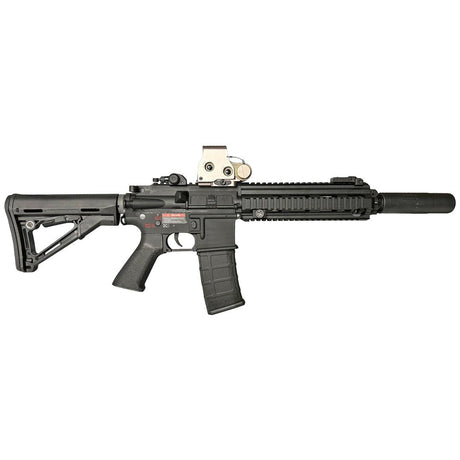
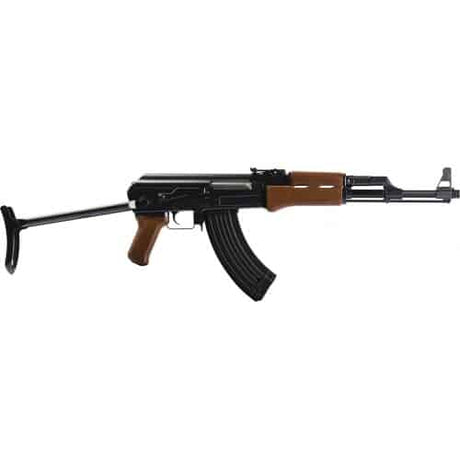
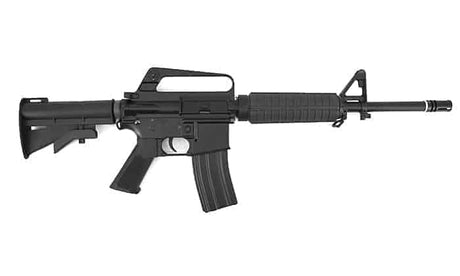
Your £500 custom AEG is only as lethal as the chemical reaction sitting inside your stock. It's a common sight at UK sites: a player with a top-tier build struggling with a sluggish trigger because they're using outdated power tech. You likely know the headache of trying to wedge a chunky stick into a tight crane stock or the genuine anxiety that comes with seeing a cell start to puff after a long Sunday. Mastering Airsoft lipo batteries is the difference between a crisp, responsive platform and a paperweight that lets you down mid-skirmish.
We're going to move past the myths and master the technical nuances that give you a faster rate of fire and a distinct tactical edge. You'll learn how to choose the right discharge rate to boost performance without frying your MOSFET and finally settle the Deans versus Tamiya debate. This guide covers the exact safety and storage protocols that 95% of experienced marshals rely on to prevent fires and extend cell life. By the end, you'll have the technical knowledge to push your gear to the limit whilst keeping your kit bag safe.
Key Takeaways
- Understand why upgrading to high-performance Airsoft lipo batteries provides the superior energy density and discharge efficiency required to dominate the modern skirmish field.
- Learn how to decode voltage and capacity ratings to select a power source that perfectly balances a rapid rate of fire with the endurance needed for all-day engagements.
- Identify the ideal cell configurations and connector types to ensure your battery fits your specific AEG platform with maximum reliability and minimal electrical resistance.
- Master the non-negotiable safety protocols and balance charging techniques that protect your investment and keep your equipment skirmish-ready.
- Discover how expert technical support and professional MOSFET installations can further optimise your loadout for peak tactical performance.
The Power Shift: Why Airsoft LiPo Batteries Define Modern Skirmishing
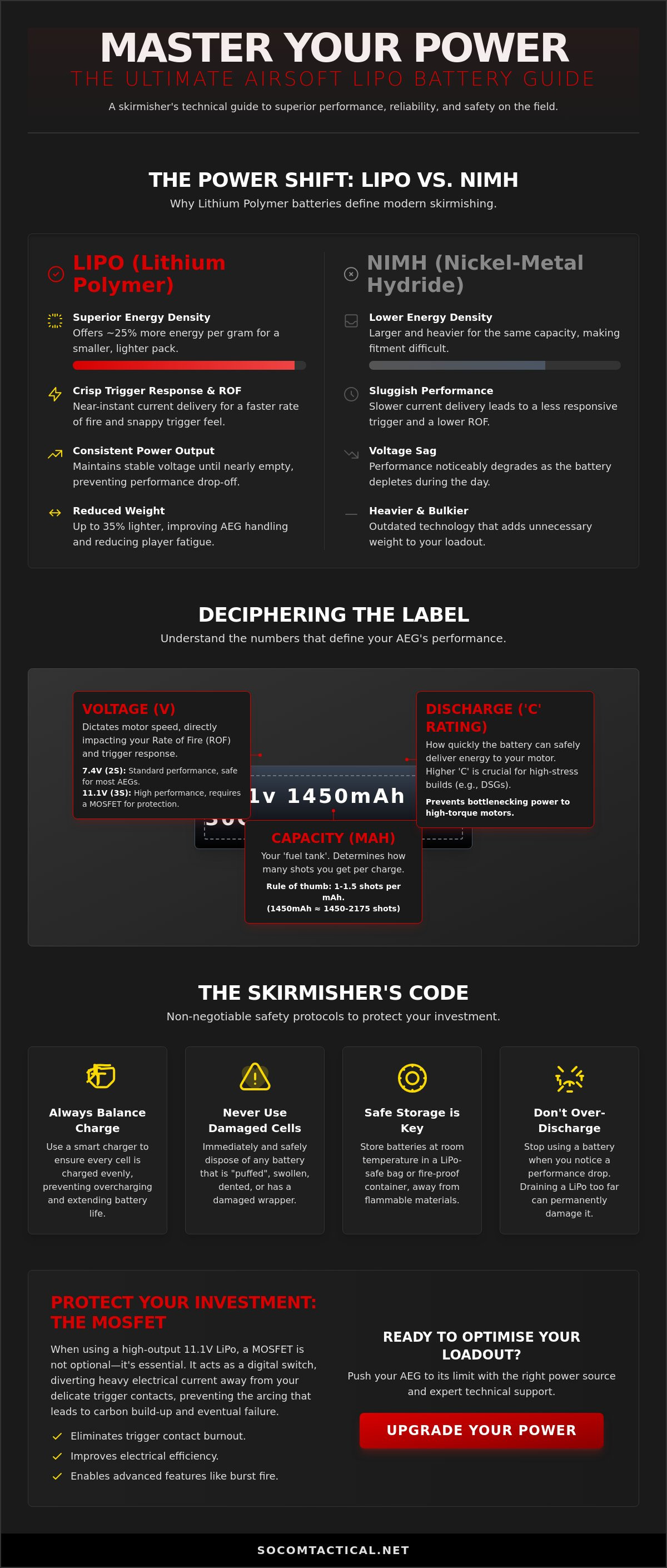
The airsoft landscape has shifted. Gone are the days of bulky, slow-charging NiMH bricks that struggled to fit into anything but a full-sized fixed stock. Today, Airsoft lipo batteries are the gold standard for any player looking to dominate the field. This evolution is driven by Lithium Polymer Battery Technology, which utilises a solid polymer electrolyte rather than a liquid one. This chemistry allows for cells that are thinner, lighter, and far more powerful than the technology of a decade ago.
The primary draw for the modern skirmisher is energy density. A standard LiPo pack offers roughly 25% more energy per gram than a traditional NiMH battery. This doesn't just mean a smaller footprint; it means more aggressive performance. When you pull the trigger, a LiPo delivers current almost instantly. This results in a crisper trigger response and a noticeable increase in your rate of fire (ROF). In a high-stakes CQB engagement, that split-second difference between your piston cycling and your opponent's reaction is the margin between victory and a walk back to the respawn point.
Modern "skirmish-ready" platforms are built with these performance gains in mind. Manufacturers now design gearboxes and motor housings specifically to handle the rapid-fire capabilities that LiPo power provides. If you're running a high-torque motor or a DSG (Dual Sector Gear) build, LiPo is no longer an optional upgrade; it's a fundamental requirement to keep the system cycling reliably under load.
LiPo vs NiMH: The Tactical Advantage
Weight reduction is a massive factor for players running lightweight PDW or SMG platforms. Switching to a LiPo can reduce your battery weight by up to 35%, making your loadout more agile during long game days. Performance is consistent throughout the day, too. Unlike NiMH batteries that gradually lose their "punch" as they deplete, a LiPo maintains a steady discharge until the cell is nearly empty. While NiMH batteries suffer from significant voltage sag that slows your motor as the battery drains, LiPo cells maintain their structural voltage to ensure every shot feels as powerful as the first.
The Role of the MOSFET in LiPo Transitions
Stepping up to a high-output 11.1V LiPo provides incredible performance, but it comes with risks for older gearboxes. The high-current flow can cause electrical arcing across traditional copper trigger contacts, eventually carbonising them or even welding them together. This is where a MOSFET becomes vital. It acts as a digital gate, diverting the heavy current away from the delicate trigger switch and sending it directly to the motor.
A MOSFET doesn't just protect your internals; it manages the flow to ensure your motor isn't overstressed. If you're looking to push your AEG to its absolute limit, checking out the latest parts and upgrades is a smart move. Most high-end rifles now come with these units pre-installed, allowing you to use Airsoft lipo batteries right out of the box without worrying about catastrophic electrical failure during a skirmish.
Deciphering the Label: Voltage, Capacity, and Discharge Ratings
Reading the label on your airsoft lipo batteries is like checking the spec sheet of a high-performance engine. If you don't understand the numbers, you risk underpowering your build or, worse, damaging your internals. The most prominent figure is usually the Voltage, indicated by the number of cells (S). A 7.4V pack contains two cells (2S), while an 11.1V pack uses three (3S). Each cell has a nominal voltage of 3.7V. This voltage dictates the speed at which your motor spins, directly impacting your Rate of Fire (ROF) and trigger response time.
Capacity, measured in milliampere-hours (mAh), represents your fuel tank. A higher mAh means more shots between charges. While efficiency varies between builds, a solid rule of thumb for a standard AEG is approximately 1 to 1.5 shots per mAh. If you're running a 1200mAh stick battery, you can expect roughly 1,200 to 1,800 shots before your performance starts to dip. For a full day of skirmishing in the UK, most players find that two 1450mAh packs provide ample coverage for even the most trigger-happy playstyles.
The 'C' rating is often the most misunderstood part of the label. It describes the discharge rate, or how quickly the battery can push energy to the motor. You'll often see two numbers, such as 20C/40C. The first is the constant discharge, while the second is the burst rate for short 10-second intervals. To calculate the total Amp output, use this formula: (mAh / 1000) x C Rating. A 1300mAh 25C battery delivers 32.5 Amps of continuous current. If your motor demands 40 Amps to cycle a heavy spring, a low-C battery will struggle, leading to heat buildup and sluggish performance.
7.4V vs 11.1V: Choosing Your Performance Ceiling
Selecting the right voltage depends entirely on your airsoft gun and its internal components. A 7.4V LiPo is the safe, reliable choice for most stock gearboxes, offering a significant boost over old NiMH packs without excessive wear. Stepping up to an 11.1V pack can increase your ROF by up to 50%, but it's a high-stakes game. Without a MOSFET to protect your trigger contacts, the increased voltage causes electrical arcing that can carbonise and destroy them within a few thousand rounds.
The Truth About C-Ratings and High-Torque Motors
High-torque motors are the engine of choice for snappy semi-auto builds, but they're power-hungry. During the initial fraction of a second when the motor starts to pull a heavy M100 or M110 spring, the current draw spikes. Using airsoft lipo batteries with a higher C-rating, such as 30C or 40C, ensures the motor isn't starved during this peak. This doesn't necessarily increase your top-end ROF, but it makes the trigger feel significantly more responsive. For a standard UK skirmish build, a 25C to 35C rating is the sweet spot for crisp performance without overstressing the cells.
Fitment and Connectivity: Ensuring Your Battery Suits Your Loadout
Selecting the right Airsoft lipo batteries involves more than just picking the highest voltage. If the pack doesn't fit your RIF, it's useless on the field. Most players face the frustration of a battery that's just a few millimetres too long for their buffer tube or too thick for their handguard. Understanding cell configurations is the first step to avoiding a mid-game power failure. Stick batteries are the go-to for slim spaces, whilst Nunchuck (or Crane) styles split the cells into separate limbs to tuck into the sides of a stock. Brick styles offer the highest capacities but require the generous space of a fixed stock or a dedicated external pouch.
At Socom Tactical, we prioritise batteries built with high-quality lead wires and robust outer casing. We've seen too many cheap packs fail because the wiring was too stiff to bend into a tight stock or the casing was too thin to resist a puncture. A standard M4 buffer tube typically provides about 160mm of depth and 20mm of internal diameter. Always measure your compartment before committing to a purchase. If you're running a PEQ box, your space is even more restricted, often capped at 70mm in length. Precision fitment ensures your wires aren't pinched, which is a leading cause of short circuits in high-performance AEGs.
Connector Evolution: Why We Recommend Deans
The transition from Mini-Tamiya to Deans (T-Plugs) is one of the most effective upgrades you can make. Mini-Tamiya connectors rely on small, round pins that offer limited surface area. This creates electrical resistance, which generates heat and saps your battery's efficiency. Deans connectors use flat, gold-plated contact surfaces that drastically reduce this resistance. This upgrade can provide a measurable boost to your motor speed and trigger response. It's common to see a 10% to 15% improvement in rate of fire simply by switching to a more efficient connector. If your RIF is still using legacy plugs, our technical team can professionally convert your AEG to Deans to ensure you're skirmish-ready.
Matching Shape to Stock: A Fitment Guide
Your platform dictates your battery shape. M4 and AR-15 variants with retractable stocks usually require slim 1200mAh sticks or nunchuck packs. AK players need the thinnest sticks available to slide under the receiver's top cover. For those running support weapons or heavy-duty setups, you might need to look at tactical gear solutions like external stock pouches. These allow you to carry high-capacity 3000mAh+ bricks that wouldn't fit internally. Always check your wire routing. A pinched wire during stock adjustment is a quick way to end your day at the site. Ensure there's enough slack for the stock to move without tensioning the leads.
The Skirmisher’s Code: LiPo Safety, Charging, and Maintenance
Owning high-performance Airsoft lipo batteries isn't just about achieving a faster trigger response; it's about tactical discipline and safety. The golden rule of LiPo ownership is absolute: never leave a battery charging unattended. While modern cells are incredibly stable when handled correctly, a charging fault can escalate into a fire in minutes. You must remain in the room, keeping a watchful eye on the process to ensure you can react instantly if something goes wrong.
If you notice your battery has become 'puffed' or bloated, it's time to retire it. This swelling is caused by gas buildup from electrolyte decomposition, often a result of over-discharging or physical damage. A puffed battery is a liability that should never be squeezed into a RIF or put back on a charger. Instead, take it to a local battery recycling centre or a hazardous waste disposal point. To prevent this damage in the first place, always use a LiPo alarm during your skirmish. These small, inexpensive devices plug into the balance lead and emit a loud siren when a cell drops below 3.3V, giving you a clear signal to swap out before you kill the battery.
Charging Protocols and Smart Chargers
Balance charging is non-negotiable for anyone serious about their kit. Unlike basic chargers that only monitor total voltage, a balance charger uses the balance lead to ensure every individual cell reaches exactly 4.2V. This prevents one cell from being overworked whilst another remains undercharged. When setting up, always match the amperage to your battery's capacity. A 1450mAh battery should be charged at 1.4 Amps to avoid unnecessary cell stress. You can explore our range of LiPo batteries and smart chargers to find a setup that keeps your cells balanced and skirmish-ready.
Storage and Transportation in the UK
Transporting your gear to the site requires more than just a rifle bag. Always use fire-retardant LiPo bags for both transport and home storage to contain any potential thermal runaway. UK winters present a unique challenge, as freezing temperatures can temporarily reduce a battery's discharge capacity. Keep your spares in an internal pocket close to your body heat to maintain their performance. When the weekend is over, don't store your Airsoft lipo batteries fully charged or completely empty. Use your charger’s 'Storage' function to bring each cell to roughly 3.8V. This specific voltage provides the best chemical stability, ensuring your batteries don't degrade whilst sitting in your kit bag between monthly events.
Ready to upgrade your power management and protect your investment? Grab a professional smart charger and safety bag today.
Optimising Your AEG: Why Socom Tactical is the UK’s LiPo Specialist
Choosing the right power source isn't just about fitting a block into a stock tube; it's about ensuring your RIF performs when the trigger pulls matter most. At Socom Tactical, we operate on a 'by players, for players' philosophy. We don't just stock any Airsoft lipo batteries that come our way. Every brand in our inventory is vetted by our staff during Sunday skirmishes at local UK sites. We understand that a battery failing mid-game is more than an inconvenience; it's a wasted game fee. Our curated selection focuses on high-discharge cells that provide the punch needed to overcome motor resistance whilst remaining stable under the 350 FPS limits standard across most UK woodland and CQB centres.
Technical Expertise and Custom Services
A high-performance battery is only as good as its connection. Many factory AEGs still ship with restrictive Tamiya connectors that bottleneck your rate of fire. Our in-store workshop provides professional battery lead repairs and precision connector soldering to upgrade your kit to Deans or XT30 plugs. We specialise in matching Airsoft lipo batteries to specific platforms, ensuring you don't accidentally fry a Tokyo Marui Recoil Shock or overwhelm a G&G ETU with too much voltage. If you're unsure about C-ratings or whether an 11.1v will strip your gears, our team provides tailored advice based on your specific internal build. For quick answers on battery compatibility and maintenance, you can check the Socom Tactical FAQ for detailed technical guidance.
Ready for the Field: Final Checks Before You Play
Reliability on the field starts in the staging area. Before you head out for a full day of tactical engagements, run through this essential battery health checklist:
- Voltage Check: Use a digital tester to ensure each cell is balanced within 0.05V of each other.
- Physical Inspection: Look for any "puffing" or swelling in the casing; if it's soft, it's unsafe.
- Connector Integrity: Ensure there's no fraying at the wire base or carbon build-up on the pins.
- Storage Charge: Verify you didn't leave your cells flat after the last game, as this kills LiPo longevity.
Don't rely on a single cell to get you through an eight-hour event. Carrying at least one spare LiPo is essential, especially during winter months when the UK cold can sap 20% of your battery's effective capacity. You can browse our newest products to find the latest compact, high-capacity cells designed for modern slimline handguards. To ensure you're fully skirmish-ready, remember to combine your battery purchase with essential consumables like high-grade BBs and maintenance sprays. We provide everything you need to keep your loadout running at peak efficiency, from the first trigger pull to the final extraction.
Dominate the Field with Superior Power
Your AEG is only as reliable as the cells driving it. Mastering the nuances of voltage, capacity, and C-ratings ensures your platform doesn't fail when the skirmish reaches its peak. High-performance Airsoft lipo batteries provide the rapid trigger response and sustained rate of fire required to dominate the field; however, you must respect the safety protocols of charging and storage to keep your gear in peak condition. Understanding your loadout's specific power requirements is the first step toward achieving total tactical reliability on the site.
Since 2009, Socom Tactical has served the UK community with specialist advice rooted in real-world experience. Our curated range features only skirmish-tested brands that endure the rigours of a full day of intense gameplay. If your platform requires a specific setup, our team provides expert technical support for connector conversions, ensuring your power source integrates perfectly with your MOSFET or wiring harness. Don't settle for sluggish performance when a simple power upgrade can transform your gameplay. Grab your gear, check your levels, and prepare for your next engagement with total confidence.
Upgrade your AEG with high-performance LiPo batteries from Socom Tactical
Frequently Asked Questions
Can I use an 11.1V LiPo in any airsoft gun?
You can't simply drop an 11.1V battery into any standard AEG without risking serious internal damage. These high-voltage airsoft lipo batteries provide a massive boost to your rate of fire, but they will burn out standard trigger contacts within 1,000 to 2,000 rounds if you don't have a MOSFET installed. Ensure your gearbox is shimmed correctly and features steel gears to handle the 30% increase in mechanical stress during a high-intensity skirmish.
What is the difference between a Deans connector and a Mini-Tamiya?
Deans connectors offer significantly lower electrical resistance and a more secure connection than the older Mini-Tamiya style. Whilst Mini-Tamiya plugs are common on entry-level platforms, they often suffer from heat build-up and loose pins after 50 or 60 plug cycles. Switching to Deans can improve your trigger response by roughly 10% to 15% because the flat, gold-plated surfaces allow for maximum current flow from your airsoft lipo batteries to the motor.
How long does an airsoft LiPo battery take to charge?
Most airsoft LiPo batteries take between 45 and 90 minutes to reach full capacity when using a dedicated balance charger. If you're charging at a safe 1C rate, such as 1.4A for a 1400mAh battery, you'll typically see a green light within 60 minutes. Never rush the process by cranking up the amperage; keeping the charge rate steady ensures your cells remain balanced and your gear stays skirmish-ready for the long haul.
What should I do if my LiPo battery starts to swell or 'puff'?
Stop using the battery immediately if you notice any visible swelling or expansion of the cells. This "puffing" indicates a chemical breakdown that turns your power source into a potential fire hazard during use or charging. Place the damaged unit in a fireproof LiPo bag and take it to a local recycling centre that handles hazardous waste. Never attempt to "bleed" the gas or charge a deformed battery, as it could ignite.
Is it safe to charge a LiPo battery with a standard NiMH charger?
You must never use a standard NiMH charger for LiPo batteries because they lack the essential balance-charging circuitry required for lithium chemistry. NiMH chargers apply a constant current that will overcharge LiPo cells, leading to a violent thermal runaway event within minutes. Always invest in a dedicated smart charger that monitors individual cell voltages to keep your equipment safe and your tactical loadout ready for the field.
How many shots can I get out of a 1450mAh LiPo battery?
You can generally expect between 1,400 and 2,100 shots from a 1450mAh battery, depending on your motor's efficiency and the ambient temperature. A common rule of thumb for airsoft lipo batteries is approximately 1.5 shots per milliamp-hour. If you're running a high-torque motor or a heavy M120 spring, your consumption will increase, so always carry a spare 1100mAh stick in your plate carrier to avoid running dry mid-game.
Can I leave my LiPo battery in my airsoft gun overnight?
Don't leave your battery connected to your RIF overnight or after a game day. Many modern AEGs with MOSFETs or electronic triggers have a small parasitic draw of 1 to 5 milliamps that will slowly drain the cells below the 3.0V safety limit. If a LiPo drops below this threshold, it often becomes chemically unstable and won't take a charge again, effectively bricking your £25 investment and ruining your next skirmish.
What is a 'storage charge' and when should I use it?
A storage charge brings each cell to roughly 3.8V, which is the most stable state for lithium cells during long-term inactivity. Use this setting on your smart charger if you don't plan to hit the field for more than 48 hours. Storing airsoft lipo batteries at full capacity or completely flat causes internal degradation, whereas a proper storage charge preserves the battery's lifespan and ensures it delivers peak performance for your next tactical engagement.