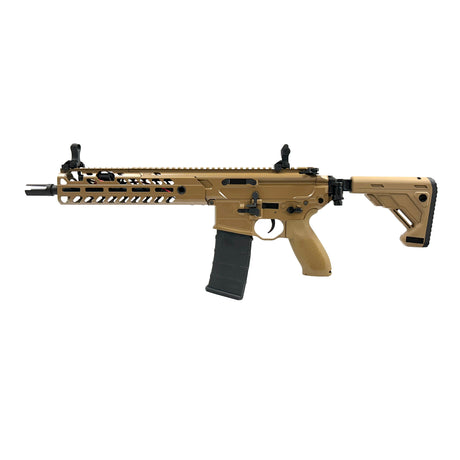
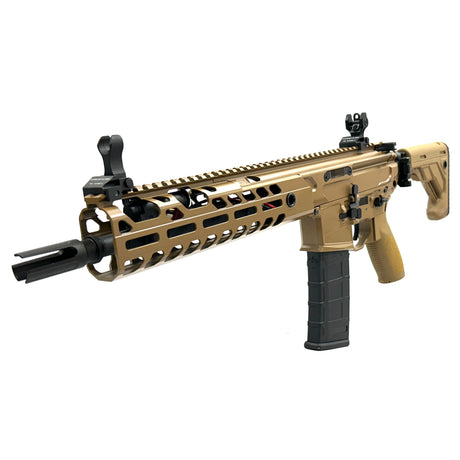
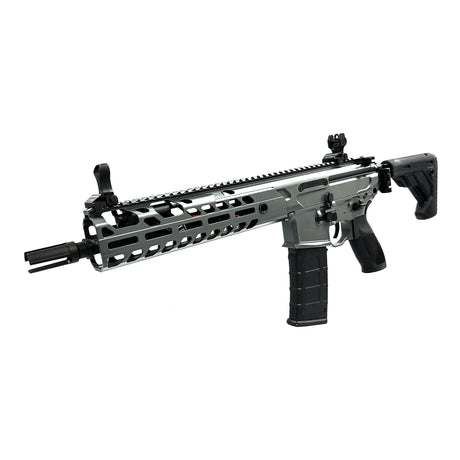
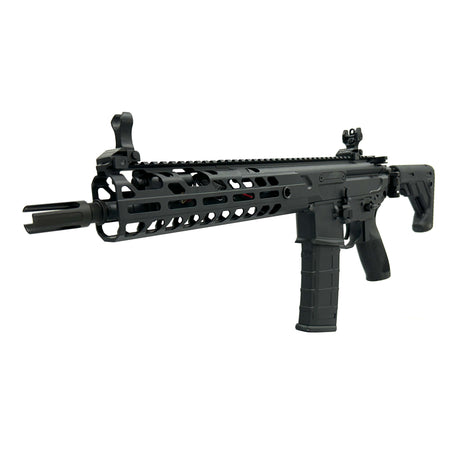
If your AEG clocks in just a single FPS over the legal limit, you aren't just looking at a site ban; you're technically in possession of an unlicensed Section 5 firearm. We've all felt that pre-skirmish anxiety at the chrono station, wondering if a change in ambient temperature or a heavier BB choice will turn your favourite platform into a legal liability. It's a confusing mess of technical jargon that often leaves players guessing rather than gaming. Our team at Socom Tactical believes every player should step onto the field with total confidence in their gear.
This guide will help you master the UK airsoft fps and joules limits, ensuring your RIF remains skirmish-ready and fully compliant with the Policing and Crime Act 2017. You'll learn the critical science behind Joule creep and how to accurately calculate power across different BB weights. We are diving deep into the technical specifications and site-specific variations that will keep your loadout legal and your performance high for the 2026 season. From high-performance MOSFET builds to standard GBB sidearms, we have the data you need to ensure your armoury stays on the right side of the law while you dominate the field.
Key Takeaways
- Understand the vital legal distinction between a RIF and a Section 5 prohibited weapon to ensure your loadout remains fully compliant with the Policing and Crime Act 2017.
- Master the technical relationship between BB mass and velocity to navigate UK airsoft fps and joules limits accurately, preventing the risks of "Joule creep" during your next skirmish.
- Learn the specific power thresholds and mechanical locking requirements for AEGs, DMRs, and snipers to guarantee your favourite platform is accepted at any UK site.
- Discover how to correctly calibrate your personal chronograph for home testing, ensuring your gear is skirmish-ready and performing optimally before you head to the field.
- Identify the warning signs of a "hot" RIF and understand how professional diagnostic services can help you prioritise reliability whilst staying within legal energy limits.
Understanding UK Airsoft Legal Limits: VCRA and Firearms Law
Staying on the right side of the law is the first step to any successful loadout. Before the Policing and Crime Act 2017 took effect on 2 May 2017, the definition of an airsoft gun was murky. It relied on outdated "lethality" tests that could vary between different police forces. Today, the law is crystal clear. An airsoft weapon is specifically defined as a barrelled weapon that is designed to fire a small plastic pellet, typically 6mm, with a kinetic energy that does not exceed specific limits. If your platform shoots harder than the law allows, you aren't just playing with a "hot" gun; you are technically in possession of an unlicensed firearm.
The 2017 Act was a vital update because it carved out a legal exception for UK airsoft skirmishing within the Firearms Act 1968. This distinction separates Realistic Imitation Firearms (RIFs) from Section 5 prohibited weapons. Without these defined UK airsoft fps and joules limits, many high-performance AEGs or gas blowbacks could be classified as dangerous air weapons or even prohibited firearms, carrying severe criminal penalties. We ensure every one of our airsoft guns is checked to meet these rigorous standards before they ever reach your hands.
The Policing and Crime Act 2017 Explained
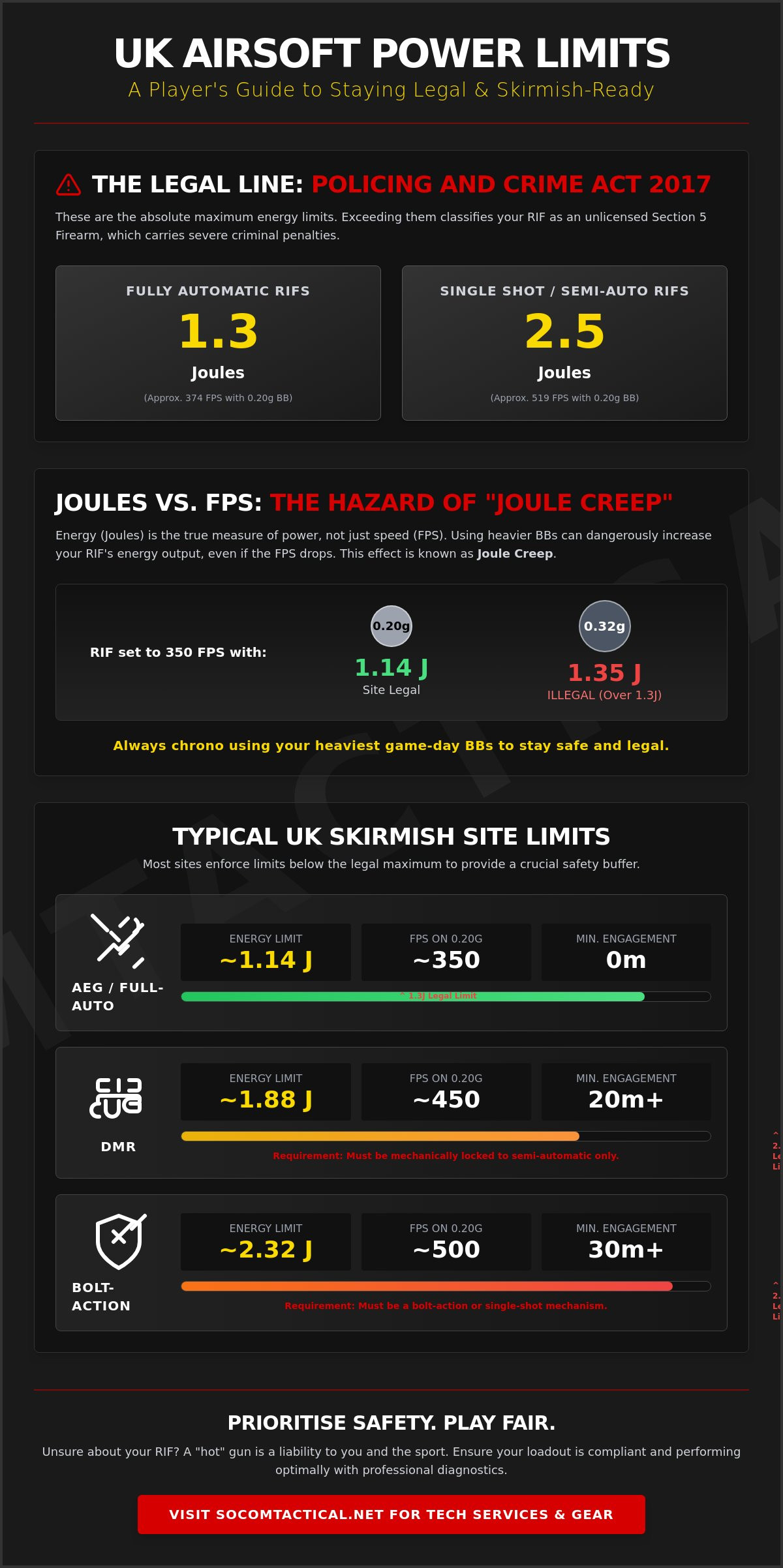
The 2017 Act introduced two hard ceilings for muzzle energy that every player must respect. For fully automatic RIFs, the limit is 1.3 Joules. For semi-automatic or single-shot weapons, such as bolt-action snipers, the limit is 2.5 Joules. These figures aren't just suggestions; they are the legal threshold of lethality. Exceeding these limits by even a fraction of a Joule means the device is no longer an "airsoft weapon" in the eyes of the law. This legislation protects the community by providing a firm framework for manufacturers and retailers to follow, ensuring the hobby remains safe and legal for everyone involved.
Lethal Barrelled Weapons vs. Airsoft RIFs
Understanding the difference between legal airsoft play and "lethal barrelled weapons" comes down to these specific numbers. The 1.3 Joule limit for automatic fire is non-negotiable because the law assumes that a high rate of fire increases the risk of injury. For those looking to dominate at range, the 2.5 Joule limit for single-shot platforms allows snipers to maintain a tactical advantage. You will notice that most UK site limits are actually lower, often set at 1.14 Joules (350fps on a 0.20g BB) for automatics. This provides a safety buffer. It ensures that even if your gun experiences "Joule creep" with heavier BBs or temperature changes, you remain within the UK airsoft fps and joules limits and don't accidentally cross into firearm territory.
- Automatic Fire: 1.3 Joules maximum (approx. 374fps with 0.20g BB)
- Single Shot/Semi: 2.5 Joules maximum (approx. 519fps with 0.20g BB)
- Legal Status: Anything over these limits is classified as a Section 5 or Section 1 firearm.
FPS vs. Joules: Why Velocity Isn’t the Only Metric
For years, the airsoft community focused almost entirely on Feet Per Second (FPS). It's a simple number that's easy to understand, but it only tells half the story. Velocity is just speed, whereas Joules represent the actual kinetic energy delivered upon impact. When we discuss UK airsoft fps and joules limits, we're really talking about the potential for a BB to cause injury or exceed legal thresholds. Site marshals have shifted their focus to Joules because it's a more consistent and honest way to measure a replica's power. Under the Violent Crime Reduction Act 2006, the distinction between a toy and a firearm is defined by this energy output, making it the most critical metric for any skirmisher to track.
The chronograph is the ultimate arbiter of safety at any UK site. Modern units don't just clock speed; they calculate energy based on the BB weight you've entered. Relying solely on 0.20g BBs for testing is a legacy habit that can lead to dangerous "hot" guns on the field. If your RIF is tuned to the absolute limit on 0.20g, it'll likely fail a Joule test once you load your heavy-weight game ammo. Accuracy and safety go hand in hand, and understanding the physics behind your shots is the first step toward a reliable loadout.
The Science of BB Weight and Energy
Physics dictates how your BB behaves once it leaves the inner barrel. Heavier BBs, such as 0.28g or 0.32g, are the preferred choice for outdoor engagements because they're less affected by wind and retain their energy much further downrange. The mathematical relationship is defined by the Joule formula: Energy = 0.5 * mass * velocity squared. Because velocity is squared, even small changes in speed have a massive impact on the total energy. A gun shooting 350 FPS on 0.20g produces roughly 1.14 Joules. However, if that same gun is highly efficient, it might shoot a 0.30g BB at a velocity that results in 1.3 Joules or more, despite the lower FPS reading. This discrepancy is why measuring with your actual game-weight ammo is non-negotiable for fair play.
Understanding Joule Creep in Gas and HPA Systems
Joule creep is a phenomenon where a RIF produces significantly more energy with heavier BBs than it does with 0.20g BBs. This is most common in HPA and Gas Blowback (GBB) platforms. These systems often have a high volume of air or gas released per shot. A lightweight 0.20g BB exits the barrel quickly, leaving behind unused expanding gas. A heavier BB accelerates more slowly, staying in the barrel longer and absorbing more of that trapped energy. Longer inner barrels can exacerbate this effect, leading to unexpected power spikes that could see you banned from a site for the day.
To identify Joule creep, you should always perform a secondary chronograph check using your heaviest skirmish-ready BBs. If you find your energy levels creeping over the 1.14J or 2.3J limits (depending on your RIF's class), you'll need to adjust your regulator or swap to a weaker spring. Mitigating this before you arrive at the centre ensures you spend your time playing rather than stripping your gear in the car park. Staying within the UK airsoft fps and joules limits isn't just about following rules; it's about maintaining the integrity of the sport.
UK Airsoft Classification: FPS Limits for AEGs, DMRs, and Snipers
Understanding the specific power tiers of your loadout is essential for staying legal and competitive on the field. The Policing and Crime Act 2017 provides the statutory framework for these classifications, but site owners apply these rules to ensure player safety during intense skirmishes. Getting your head around UK airsoft fps and joules limits ensures you don't get turned away at the chrono station before the day even starts.
Standard Skirmish Limits: AEGs and Pistols
The 350 FPS limit using a 0.20g BB, which translates to approximately 1.13 Joules, is the universal standard for most UK sites. This limit covers almost all automatic electric guns (AEGs) and sidearms. It's a balance between performance and safety. In Close Quarter Battle (CQB) environments, engagement distances are often less than five metres; keeping power at 1.13 Joules prevents unnecessary injury while maintaining enough velocity for outdoor range. If you're looking for a platform that's ready to hit the field right out of the box, check our latest AEG rifles which are specifically selected for UK site compliance.
Specialist Roles: DMR and Bolt-Action Rules
Stepping into a specialist role requires more than just a high-magnification scope. Designated Marksman Rifles (DMRs) typically sit in a middle ground. Most sites allow them to fire at up to 450 FPS (1.88 Joules), though some venues cap this at 400 FPS (1.49 Joules). The trade-off is strict. These platforms must be mechanically or electronically locked to semi-auto only. You can't simply slap a scope on a standard M4 and call it a DMR; it needs to be incapable of firing in full-auto to meet the site brief.
Bolt-action sniper rifles represent the peak of the UK airsoft fps and joules limits hierarchy. The industry standard is 500 FPS on a 0.20g BB, equating to 2.32 Joules. This is the legal ceiling for airsoft guns in the UK. This higher power comes with a mandatory Minimum Engagement Distance (MED), usually set at 20 or 30 metres. This ensures that high-power shots don't cause harm at close range. Because of this MED, carrying a reliable sidearm is essential for any sniper. Site-specific variations are common, so you should always check the FAQ or the morning safety brief before you gear up. Tactical readiness starts with knowing your limits.
- AEG/Pistol: 1.13 Joules (Approx 350 FPS) - No MED.
- DMR: 1.49 - 1.88 Joules (Approx 400-450 FPS) - 15m to 20m MED.
- Sniper: 2.32 Joules (Approx 500 FPS) - 20m to 30m MED.
How to Chrono Your Airsoft Gun and Stay Field-Legal
Don't wait until you're at the safe zone table to find out your RIF is "hot". A failed chrono test ruins your day and wastes your green fee. Setting up a home testing station is the only way to ensure you're within the UK airsoft fps and joules limits before you load the van. Relying on guesswork is a fast track to the walk of shame back to the car park.
Modern UK sites have moved away from the "0.20g only" rule for a reason. You must chrono with the weight you actually use on the field. This accounts for Joule Creep, where heavier BBs can carry significantly more energy than a standard calculation suggests, even if the FPS looks low. Stock up on high-quality BLS BBs to ensure your home testing matches the consistency and density of the rounds you'll use in-game.
Temperature is the biggest variable for Gas and CO2 platforms. A GBB pistol shooting 1.1 Joules in a 12°C morning might spike to 1.3 Joules by 2:00 PM when the sun hits the staging area. To stay skirmish-ready, always leave yourself a 10 percent safety margin to account for these thermal shifts. If you're riding the absolute limit of the law in the morning, you'll likely be illegal by lunch.
Using a Chronograph Correctly
Alignment is everything. If you tilt your RIF or fire at an angle, the sensors will give you a false low or an error reading. Hold the muzzle 2 to 3 inches away from the first sensor, keeping the barrel perfectly level with the chronograph's internal path. Fire a string of 5 to 10 shots. Don't just look at the average; look at the peak. If one shot in ten breaks the UK airsoft fps and joules limits, your platform needs adjustment before a marshal sees it.
Adjusting Your Power Levels
If you're over the limit, don't panic. For AEGs, a quick-change spring system is your best friend. Dropping from an M110 to an M105 spring can be the 5-minute fix that saves your weekend. Gas users should look into NPAS (Negative Pressure Adjustable System) valves or adjustable HPA regulators to dial back the output. Always set your hop-up to zero during the official chrono. Some setups actually increase in power when the hop is applied, which can lead to immediate site bans if caught during spot checks on the field.
Need the right gear to tweak your performance? Explore our range of internal upgrades and springs to get your RIF skirmish-ready and legal.
Professional Tech Services: Keeping Your Loadout Skirmish-Ready
Realising your RIF is shooting "hot" at a morning chrono station is every player's nightmare. It ruins the day and puts your legal standing at risk. If your AEG or GBB consistently exceeds the UK airsoft fps and joules limits, it's time to step away from the workbench and call in the experts. Professional diagnostics identify whether the issue is a settled spring, a poor air seal, or an over-tuned motor before it leads to a site ban or a breach of the Policing and Crime Act 2017.
Most players chase raw power, but seasoned skirmishers know that consistency wins games. An erratic FPS range makes long-distance shots unpredictable. By focusing on internal refinements rather than just a stiffer spring, you achieve a tighter deviation between shots. This ensures you stay competitive whilst remaining safely within the legal 1.13-joule limit for full-auto platforms. High-performance airsoft isn't about being the loudest or the hardest hitting; it's about being the most reliable person on the field.
Spring Swaps and Internal Tuning
Socom Tactical technicians optimise internal parts to ensure your gearbox runs like a precision instrument. DIY spring cutting is a common "quick fix" that often backfires. It leaves jagged edges that can chew through your piston or cause inconsistent tension. Our team installs the correct rated springs and balances them with high-quality hop-up rubbers to maximise range without breaking the law. We focus on the air seal; a perfect seal prevents the 20-30 FPS fluctuations that plague unoptimised builds.
The Socom Tactical Commitment
We've supported the UK community with expert advice for over 15 years, operating from our Hampshire centre. Every RIF that passes through our workshop undergoes rigorous testing on professional-grade chronographs before it returns to your loadout. We don't just fix guns; we build confidence. If you're unsure about your current setup, you can contact our tech team for a comprehensive power check or a bespoke upgrade plan.
Safety isn't just a box-ticking exercise. Adhering to the UK airsoft fps and joules limits protects the players around you and ensures the longevity of our hobby. Keep your gear legal, keep it consistent, and stay skirmish-ready.
Dominate the Field with a Compliant Loadout
Navigating the Policing and Crime Act 2017 requires more than a basic understanding of velocity. You've got to master the balance between 1.3-joule limits for automatic platforms and the 2.5-joule ceiling for single-shot rifles. Safety on the skirmish field depends on precise energy readings, not just high muzzle speeds. Since 2009, Socom Tactical has operated as an independent UK specialist, ensuring every RIF we handle is fully tested for compliance. We don't just sell gear; we provide the expert technical labour and repair services needed to keep your equipment reliable and legal. Staying within the UK airsoft fps and joules limits is the only way to protect the hobby and your reputation as a player. Our team takes the guesswork out of your build, so you can focus on the mission ahead. Whether you're upgrading a MOSFET or tuning a sniper rifle, we ensure your gear is ready for the most intense engagements.
Browse our skirmish-ready UK legal airsoft guns and gear up with confidence for your next event.
Frequently Asked Questions
What is the maximum legal FPS for an airsoft gun in the UK?
Under the Policing and Crime Act 2017, the maximum legal limit for a full-auto airsoft RIF is 1.3 Joules, which is roughly 374 FPS when using a 0.20g BB. For single-shot platforms like bolt-action snipers, the limit is 2.5 Joules, or approximately 520 FPS. Exceeding these UK airsoft fps and joules limits means your gear is no longer classed as an airsoft gun but as a prohibited firearm.
Can I go to prison for having an airsoft gun that shoots too hard?
You can face a prison sentence if your airsoft platform exceeds the legal power limits. Under the Firearms Act 1968, any airsoft gun firing above 1.3 Joules for full-auto or 2.5 Joules for single-shot is legally a section 5 firearm. Possession of such a weapon can lead to a mandatory minimum five-year prison sentence. It's vital to test your kit before heading to the skirmish field to ensure you're safe.
Does the UKARA membership change the FPS limits I must follow?
UKARA membership doesn't change the legal power limits you're required to follow. While your UKARA status provides a defence under the VCRA 2006 to purchase a realistic imitation firearm, it doesn't grant permission to exceed the 1.3 Joule or 2.5 Joule thresholds. Every player must adhere to the same UK airsoft fps and joules limits set by the Policing and Crime Act 2017 to stay within the law.
Why does my gun shoot a different FPS at the site than it did at home?
Variations in readings often occur due to temperature changes, different chronograph calibrations, or hop-up adjustments. Gas blowback platforms are particularly sensitive; a 10-degree Celsius rise in ambient temperature can significantly boost your FPS. Always chrono your primary with the hop-up turned off and use the site's provided 0.20g BBs to ensure your loadout remains skirmish-ready and compliant with local safety rules.
Is it better to have a higher FPS for better range and accuracy?
Higher FPS doesn't guarantee better range or accuracy on the field. Consistency is king; a well-tuned hop-up unit and a high-quality 6.03mm tight-bore barrel provide more effective range than raw power alone. Many players find that a stable 330 FPS AEG using 0.28g BBs outshines a 350 FPS build with poor air seal. Focus on your bucking and nub setup to truly dominate the engagement.
How do I lower the FPS on my AEG if it is shooting over the site limit?
The most reliable way to lower your AEG's power is by installing a lower-rated main spring, such as an M95 or M100. If your gearbox has a quick-change spring system, this is a five-minute job in the pits. Alternatively, you can slightly shorten your inner barrel or install a wider bore barrel to reduce pressure. Don't rely on "breaking in" a spring, as it rarely drops the power enough to pass a strict chrono.
What happens if my airsoft gun fails the 'Chrono' test at a site?
If your RIF fails the chrono test, the site marshal will prohibit its use for the duration of the event. Safety is the priority for the UK airsoft community, so sites won't risk their insurance by letting "hot" guns onto the field. Most sites allow you to attempt a repair or swap to a backup weapon from your loadout. It's always wise to carry a spare M100 spring to avoid a wasted journey.
Do different UK airsoft sites have different Joule limits?
Many UK sites enforce their own limits that are lower than the 1.3 Joule legal maximum. For instance, most CQB centres cap AEGs at 1.14 Joules, which is 350 FPS, to ensure player safety in tight corridors. Always check the specific rules on the site's website before you travel. These insurance-mandated caps are strictly enforced by marshals to keep the skirmish fair and prevent unnecessary injuries during close-quarters combat.