Why risk stripping your gearbox's internal components with an aggressive high-voltage setup when the perfect balance of power and reliability is already within reach? For many players, the 7.4v Lipo Battery is the definitive Goldilocks solution for UK skirmishing; it provides the punch you need without the mechanical strain that leads to costly repairs. We know the common frustrations: the anxiety over potential battery swelling, the confusion surrounding C-ratings, and the struggle to find a cell that actually fits inside a slim stock tube.
We've spent years on the field and in the tech booth at Socom Tactical Airsoft, so we understand that gear confidence is everything. This guide promises to help you master the technical nuances of LiPo technology to maximise your AEG performance whilst ensuring absolute safety. You'll learn how to interpret discharge rates, why a 1200mAh capacity typically yields 1,200 shots, and how to select a compatible smart charger. We're moving from basic power storage to professional-grade energy management, ensuring your kit is always field-ready and your trigger response remains crisp from the first whistle to the final extraction.
Key Takeaways
- Discover why the 7.4v LiPo is the optimal choice for most UK airsoft rifles, offering a crisp trigger response without the gearbox strain of higher voltage alternatives.
- Decode technical jargon like mAh and C-ratings to select a 7.4v Lipo Battery that matches your motor’s requirements and provides enough capacity for a full day of skirmishing.
- Master essential safety protocols, including how to use a storage charge to prevent cells from swelling and why you should never leave your kit unattended whilst charging.
- Understand the performance benefits of upgrading to Deans connectors to reduce electrical resistance and improve your AEG's overall electrical efficiency.
- Identify the correct battery configuration, from crane to stick types, to ensure a perfect fit in even the tightest buffer tubes or handguards.
Powering Your AEG: Why the 7.4v LiPo is the Airsofter’s Favourite Choice
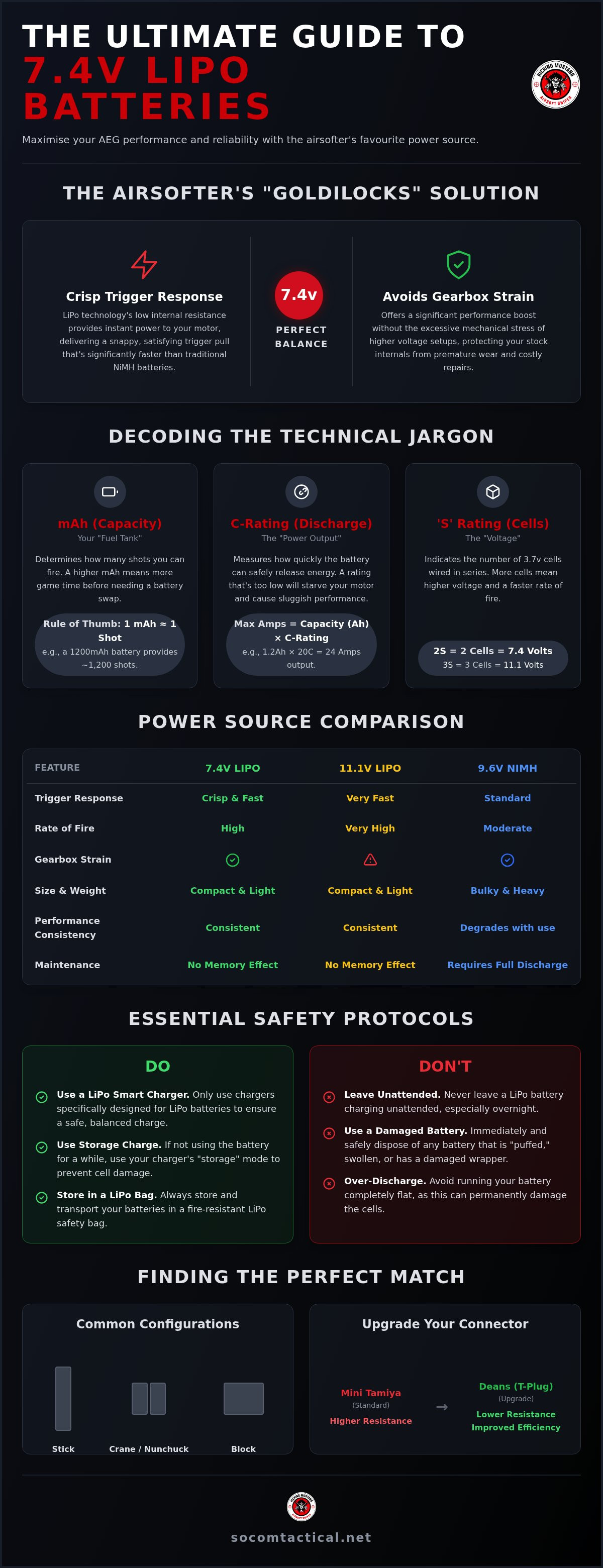
The shift from bulky Nickel Metal Hydride (NiMH) packs to lithium-based power has completely redefined field performance for the modern player. For most skirmishers in the UK, the 7.4v Lipo Battery represents the absolute sweet spot for reliability and punch. Technically, this is a 2-cell (2S) power source, where two 3.7v lithium polymer cells are wired in series to provide a nominal voltage of 7.4v. It's the safe entry point for any gearbox. While an 11.1v pack might offer a blistering rate of fire, it often demands reinforced internals to prevent mechanical failure. The 7.4v alternative delivers a crisp, snappy response that feels significantly faster than a traditional 9.6v NiMH, but without the risk of stripping your piston or burning out your motor on a stock build.
Voltage dictates the speed at which your motor spins, which in turn determines your rate of fire (RoF). However, voltage isn't the only factor at play. Because LiPo cells have much lower internal resistance than their predecessors, they can dump current into the motor far more efficiently. This means your first shot breaks faster, giving you a distinct advantage in close-quarters engagements. It's about operational readiness; you want a battery that responds the moment you pull the trigger, not one that sluggishly winds up the spring.
The Science of Lithium Polymer (LiPo) Technology
The fundamental chemistry of a Lithium-ion polymer battery allows for a much higher energy density compared to older technologies. This translates to more power packed into a much smaller physical footprint. One of the most significant benefits for the active player is the flat discharge curve. Unlike NiMH batteries, which lose power and slow down your rate of fire as they deplete, a LiPo maintains a consistent output until the very end of its cycle. You'll notice your AEG performs just as well on its last magazine as it did on the first, providing the consistency that our technicians at Socom Tactical Airsoft expect from high-tier builds.
Advantages Over Traditional NiMH Packs
Size is the most immediate win. We've all struggled to jam a large NiMH block into a tight handguard or a slim buffer tube. LiPo cells are incredibly compact, making them the perfect solution for modern, low-profile builds. Beyond the aesthetics, they offer a massive performance upgrade. Because there's no "memory effect," you don't need to fully discharge them before charging again. You can top them up between games without degrading the cell's lifespan. If you're looking to push your kit further, browse our range of parts and upgrades to ensure your gearbox is fully optimised for this modern power standard.
Understanding the Tech: mAh, C-Ratings, and Cells
Cracking the code on your battery label is the first step toward achieving operational readiness. When you pick up a 7.4v Lipo Battery, you'll see two primary numbers: the capacity (mAh) and the discharge rate (C). Think of the mAh as your fuel tank. A higher number means more shots before you're heading back to the safe zone for a swap. A common rule of thumb in the community is that 1mAh provides roughly one shot in a standard AEG. If you're running a 1450mAh stick battery, you can expect around 1,450 rounds of trigger time under normal conditions.
The "S" rating refers to the cell count. A 2S battery contains two cells, totalling 7.4v, while a 3S pack contains three, reaching 11.1v. This configuration isn't just about size; it's about the electrical "pressure" pushing through your motor. To calculate if your battery provides enough juice, multiply the capacity (in Amps) by the C-rating. For example, a 1.2Ah (1200mAh) battery with a 20C rating provides 24 Amps of continuous current. If your high-torque motor demands 30 Amps to cycle a heavy spring, an under-rated battery will struggle, heat up, and eventually fail.
Deciphering the C-Rating
The C-rating is often split into two figures: continuous and burst. Continuous is what the battery can handle safely for long periods, while burst is the maximum output for a few seconds. High-torque motors are particularly hungry during the initial cycle of the gearbox. If your C-rating is too low, the battery can't supply the current fast enough, leading to sluggish trigger response or the dreaded "LiPo puff." Always aim for a rating that exceeds your motor's peak draw to maintain long-term health. If you're unsure about your current setup, browsing our range of field-ready consumables can help you find a pack with the right overhead for your build.
Capacity and Skirmish Longevity
While 1450mAh is often the sweet spot for a day of skirmishing, environmental factors play a massive role. In the biting cold of a UK winter, chemical reactions inside the cells slow down, which can reduce effective capacity. Similarly, pulling a heavy M120 spring requires more energy per cycle than a standard M90. If you're a support gunner or a heavy-fingered rifler, you might need to carry spares or opt for a larger capacity block battery to ensure you don't run dry mid-engagement. Consistent performance is about matching your power source to your specific playstyle and the local conditions.
7.4V LiPo vs 11.1v and NiMH: Making the Right Upgrade
While the 9.6v NiMH battery remains a popular choice for those just starting out, it often acts as a bottleneck for your AEG's true potential. Upgrading to a 7.4v Lipo Battery provides a professional standard of performance that NiMH simply cannot match. Even though the nominal voltage is lower, the LiPo’s ability to maintain its discharge rate ensures your motor isn't struggling to pull back the piston. This results in a more responsive platform that feels lighter and more efficient during long days of travelling between objectives on larger sites.
The primary reason we advocate for the 7.4v option is its compatibility with standard, non-MOSFET gearboxes. High-voltage 11.1v batteries carry hidden costs; they generate significant electrical arcing every time you pull the trigger. Over time, this carbon buildup can fuse your trigger contacts together, leading to a "runaway gun" scenario. By sticking to 7.4v, you enjoy the benefits of lithium technology without the immediate need for a complete internal overhaul or expensive electronic upgrades.
The 11.1v Temptation: Risks and Requirements
The technicians at Socom Tactical Airsoft frequently handle repairs for AEGs that have been pushed too far, too soon. Using an 11.1v battery without a MOSFET or reinforced internals often leads to over-spin, where the gears rotate past their intended stopping point. In severe cases, this causes premature engagement, where the sector gear strikes the piston before it has fully reset, resulting in stripped teeth and a dead rifle. For most builds, the 7.4v remains the gold standard for long-term reliability and field-readiness.
Comparison Table: Battery Types at a Glance
Choosing the right power source involves balancing performance against mechanical stress. The table below outlines how the 7.4v Lipo Battery serves as the ideal all-rounder for the UK airsoft scene.
| Battery Type | Voltage | Trigger Response | Gearbox Stress | Maintenance |
|---|---|---|---|---|
| NiMH | 9.6v | Sluggish | Low | Moderate |
| LiPo | 7.4v | Crisp | Moderate | Low |
| LiPo | 11.1v | Instant | High | High |
Maintenance and Safety: Protecting Your Gear and Your Home
Owning a 7.4v Lipo Battery is a commitment to performance, but it also requires a disciplined approach to safety. These aren't like the alkaline batteries in your TV remote; they're high-energy density cells that can become volatile if mistreated. The golden rule is absolute: never leave a battery on charge unattended. Whether you're at home or in the safe zone, you must be present to monitor the process. It's the difference between a successful skirmish and a catastrophic fire. If a cell begins to fail during a charge cycle, early intervention is your only line of defence.
Charging Protocols for Longevity
You must use a dedicated LiPo balance charger to ensure every cell in your 7.4v pack remains at the same voltage. Standard chargers can't "see" individual cells, leading to dangerous imbalances. Equally important is monitoring your discharge during a game. If your trigger response feels sluggish or your rate of fire drops, stop immediately. Over-discharging a cell below 3.0v, which is 6.0v total for a 7.4v pack, often causes permanent chemical damage. Always charge your batteries inside a fire-retardant LiPo bag, keeping the wires clear and the bag placed on a non-flammable surface like a stone floor.
Safe Storage and Transport
When you're off the field, store your batteries in a cool, dry place away from flammable materials. Avoid leaving them in a hot car or a damp garage. For UK players, disposing of a dead LiPo requires a trip to a local recycling centre or a dedicated battery disposal point; never throw them in the household bin. Field etiquette is just as vital. Disconnect your battery whilst in the safe zone to prevent accidental discharges and ensure your kit remains a tool, not a hazard. To keep your equipment in peak condition, browse our full selection of LiPo batteries and smart chargers before your next engagement.
Finding Your Perfect Match: Configurations and Connectors
Selecting the right 7.4v Lipo Battery is as much about physical geometry as it is about electrical capacity. You could have the most powerful cell in the world, but if it doesn't fit within your stock tube or handguard, it's useless on the field. Most modern AEGs are designed with specific battery compartments in mind, and understanding these shapes is vital for operational readiness. At Socom Tactical, we've seen every possible configuration since 2009, from ultra-slim PDW builds to cavernous fixed stocks. Getting the fitment right ensures your wiring isn't pinched and your kit remains reliable during high-intensity movements.
Connectors: The Deans Revolution
The electrical connection between your battery and your gearbox is a critical performance bottleneck. While the Mini Tamiya was the industry standard for decades, it's increasingly viewed as a relic. The T-Plug, commonly known as Deans, offers approximately 50% less electrical resistance than the older Tamiya-style connectors. This lower resistance translates directly into a more efficient circuit, less heat buildup, and a noticeable boost in trigger response. If your rifle still uses the green plastic Tamiya plugs, we highly recommend an upgrade to standardise your kit. You can browse our parts and upgrades for connector swaps to bring your older RIFs up to the professional standard.
Physical Fitment Guide for Common RIFs
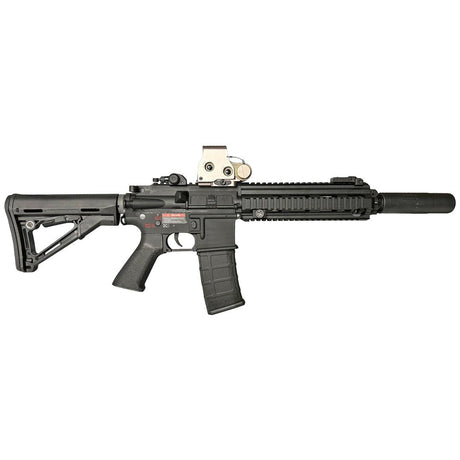
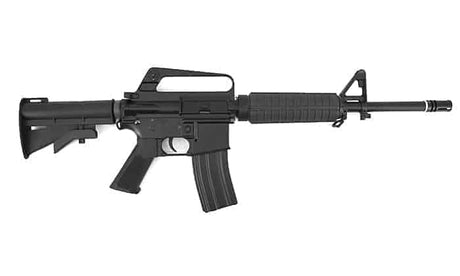
Fitting a battery into a tight space requires precision. For M4 and AR-15 platforms with adjustable stocks, a "Stick" battery is usually designed to slide directly into the buffer tube. If you use a Crane stock, you'll likely need a "Nunchuck" or "Crane" configuration, where the cells are split into two or three separate sticks that sit in the side compartments of the stock. This allows the stock to retract fully without crushing the cells or the wiring loom.
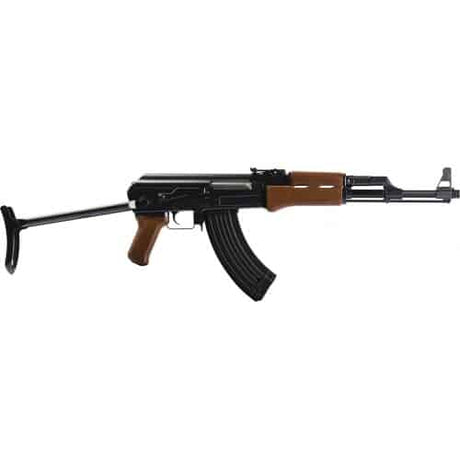
AK platforms present a different challenge. Most top-wired AKs require a very slim stick battery that sits beneath the dust cover, resting above the gearbox. For those running PDWs or using external PEQ boxes, a compact "Block" battery is often the only viable solution. Always measure your internal compartment's length, width, and height before purchasing. A battery that is even 2mm too long can prevent a stock from locking or a dust cover from closing properly. To ensure you have the latest tech for your next engagement, check out our latest arrivals for the perfect battery fit. Our team is always on hand at our retail outlet to provide face-to-face advice if you're unsure which configuration suits your specific build.
Ready for the Field: Master Your Power
Mastering your power source is the final step in ensuring your AEG is truly field-ready. By choosing a 7.4v Lipo Battery, you've opted for the perfect balance of crisp trigger response and mechanical longevity. You now understand how to decode C-ratings to protect your motor and why a storage charge is essential for preventing the dreaded LiPo puff. These aren't just accessories; they're the lifeblood of your kit. Consistency on the field starts with the energy that drives every cycle of your gearbox.
At Socom Tactical, we've provided expert advice since 2009. Our team consists of airsoft veterans who only stock field-tested gear. Whether you need a high-capacity nunchuck for a crane stock or full technical support for connector swaps to Deans, we're here to help you optimise your setup. Don't let a sluggish battery compromise your performance during a high-stakes engagement. Reliability is the foundation of every successful extraction.
Upgrade your power with our range of LiPo batteries and smart chargers and head to your next skirmish with total confidence in your equipment. See you on the field.
Frequently Asked Questions
Can I use a 7.4v LiPo in any airsoft gun?
Yes, a 7.4v Lipo Battery is compatible with almost every modern AEG currently on the market. Unlike higher voltage 11.1v alternatives, it doesn't require an internal MOSFET to protect your trigger contacts from electrical arcing. It's the standard recommendation for stock builds where you want improved performance without risking internal damage. If your rifle currently runs on a 9.6v NiMH, switching to a 7.4v LiPo is a direct, safe upgrade.
How long does a 7.4v LiPo battery take to charge?
Charging times vary based on the capacity of the cells and the output of your smart charger. Typically, a standard 1450mAh pack will take between 45 and 90 minutes to reach full capacity when using a balance charger at a 1A or 2A rate. Always monitor the progress and never leave the unit unattended whilst charging. Slower balance charging is always better for the long-term health and stability of the cells.
What is the difference between a 2S and 3S LiPo?
The "S" rating denotes the number of individual cells wired in series within the pack. A 2S battery contains two 3.7v cells, providing a total of 7.4v, while a 3S battery uses three cells to reach 11.1v. Higher cell counts increase the motor's RPM and your rate of fire, but they also place significantly more stress on your gearbox's internal components. For most UK skirmishers, the 2S configuration is the reliable, professional choice.
How do I know when my LiPo battery is running low?
You'll notice a distinct drop in trigger response and a slower rate of fire as the voltage dips. However, waiting for performance to degrade is risky, as discharging below 3.0v per cell can cause permanent chemical damage. We recommend using a LiPo alarm that plugs into the balance lead; it provides an audible warning the moment your cells hit the safety limit, ensuring you can swap out before any damage occurs.
Why is my LiPo battery swelling or getting hot?
Swelling, or "puffing," is usually caused by internal gas buildup following an over-discharge, over-charge, or physical impact. If your 7.4v Lipo Battery feels hot to the touch during use, your motor might be drawing more current than the C-rating can safely provide. A swollen battery is a fire hazard and should be retired immediately. Do not attempt to charge it; instead, dispose of it safely at a local recycling centre.
Do I need a special charger for 7.4v LiPo batteries?
Yes, you must use a dedicated LiPo balance charger. Traditional NiMH chargers don't have the circuitry required to monitor individual cell voltages or manage the specific charging curve that lithium chemistry demands. A proper smart charger ensures each cell reaches exactly 4.2v at full capacity, preventing imbalances that lead to instability. Using the wrong charger is the most common cause of battery-related accidents, so always prioritise high-quality charging equipment.
Can I leave my LiPo battery in my airsoft gun overnight?
No, you should always disconnect your battery once you've finished playing. Some AEGs with active braking MOSFETs or electronic trigger units (ETUs) continue to draw a tiny amount of current even when the gun isn't being fired. This parasitic drain can pull the cells below the 3.0v safety threshold overnight, effectively "killing" the battery. Disconnecting it is a simple habit that protects your investment and ensures your kit remains in a state of operational readiness.
Is a 7.4v LiPo better than a 9.6v NiMH?
In almost every performance metric, the LiPo is superior. A 7.4v LiPo provides a faster trigger response and a more consistent discharge curve than a 9.6v NiMH due to its lower internal resistance. It also offers a much better size-to-power ratio, making it easier to fit into slimline buffer tubes. Unlike NiMH, there's no memory effect, so you can top up your charge between games without worrying about reducing the battery's lifespan.