Your first day on the airsoft field shouldn't be defined by how much you spent on a high-end rifle, but by how well you've prepared for the engagement. It's completely natural to feel a bit of "new person" anxiety when you're staring down a line of seasoned veterans in full tactical kit. You're likely worried about picking the wrong AEG or getting tangled in the legal weeds of UKARA and the VCRA. We've all been there, standing in the safe zone wondering if our eye protection is up to scratch or if we're about to be the first one out in every skirmish.
This guide provides the essential airsoft tips for new players to help you move from a nervous recruit to a field-ready operator without wasting money on subpar gear. You'll master the fundamentals of the sport, from understanding the legalities of RIF ownership to tactical advice that ensures you survive your first contact. We're laying out a clear roadmap for your first few games, ensuring you understand exactly how to secure your UKARA defence and which equipment will actually serve you when the BBs start flying. Mental composure is just as vital as your gear, and many find that the wellness products and grounding crystals from Spirit of the Earth can help manage those first-game jitters. Get ready to step onto the field with the confidence of a veteran.
Key Takeaways
- Discover why renting for your first three games is the smartest move for your wallet and how these essential airsoft tips for new players ensure you pick the right site.
- Navigate the complexities of the VCRA and the UKARA database to understand exactly how to legally purchase your first Realistic Imitation Firearm (RIF).
- Learn why the Automatic Electric Gun (AEG) remains the undisputed king of the British skirmish field, offering unmatched reliability through cold and damp winters.
- Master the unwritten rules of the safe zone and the skirmish field, from the importance of calling your hits to effective squad communication.
- Organise your first tactical loadout with precision by prioritising functional gear like plate carriers or chest rigs that suit your specific playstyle.
Your First Airsoft Skirmish: Preparation and the Rental Experience
Your first day on the field is a high-octane mix of adrenaline and learning curves. One of the most vital airsoft tips for new players is to embrace the rental experience for your first three outings. Most UK sites provide a robust package including a reliable AEG, a high-capacity magazine, and full-face protection. Renting allows you to test different playstyles without a massive upfront investment. It also ensures you meet the minimum game requirement for UKARA registration before you commit to buying your own gear. Following these airsoft tips for new players will ensure your first day is about the action, not equipment failure.
Choosing the right venue is equally important. Look for sites with a strong reputation for safety and fair play. A professional site will always conduct a thorough safety briefing and use a chronograph to test every rifle's power output. If you are still asking What is Airsoft? in a practical sense, the staff at these venues are seasoned veterans who can guide you through the local rules. You can find more details on what to expect in our airsoft FAQ section. Expect a day that starts with registration, moves into briefing, and features several objective-based rounds with a lunch break in between.
What to Wear for Your First Game
You don't need a full set of tactical camouflage to be effective. A thick hoodie and durable cargo trousers are your best friends; they provide enough protection from BB impacts whilst remaining breathable. The most critical item is footwear. Avoid trainers at all costs. Airsoft environments are often rugged, muddy, and uneven. A pair of sturdy boots with good ankle support will protect you from trips and sprains during a heavy sprint. Layer your clothing to stay warm whilst remaining mobile during the unpredictable British weather.
While preparing for the outdoors involves choosing the right tactical gear, creating a comfortable space to relax after the game is just as important; you can check out MIMO Living for premium outdoor furniture that blends modern design with natural serenity.
Essential Non-Tactical Gear
High-intensity rounds will drain your energy faster than you expect. Pack at least two litres of water and bring plenty of high-carb snacks to maintain your stamina throughout the day. You should also bring a spare change of clothes and a towel for the journey home. You will get muddy. You will get sweaty. For a comfortable and humorous change of clothes, Sasshole Clothing offers bold graphic designs that are perfect for the drive back. A simple microfibre cloth is also a game-changer for gently clearing fogged goggles without damaging the anti-fog coating or scratching the lens. Managing your physical comfort is just as important as managing your ammunition.
Safety First: Eye Protection and British Airsoft Law
Safety isn't just a suggestion in airsoft; it's the foundation of the entire community. One of the most critical airsoft tips for new players is to never cut corners on eye protection. Whilst you can survive a game with a budget chest rig, your eyesight is irreplaceable. Every reliable site in the UK enforces strict standards because they understand the risks involved. Beyond physical safety, you must also respect the legal framework that allows our hobby to exist. The Violent Crime Reduction Act (VCRA) 2006 governs how we buy and own our equipment, making it vital to know your RIFs from your IFs.
Under UK airsoft law, airsoft guns are classified based on their appearance and power output. If you don't have a valid "defence," such as being a registered skirmisher, you can only purchase an Imitation Firearm (IF). These are "two-tone" guns, meaning at least 51% of the surface is a bright, non-military colour like blue or orange. Once you've proven you're a regular player, you can acquire a Realistic Imitation Firearm (RIF). This distinction is a cornerstone of the UK scene, ensuring that high-performance gear stays in the hands of responsible hobbyists.
Choosing Ballistic Eye Protection
Don't just grab the cheapest pair of goggles you find online. You need gear rated to EN166B or ANSI Z87.1 standards to ensure it can withstand high-velocity impacts. Polycarbonate lenses offer the best protection against BB fragments, though they can struggle with fogging in the humid British climate. Mesh masks are a popular alternative because they never fog, but they don't protect against shattering BBs as effectively. Investing in quality ballistic eye protection is the single best purchase you'll ever make for your kit bag.
The Path to UKARA Registration
The UKARA database is the most common way to prove your defence for buying a RIF. To qualify, you must play at least three games at a registered site over a period of no less than 56 days. This process proves you're a dedicated player rather than someone looking for a "cool toy." If you're eager to get started before your 56 days are up, contact us to discuss our two-tone painting services. Remember that legal ownership also means legal transport. Always carry your gear in a secure gun bag or case; never let it be visible in public. Keeping your gear out of sight maintains the public's trust and keeps you on the right side of the law.
Choosing Your First Airsoft Gun: Why the AEG is King
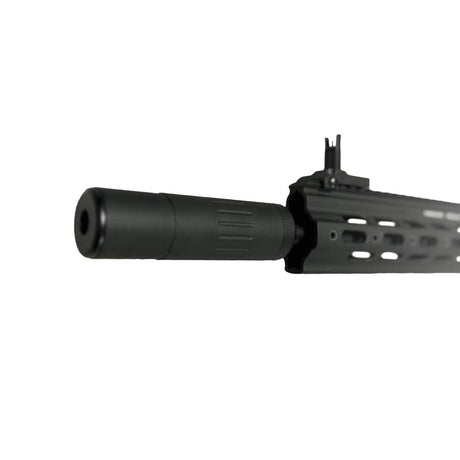
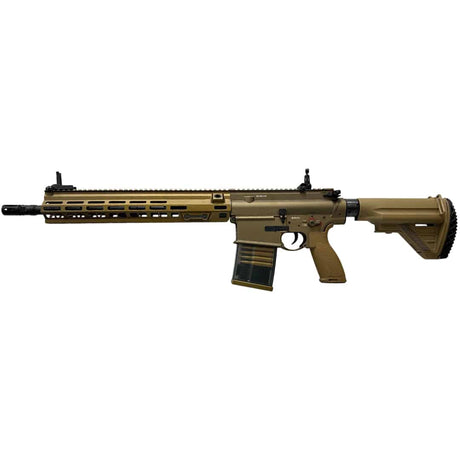
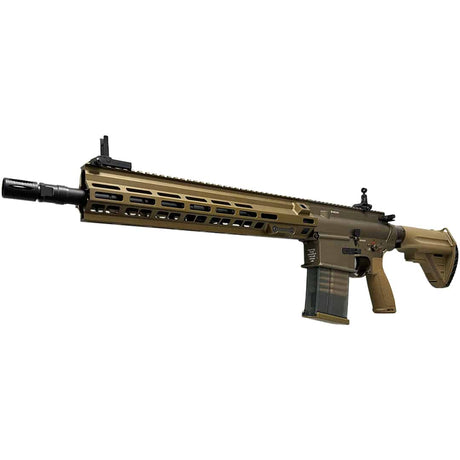
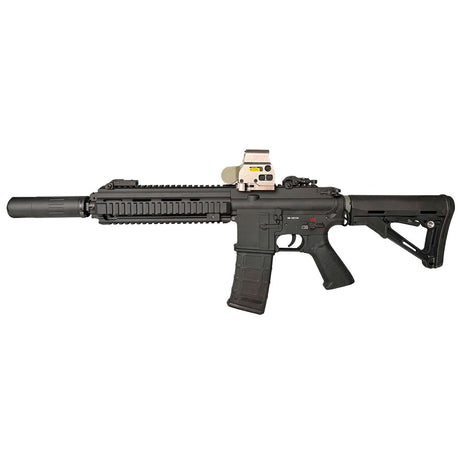
Selecting your first primary weapon is a defining moment. One of the most vital airsoft tips for new players is to prioritise reliability over aesthetic flair for your first purchase. Whilst gas blowback rifles offer a satisfying recoil, they often fail during the damp, freezing conditions of a typical British winter due to the "cool-down" effect. AEGs (Automatic Electric Guns) are the undisputed backbone of the hobby because they use a battery-powered motor to drive a gearbox, ensuring consistent performance regardless of the external temperature.
If you're still researching what is airsoft in terms of mechanical function, think of an AEG as a high-performance power tool built for precision. These rifles are powered by either NiMH (Nickel Metal Hydride) or LiPo (Lithium Polymer) batteries. For beginners, NiMH packs are rugged and easy to charge, whilst LiPo batteries offer a faster rate of fire and better trigger response but require a dedicated smart charger to remain safe. Pairing your rifle with "High-Cap" (high capacity) magazines is also a smart move. These mags hold hundreds of rounds and use a manual winding wheel, allowing you to stay in the fight longer without carrying a dozen spare magazines.
Top Platform Choices for Beginners
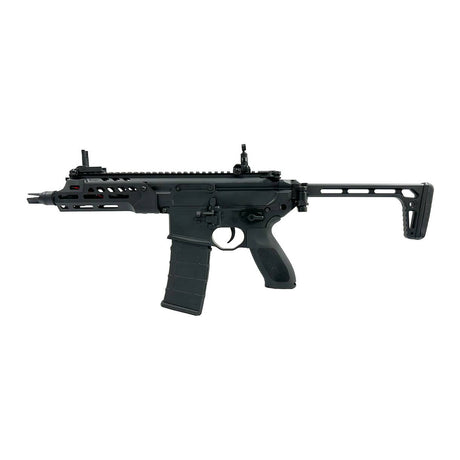
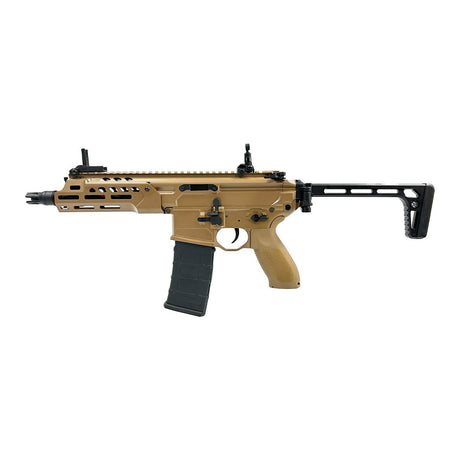
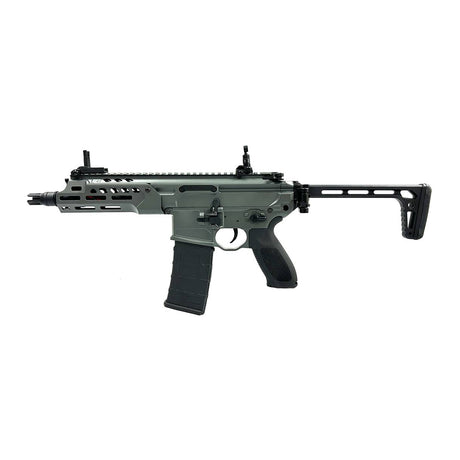
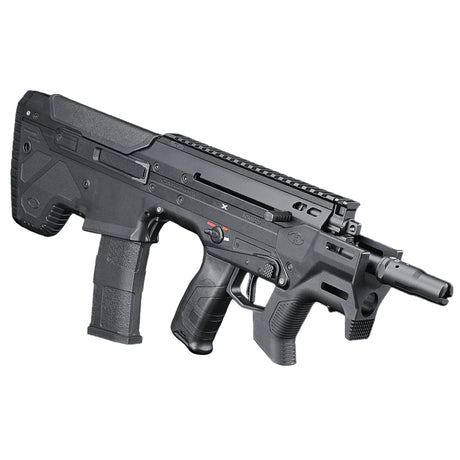
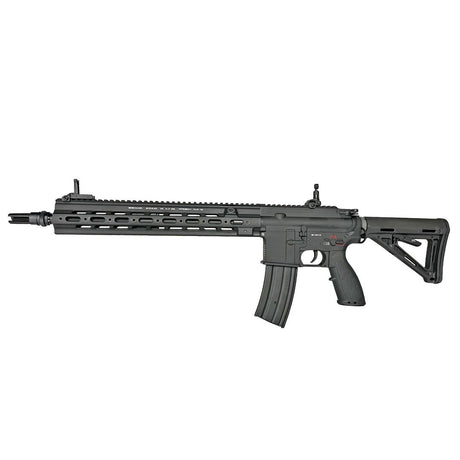
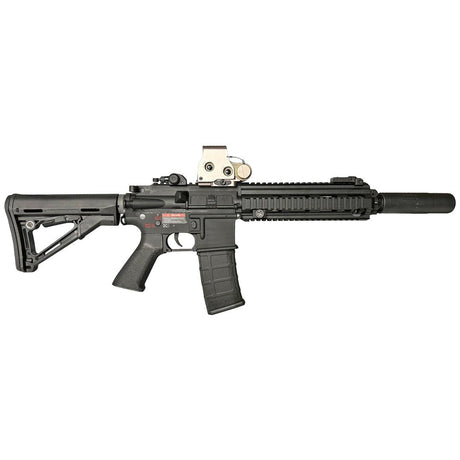
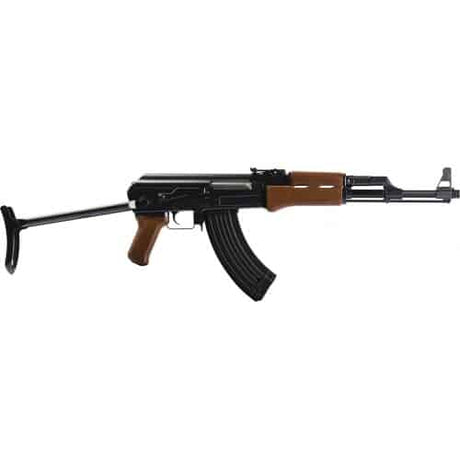
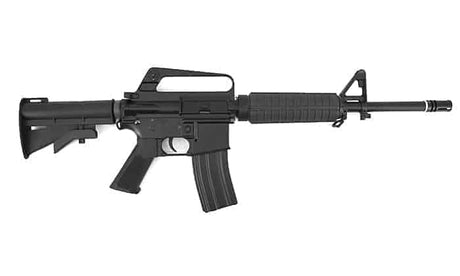
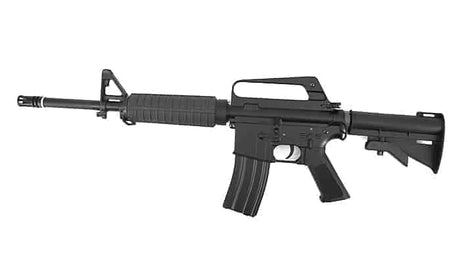
The M4 (AR-15) platform is the gold standard for new recruits. Its popularity means you'll have access to endless customisation options and a massive pool of spare parts if something goes wrong. If you prefer something more rugged, the AK series offers a distinct aesthetic and legendary durability. Both platforms are well-supported by the community and site technicians across the UK. You can explore our full range of AEG Airsoft Rifles to find a platform that feels right in your hands.
Essential Consumables
Your rifle is only as good as the ammunition you feed it. For most starter AEGs, 0.25g BBs are the "sweet spot," providing a perfect balance between range and wind resistance. Never buy "cheap" BBs from high-street toy shops; these often have visible seams or air bubbles that can shatter inside your hop-up unit or precision inner barrel, leading to costly repairs. We recommend using BLS Airsoft BBs for their consistent spherical shape and polished finish, which ensures your rifle maintains its accuracy round after round.

Field Craft 101: How to Survive Your First Day
Mastering your AEG is only half the battle. These airsoft tips for new players focus on the "soft skills" and tactical habits that keep you in the game longer and earn you respect amongst the local community. Airsoft is fundamentally a game built on honour. If a BB strikes any part of your body, clothing, or gear, you're out. Raise your hand, shout "HIT!" clearly, and move towards your respawn point or the designated dead zone. Never ignore a hit, even if you're unsure. It's always better to call a "dodgy" hit than to be labelled a cheat by your peers. Similarly, manage your own trigger finger to avoid overkill. Once an opponent signals they're hit, stop firing immediately.
Effective communication is your greatest tool on the skirmish field. You don't need to scream across the woods; short, sharp directions like "Contact, front!" or "Moving!" are far more effective for squad coordination. Avoid tunnel vision by keeping your head on a swivel. Beginners often forget to check their six, leaving them vulnerable to a simple flank. When approaching corners, use the "slicing the pie" technique. This involves moving in a semi-circle away from the corner, exposing tiny slivers of the room at a time to clear threats whilst minimising your own silhouette.
Beyond tactical skill, the social side of the sport is a huge draw, with many teams opting to create custom trading cards to commemorate their squad members and document their growth from recruits to veterans.
Etiquette and Behaviour
The most important rule for hit players is that dead men don't talk. Once you've been struck, you're a ghost. Do not shout enemy positions to your teammates or point out where the sniper is hiding as you walk off. When you return to the safe zone, maintain a professional attitude by ensuring your magazine is out and your selector is on safe. If a dispute occurs on the field, do not argue with other players. Involve a marshal immediately; they're the final authority and are there to ensure the game remains fair and fun for everyone. This level of integrity is what makes the community thrive, much like how collective responsibility drives citizen-led initiatives; if you're curious about such movements, you can discover Aux Armes Citoyens ! and their commitment to member engagement.
Basic Tactical Movement
When using cover, don't "crowd" the object. Standing a step back from a wall or tree gives you a better angle of fire and more room to react if you need to reposition. Use the "low ready" position whilst moving between objectives. This involves keeping the rifle stock firmly in your shoulder with the muzzle pointed at a 45-degree angle towards the ground. It's the fastest way to bring your sights on target whilst keeping your muzzle clear of your teammates' heads. Suppressive fire is the act of maintaining a high volume of fire onto an enemy position to pin them down, allowing your teammates to advance safely.
Get field-ready for your next engagement by browsing our professional-grade tactical clothing and gear today.
Beyond the Basics: Organising Your Tactical Loadout
Once you've secured your first rifle, the temptation to buy every piece of gear in the shop is intense. One of the most practical airsoft tips for new players is to prioritise functional utility over aesthetic "cool factor" during your first few months. You don't need a sidearm yet. Whilst a gas blowback pistol looks fantastic in a holster, you'll rarely use it in a standard skirmish. That money is far better spent on extra magazines, high-quality BBs, or a more comfortable load-bearing system. Focus on building a kit that supports your primary weapon and keeps you mobile on the field.
Choosing between a chest rig and a plate carrier is your first major tactical decision. Chest rigs are lightweight, highly breathable, and ideal for the high-intensity movement required in British woodland sites. They're perfect for players who value speed and want to stay cool during summer games. Plate carriers offer a more "operator" look and provide extra protection against close-range stings, but they can be bulky and restrictive. Whichever you choose, ensure it has enough MOLLE space to organise your pouches for easy access under pressure. A well-organised kit ensures you aren't fumbling for a fresh mag whilst the enemy is advancing on your position; many players also use durable paint markers from poscart.com.au to clearly label their magazines and batteries, preventing costly mix-ups in a crowded safe zone.
Essential Tactical Accessories
A 2-point sling is the most underrated piece of equipment in the hobby. Holding a three-kilogram rifle for eight hours will exhaust your arms, leading to sloppy aim and fatigue. A sturdy sling allows you to drop your rifle to a secure "low ready" whilst keeping your hands free for objectives or hydration. You'll also need at least two spare magazines and a reliable speedloader to stay in the fight. Without these, you'll find yourself retreating to the safe zone every twenty minutes just to reload. You can find these essentials and more by browsing our range of Airsoft RIF Accessories to enhance your field-readiness.
Long-term Maintenance
Keeping your gear in peak condition is what separates the veterans from the casuals. Cleaning your precision inner barrel after every game is the simplest way to maintain your accuracy; a tiny bit of dirt can cause your BBs to fly wildly off-target. Battery care is equally vital. Never leave your LiPo batteries completely flat or fully charged for long periods, and always use a smart charger to prevent cell damage. If your gearbox starts making unusual noises or your trigger response drops, don't try to "bodge" it yourself. Utilise professional Technical Labour and Repair services to ensure your AEG remains reliable for years to come.
Deploying for Your First Skirmish
Stepping into the world of airsoft is about more than just picking up a rifle; it's about joining a community built on honour and tactical precision. By following these airsoft tips for new players, you've already cleared the biggest hurdle: understanding the legal landscape of the UK scene. Remember to prioritise your UKARA registration through regular play and focus on mastering your AEG before worrying about complex sidearms. Success on the field comes from immediate field-readiness and reliable gear—including the health supplements and dry foods often packaged by specialists like simplepack.co.uk—rather than just the aesthetic of your loadout.
We've been providing expert technical support since 2009, helping recruits transition into seasoned operators with ease. Whether you need a professional two-tone painting service to start playing immediately or comprehensive UKARA support to secure your first RIF, we're here to guide every step. Our mission is to ensure your equipment never fails you in the heat of a high-stakes engagement. Ready to start your journey? Explore our New Products and gear up today! See you on the field.
Frequently Asked Questions
How much does it cost to start airsoft in the UK?
A full-day rental package typically costs between £40 and £80, which covers your site entry, equipment hire, and a starting supply of BBs. When you decide to purchase your own kit, your main investment will be a reliable AEG and ballistic eye protection. The total setup cost depends entirely on the specific performance level and tactical gear you select for your loadout.
Do I need a license to buy an airsoft gun?
You don't need a specific license to own an airsoft gun, but you must have a valid defence to purchase a Realistic Imitation Firearm (RIF). The UKARA database is the industry standard for proving you're an active skirmisher at a registered site. Without this defence, you're legally restricted to purchasing two-tone imitation firearms that are at least 51% a bright, non-military colour.
Does getting hit by an airsoft BB hurt?
Getting hit feels like a sharp sting or being flicked with a rubber band, but protective gear makes it very manageable. Following basic airsoft tips for new players, such as wearing thick hoodies or mesh masks, will ensure you stay comfortable during intense skirmishes. Most players find the adrenaline of the game far outweighs any minor, temporary discomfort from a hit.
What is the difference between a RIF and a two-tone gun?
A Realistic Imitation Firearm (RIF) is indistinguishable from a real firearm, whilst a two-tone gun is painted in a bright colour like blue or orange. Two-tones are available to anyone over 18 without a specific defence, making them the entry point for many. RIFs require proof of active skirmishing to ensure they're owned and used responsibly within the established community.
Can I play airsoft if I am under 18?
Players under 18 can participate in airsoft at most UK sites provided they have parental consent and proper supervision. Whilst minors cannot legally purchase an airsoft gun, they can use site rentals or be gifted one by an adult. Always check the specific age requirements and insurance policies of your local site before booking your first session.
How do I get a UKARA number?
Obtaining a UKARA number requires you to play at least three games at the same registered site over a period of no less than 56 days. Once you've completed these games, the site official will validate your application and add you to the national database. This registration acts as your legal defence for purchasing RIFs from reputable retailers across the country.
What should I look for in my first airsoft rifle?
Look for an Automatic Electric Gun (AEG) on an M4 or AK platform to ensure you have maximum compatibility with community spare parts and magazines. You should focus on rifles with metal gearboxes and adjustable hop-up units for consistent performance on the field. These technical specs are central to most airsoft tips for new players seeking long-term reliability and ease of maintenance.
Can I use my airsoft gun in my back garden?
Using an airsoft gun in your garden is legal provided no BBs leave your property boundary and you don't cause public alarm or distress. However, we strongly advise against it if your garden is overlooked by neighbours or public paths. The police take reports of firearms very seriously, and a simple misunderstanding could lead to a high-stakes armed response.