What if an HPA starter kit looks complete but still won’t work with your replica? HPA Starter kits can mean different things: some bundles pair a tank, regulator and air line, whilst a full setup also needs a compatible engine or a dedicated HPA rifle. It’s easy to overlook that distinction when comparing bundles or putting a system together.
If you’re unsure which parts are essential or whether an engine and air system will suit your replica, start with the platform you’re running. Every component needs to work with the others, and the right setup depends on your replica and how you play.
This guide explains what each core component does, how electro-pneumatic and mechanical engines differ, and what to check before choosing. You’ll also see how to compare a bundled air system with a build-your-own setup, so you can make a practical choice based on your replica, play style and existing equipment.
Key Takeaways
- Start with your exact replica model and operating platform. Engine, adapter, magazine and connection fitment can all depend on it.
- Check what a bundle actually contains before comparing it with a build-your-own setup. The label alone doesn’t show whether it covers your needs.
- Choose HPA Starter kits around your replica, intended role and equipment you already own.
- Plan tank portability, air-line routing and where your gear sits before settling on a layout for play.
- Turn your shortlist into a usable setup by identifying the platform, listing the required parts, verifying fitment and reviewing site rules.
What Does an HPA Starter Kit Include? Understand the Core Components
An HPA starter kit is a set of components that supplies and controls compressed air for a compatible airsoft replica. A typical setup uses an HPA engine or adapter, an air tank, a regulator and an air line, but bundle contents vary. Your replica’s platform determines which engine or adapter interface will work, so check that the parts match the gun before choosing a kit.
Unlike a self-contained power source, an HPA system routes air from a separate tank to the replica. The connections between components are therefore central to the setup. A general overview of how HPA fits into the wider range of airsoft gun types can help put the platform in context, but the individual parts still need to work together as a system.
What does each part of an HPA setup do?
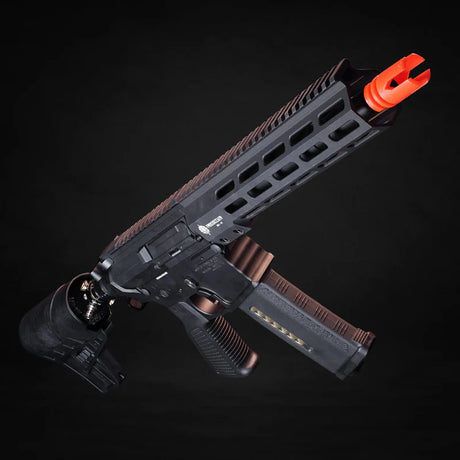
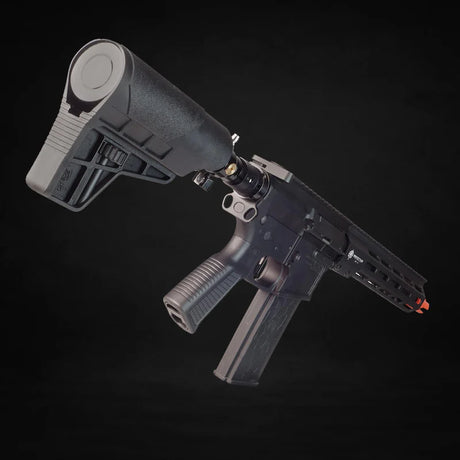
The engine replaces or works with the replica’s firing mechanism to direct air into the firing cycle. An adapter may instead connect an external air supply to a compatible platform, such as a gas-powered replica. The right option depends on the replica and its design.
The tank stores the compressed air. A regulator controls the pressure delivered from the tank to the system, whilst the air line carries that regulated supply between the regulator and replica. The parts form a chain: tank, regulator, line, then engine or adapter. A mismatch or fault at any connection can stop the setup working as intended.
Some electronic engines also use a fire control unit (FCU) to manage the firing cycle and typically need a small battery to power it. Mechanical engines don’t use the same electronic control arrangement, so not every HPA build needs an FCU battery. The platform and engine type determine the requirements.
Which parts are essential, and what may be optional?
Think about what each component does, rather than relying on the word “kit”. The replica needs a compatible way to receive air, a source of compressed air, pressure control and a connection between the supply and the gun. Those roles are commonly filled by an engine or adapter, tank, regulator and line, although the exact configuration can differ.
- Platform-specific parts: An engine, adapter or magazine interface depends on the replica’s operating system and design. These parts aren’t interchangeable by default.
- System-dependent items: Electronics and a battery may be needed for an electronic engine, but they aren’t universal requirements across HPA platforms.
- Accessories: Items that help organise or carry the air system can be useful, but they don’t replace the components that supply, regulate and route air.
Before choosing among HPA Starter kits, compare the bundle contents with the parts your replica needs. A tank-and-line bundle may cover the air supply but not include an engine or adapter. An engine package may leave the tank, regulator or line to source separately. The right setup is the combination that fits your platform and connects correctly, not simply the bundle with the most items.
HPA Kit Compatibility: Match the Engine and Air System to Your Replica
Check replica-platform compatibility before choosing an HPA kit. A bundle can contain the right types of components and still be unsuitable for your specific replica, magazine or connection points. Start with the gun, then trace the route from the HPA system to the replica instead of relying on a bundle name or broad platform description.
Start with the replica and its HPA conversion route
Identify the exact make and model, then establish how the replica operates. An AEG conversion may use a drop-in HPA engine, whilst a gas-powered replica may use an adapter-based route. These approaches aren’t interchangeable: receiver, internal layout and feeding system can differ between replica families. For an overview of platform types, explore Socom Tactical Airsoft’s airsoft guns range.
- Write down the exact replica model. Use the model name and version, not just “M4”, “pistol” or “AK”. Variants within a family can differ in their internals and fitment.
- Identify its operating platform. Establish whether it’s an AEG, gas blowback replica or another type. Then determine whether the intended conversion uses an engine, adapter or another platform-specific interface.
- Match the engine or adapter. Compare the manufacturer’s compatibility information with the exact replica. Check the magazine and feeding arrangement too, as an adapter that fits the replica may still depend on a particular magazine setup.
- Verify every air-system connection. Compare the tank, regulator and line specifications, including their connection types, with the relevant manufacturer information. Don’t assume components from different bundles will connect simply because they’re all intended for HPA.
- Review the complete parts list. Confirm what’s included and identify anything else needed to connect the chosen system to the replica. Note which fitment details are confirmed and which still need verification.
Check the air-system connections and included parts
Compatibility is a chain, not a single tick-box. The engine or adapter must suit the replica, the magazine arrangement must work with that interface, and the regulator and line must connect as specified. Read the manufacturers’ compatibility notes for each component, not just the kit listing. If a model version or connection detail is unclear, verify it against the relevant specifications rather than guessing.
This can prevent a common mismatch: selecting a kit described for a familiar replica family, then finding that a particular variant or magazine arrangement isn’t covered. Before comparing HPA Starter kits, record the model, conversion route, magazine type and air-system connections. That gives you a clear basis for checking fitment and makes missing information easier to spot.
Complete HPA Starter Kit or Build Your Own? Compare the Trade-Offs
A complete kit can simplify the shopping process, whilst selecting components individually gives you more control. Neither route guarantees a working setup by itself. Your choice depends on how clearly you understand your replica’s conversion route, which parts you already have and how much compatibility research you’re prepared to do.
| Consideration | Complete kit | Build your own |
|---|---|---|
| Component choice | Parts are grouped for a stated setup or platform, with selection largely made for you. | You choose each component to suit your known replica and requirements. |
| Research effort | Can reduce the initial comparison work, but you still need to read the contents and compatibility notes. | Requires you to research how every selected part connects and works with the rest. |
| Fitment checks | Verify the stated platform and check for any required parts that aren’t included. | Check each interface and connection across the full system before settling on your choices. |
| Best suited to | Players who want a grouped starting point and whose replica matches the stated setup. | Players with a defined platform, existing equipment or specific component preferences. |
Use the table to guide your decision, not as a shortcut around compatibility checks. “Complete” can describe a particular bundle of air-system parts without meaning it includes everything needed for every replica.
When can a complete kit make sense?
A bundle can be a convenient starting point if it’s described for your platform or intended setup. It lets you review a grouped selection rather than assembling every part from scratch. Before treating it as complete, read the contents list and compatibility notes. Check what the package covers, what it leaves out and whether the stated fitment applies to your exact replica. Convenience doesn’t replace this comparison.
When is a component-by-component build worth considering?
Choosing parts separately can suit players who know their platform, have compatible equipment or want to shape the setup around a particular replica. The trade-off is more research: you’re responsible for checking each component and connection against the others rather than assessing a grouped selection. Thinking through airsoft parts and upgrades alongside your replica can help clarify the wider platform decisions involved.
For a build-your-own route, keep a simple parts record as you compare options:
- Platform: the exact replica and conversion route.
- Air system: the selected tank, regulator and line, with their stated connections.
- Remaining requirements: any platform-specific interface or other component needed to complete the setup.
Compare that record with a bundle’s contents. If it covers the parts you need and its compatibility information matches your replica, the grouped option may suit. If it contains items you don’t need or leaves a key fitment question unanswered, choosing components individually may give you a clearer path. Judge HPA Starter kits by what they include and how well those parts suit your replica, not by the bundle label alone.

Choose HPA Starter Kit Components for Your Play Style and Setup
A practical setup starts with three things: your replica platform, the role you play and the equipment you already own. A compact loadout for moving through tight spaces may call for a different tank position and line route from a setup where familiar handling matters more than keeping your profile minimal. Treat fitment as a requirement and layout as a preference you can refine around how you play.
Match the setup to the way you play
Before comparing HPA Starter kits, decide what you want to keep and what you’re willing to change. Are you committed to a particular replica, building around a specific platform or aiming for a compact loadout? Note any compatible air-system equipment you already have, then identify what the new setup must add. This keeps the decision grounded in your actual kit rather than a feature list alone.
Tank placement and air-line routing are practical layout choices, not universal rules. A tank carried on your back may suit one player’s gear arrangement; another may prefer a different position to preserve movement or access to other equipment. Whichever layout you consider, check that the line reaches the replica comfortably and doesn’t snag, pull awkwardly or interfere with normal handling. Try the arrangement with your full loadout in place, not just whilst holding the replica on its own.
Keep performance expectations realistic. Results depend on the replica, the chosen configuration and the limits set by the site where you play. A component’s advertised capability doesn’t override site rules or guarantee a particular result in your complete setup. If a product lists operating pressures, connection details or other specifications, check them against the manufacturer’s current documentation before choosing.
Plan setup, safety and routine checks
HPA equipment should be part of your pre-game preparation. Follow the tank and regulator manufacturers’ instructions for operation, handling and inspection, and stay within the stated limits for the specific components you own. Don’t rely on an old product description or assumptions based on a similar-looking part. Use the current documentation for that item.
Site rules still apply to an HPA-powered replica. Review the venue’s requirements and chronograph procedure before play, then make sure the configured replica is within the limits set for your game. Because an HPA setup can be adjusted, include power checks in your field preparation rather than treating them as a one-off step when assembling the system.
- Compatibility: Confirm the replica and components suit one another.
- Preference: Choose a tank position and line route that work with your loadout.
- Preparation: Follow current manufacturer instructions and the site’s rules before play.
If you’re weighing up changes to your replica alongside the air-system setup, explore Socom Tactical Airsoft’s airsoft upgrades and technical support as part of your platform planning.
Your Next Steps: Turn an HPA Kit Shortlist into a Usable Setup
A shortlist is a plan, not a field-ready system. Before choosing HPA Starter kits, work through the setup in order: identify the replica platform, list the required components, verify every connection and fitment detail, then review the rules at the site where you intend to play. This turns a set of product options into a configuration you can assess as a whole.
Use a final pre-purchase checklist
- Identify the platform. Record the replica’s exact make and model, then establish whether your route uses an HPA engine, an adapter or another platform-specific interface.
- List the required parts. Include the engine or adapter route and magazine interface, along with the air-system components needed for your configuration. Count equipment you already own only if it’s compatible with the planned setup.
- Check the system connections. Compare the tank, regulator and line specifications as one connected system. Review the manufacturers’ documentation for each part rather than assuming components grouped together will suit your replica.
- Review instructions and site rules. Follow current component documentation for setup and use, then review the intended site’s requirements and chronograph procedure before play.
Take time over these checks. A shopping shortlist tells you what you might buy; a usable setup has the right parts for the replica, verified connections and a configuration checked against the relevant site rules. An order confirmation or bundle description alone doesn’t show that the assembled system is ready to use.
Get help with the wider airsoft platform
Platform choice sits at the centre of the decision. If you’re still weighing up which type of replica suits your role, browse the airsoft guns selection as part of your research. Then consider how an HPA conversion or adapter route fits with the replica and upgrades you have in mind.
Socom Tactical Airsoft sells airsoft guns, parts and upgrades, and provides technical maintenance and upgrade services. Its wider platform range can help you consider how your replica choices and planned changes fit together, whilst keeping the specific compatibility checks for your HPA configuration in view.
For help considering your replica and intended setup, contact the Socom Tactical Airsoft team to discuss your airsoft setup and the platform decisions you’re weighing up.
Make Your Next HPA Setup a Confident Choice
Turn your plan into a setup you can handle, inspect and use with confidence. Treat fitment checks, manufacturer instructions and site requirements as part of the build, not as last-minute admin. This gives you a sound basis for deciding which HPA Starter kits suit your replica and what needs attention before game day.
Socom Tactical is an independent specialist retailer selling airsoft guns, parts and upgrades, and providing technical maintenance and upgrade services. Keep your replica and intended use at the centre of the conversation, so your next decisions support the platform you want to run.
Explore Socom Tactical’s airsoft range and take the next step towards a considered setup.
Frequently Asked Questions
Can I use one HPA setup with more than one airsoft replica?
Sometimes, but sharing an air source doesn’t automatically make every replica compatible. You may be able to share a tank, regulator and line if their connections and operating requirements suit each setup. The engine, adapter and magazine interface are more likely to be replica-specific. For example, changing from an AEG conversion to a gas blowback pistol may require a different interface, so check each replica separately.
Do HPA systems need a battery?
It depends on the engine. An electro-pneumatic system uses a fire control unit (FCU) to manage firing, so it needs a battery to power its electronics. A fully mechanical engine operates without an FCU battery. Check the engine manufacturer’s instructions for its power requirements and battery arrangement, if applicable. Don’t assume an HPA setup needs a battery simply because another player’s system uses one.
Can I use an HPA-powered replica at every airsoft site?
No, site policies vary. A site may have rules for HPA equipment, require a particular chronograph process or set limits for your replica’s role. Review the site’s published rules before attending, then present the replica for the required checks. Don’t rely on another venue’s policy as a guide: acceptance and limits can differ, even if your HPA configuration hasn’t changed.
How do I know whether an HPA tank and regulator are compatible?
Compare the tank and regulator documentation, including stated pressure ratings and connection requirements. Confirm that the regulator is intended for the tank type and that the specified connection matches. Visual similarity isn’t proof of fit. Check that the regulator’s output is suitable for the intended system, using the relevant manufacturer instructions. If any rating or connection detail is unclear, don’t assemble the parts by guesswork.
Does an HPA starter kit include everything needed to play?
Not necessarily. The term “starter kit” can describe different combinations, from an air-supply bundle to a package that also includes a platform-specific engine or adapter. You’ll still need a compatible replica, suitable magazines where required, BBs and your usual protective equipment. Read the contents list carefully and distinguish the parts needed to make the replica operate from the wider kit you need for a day of airsoft.
Is an HPA setup difficult for a beginner to maintain?
A beginner can manage routine care by following the instructions supplied for each component and keeping the system’s documentation to hand. The tank, regulator, line and replica may each have separate handling or inspection guidance, so don’t treat the whole setup as one maintenance item. Don’t dismantle pressurised equipment or attempt work beyond the manufacturer’s instructions. For unfamiliar replica work, Socom Tactical provides professional airsoft maintenance and upgrade services.
What should I check before using an HPA setup for the first time?
Confirm that the replica and air system are assembled according to their manufacturers’ instructions, with connections secure and components within their stated operating requirements. Check the tank’s inspection status and follow its handling guidance. Test the replica safely, then have it chronographed using the site’s procedure and intended BBs. Review site rules before play, including any requirements for HPA equipment or power limits, and don’t make adjustments that breach them.