The objective is in sight, you've successfully flanked the opposition, and just as you pull the trigger to neutralise the final defender, your AEG gives a pathetic whine and dies. It's a scenario every seasoned player has faced, usually resulting from a poor choice in airsoft batteries or a lack of proper maintenance. We agree that your gear should be as relentless as your playstyle, yet many players still struggle with cells that puff under pressure or connectors that simply won't fit in a cramped buffer tube. Reliability on the field starts with the energy source powering your gearbox, and getting it wrong can turn a high-stakes engagement into a frustrating walk back to the safe zone.
This guide will help you master the technical nuances of battery chemistry so you can ensure your AEG never fails you mid-skirmish again. We'll provide the essential knowledge needed to improve your trigger response and rate of fire whilst keeping your equipment safe and operational. You can expect a deep dive into the NiMH versus LiPo debate, alongside practical advice on connector types and smart charging protocols. By mastering these details, you'll gain the confidence to maximise your kit's potential without the fear of a mid-game blackout.
Key Takeaways
- Learn the fundamental differences between NiMH and LiPo chemistry to select the power source that best suits your AEG's gearbox and your experience level.
- Understand how voltage and capacity influence your rate of fire and shot count to ensure you have enough fuel for a full day of skirmishing.
- Master the nuances of Mini-Tamiya and Deans connectors to find the perfect fit for your stock tube whilst optimising the performance of your airsoft batteries.
- Discover essential LiPo safety protocols and why using smart chargers is non-negotiable for preventing cell damage and ensuring field-readiness.
- Gain expert insights into storage voltage and maintenance to avoid common pitfalls like puffed packs or mid-game power failures.
Choosing the Right Airsoft Batteries for Your AEG
Every AEG relies on a consistent energy source to drive the motor and cycle the gearbox. If your power source is weak, your trigger response will feel sluggish and your rate of fire will suffer. Selecting the correct airsoft batteries is a critical step in ensuring your rifle performs exactly how you need it to during a skirmish. You aren't just buying a fuel tank; you're choosing the component that dictates how quickly your build can react to your trigger finger.
Nickel Metal Hydride (NiMH) cells are the rugged veterans of the hobby. They're incredibly forgiving and don't require the strict maintenance regimes that lithium based alternatives do. For beginners or those running standard AEGs, a 9.6v NiMH is a solid, reliable choice. These batteries are difficult to damage through over-discharging, making them the perfect 'plug and play' solution for players who want to focus on the game rather than battery chemistry.
If you want to push your performance further, Lithium Polymer (LiPo) battery technology is the modern standard for high-performance play. These packs offer a much higher energy density, meaning they provide more punch in a smaller package. This makes them ideal for modern RIFs with limited space in the stock tube or handguard. However, they require a dedicated smart charger and a bit of discipline to ensure they are stored at the correct voltage.
Lithium Iron Phosphate (LiFe) batteries offer a unique middle ground. They provide better thermal stability and a longer lifecycle than LiPos, making them a favourite for players who want lithium performance with fewer safety concerns. Whilst less common on the field, they are an excellent alternative for specific setups where a 7.4v LiPo feels too slow but an 11.1v might risk damaging internal components.
NiMH vs LiPo: The Great Debate
The decision usually rests on whether you value simplicity or speed. NiMH is simple and reliable, whilst LiPo transforms your trigger response. A 7.4v LiPo often feels snappier than a 9.6v NiMH because it can deliver current to the motor more efficiently. If you've invested in parts and upgrades like a high-torque motor, the difference in performance becomes even more pronounced. The faster the motor reaches its peak RPM, the faster your BB leaves the barrel.
Understanding the "Shot Per mAh" Rule
A standard guideline in the community is that 1mAh provides roughly one shot. A 1450mAh battery should, in theory, last for 1450 rounds. However, this isn't a fixed rule. Heavy springs and high-speed gear sets increase the electrical draw, which reduces your total shot count. We recommend always carrying a spare in your consumables pouch. It's better to have a fresh battery ready for the afternoon session than to be the person shouting 'hit' because your power failed mid-engagement.
Voltage, Capacity, and Discharge Rates Explained
Selecting the right airsoft batteries requires more than just picking a pack that fits your stock. You need to understand how the three pillars of battery performance, voltage, capacity, and discharge rate, interact with your gearbox. Think of voltage as your motor's speed limiter. A higher voltage increases the RPM of your motor, which directly translates to a faster rate of fire. Capacity is your fuel tank, measured in milliampere-hours (mAh). Whilst a high capacity keeps you in the fight, it's the discharge rate that defines how snappy your RIF feels when you pull the trigger.
The Math Behind the C-Rating
The discharge rate, or C-rating, is often the most misunderstood specification. It represents how quickly the battery can deliver its stored energy to the motor. To find the continuous current draw in Amps, you use a simple calculation: (mAh / 1000) x C-rating. For example, a 1200mAh battery with a 25C rating provides a continuous output of 30 Amps. If your motor demands 35 Amps during a high-torque startup but your battery only provides 24, your trigger response will feel sluggish and your battery may overheat.
Matching your battery to your motor is essential for longevity. A high-torque motor paired with a low C-rating battery is a recipe for a "puffed" pack. Conversely, a high C-rating ensures your motor gets all the current it needs instantly, providing that crisp, immediate cycle that wins close-quarters engagements. If you're noticing a delay between your trigger pull and the shot, you might need to look at parts and upgrades like a higher-rated battery or a more efficient motor.
Voltage Tiers: 7.4v vs 11.1v
The jump from a 7.4v to an 11.1v LiPo is significant. Whilst the performance increase is addictive, it comes with risks. Many manufacturers claim their guns are "LiPo Ready," but this often only refers to the physical space and basic wiring. Running an 11.1v battery in a RIF without a MOSFET will cause electrical arcing across your trigger contacts, eventually welding them together or burning them out. For most stock AEGs, a 7.4v LiPo represents the safe maximum voltage limit to prevent premature gearbox wear or electrical failure.
A MOSFET acts as an electronic switch, diverting high-current power away from the delicate trigger contacts and straight to the motor. This protection is vital if you intend to use high-voltage packs. Beyond electrical safety, you must also consider rechargeable battery safety guidelines to ensure your high-performance cells don't become a hazard in the safe zone. Over-speccing your voltage without reinforced gears or a proper MOSFET can lead to "PME" (Pre-Maturate Engagement), where the gears spin so fast they catch the piston before it has finished its stroke, resulting in a stripped piston and a costly repair bill.
Connectors and Fitment: Finding the Right Match
You've chosen your cell chemistry and calculated your discharge rate, but the hardware must physically integrate with your rifle. There is nothing more aggravating than arriving at a skirmish only to realise your new airsoft batteries are two millimetres too wide for your stock tube. Finding the right match involves balancing the physical dimensions of the pack with the electrical efficiency of the connector type. It's about ensuring your gear is operational from the first whistle to the final extraction.
The Mini-Tamiya connector remains the legacy standard for most entry-level AEGs. It's a plastic, keyed housing that's easy to use but suffers from high electrical resistance. For high-performance builds, Deans (T-Connectors) are the superior choice. These offer a much larger surface area for contact, which reduces heat build-up and ensures more energy reaches your motor. If you are looking for other ways to streamline your loadout, you can browse our full range of airsoft gun magazines and accessories to find the perfect tactical match for your RIF.
Common Fitment Challenges by Rifle Type
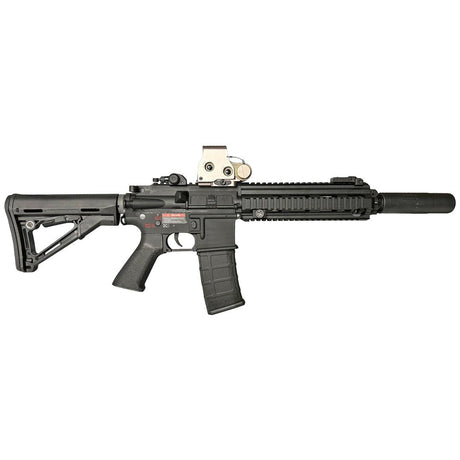
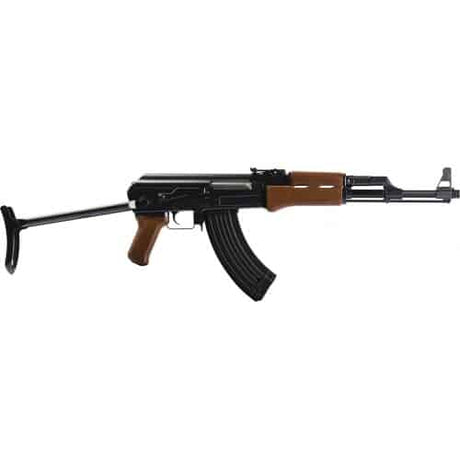
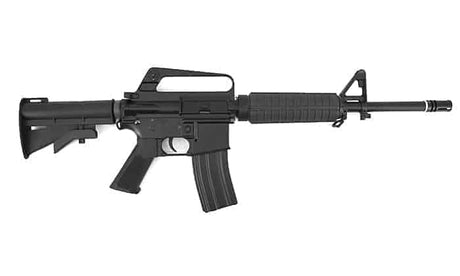
M4 crane stocks are the most common battery storage solution, requiring "nunchuck" or butterfly configurations. These split-cell packs allow you to slide the cells into the side tubes of the stock, keeping the centre clear for the buffer tube. AK platforms usually require a slim stick battery that sits under the top cover. Space here is notoriously tight; even a slightly thicker wire can prevent the dust cover from locking correctly. PDW-style rifles and those with slim buffer tubes are even more restrictive, often requiring specific 7.4v LiPo sticks that prioritise a thin profile over maximum capacity.
The Deans Conversion: Is it Worth It?
The short answer is yes. Swapping from Mini-Tamiya to Deans is one of the most cost-effective upgrades you can perform. By reducing the resistance at the connection point, you'll notice a tangible improvement in trigger response and a slight increase in your rate of fire. It also helps preserve the life of your airsoft batteries by preventing the connector from melting during sustained semi-auto fire. If you aren't comfortable with a soldering iron, you can explore our technical labour services for connector conversions. Our workshop regularly handles these upgrades to ensure your RIF is field-ready and electrically efficient. Matching your connector to your internal MOSFET setup is the final step in creating a truly reliable primary.

LiPo Safety and Maintenance: Maximising Lifespan
High-performance power requires a disciplined approach to maintenance. Whilst LiPo cells offer the best trigger response for your RIF, they are chemically volatile if mistreated. The golden rule is absolute: never leave airsoft batteries charging unattended. A smart charger can mitigate many risks, but physical monitoring is the only way to ensure a malfunction doesn't escalate into a fire. Safety isn't just about protecting your gear; it's about ensuring your safe zone remains exactly that.
Storage voltage is the most common area where players fail. You must never store your LiPos fully charged or completely empty for more than a few days. Storing a pack at 100% capacity causes internal resistance to build, whilst letting it drop too low can permanently "brick" the cells. Aim for a storage charge of approximately 3.8v per cell. If you notice your battery looks swollen or "puffed," similar to a bloated packet of crisps, stop using it immediately. A puffed battery indicates a chemical breakdown that could lead to a thermal runaway event.
When a pack reaches the end of its life, neutralise it before disposal. Most technicians recommend a prolonged soak in a saltwater bath to fully discharge the remaining energy before taking it to a dedicated battery recycling centre. Never bin a damaged LiPo in your household waste.
Smart Chargers vs Basic Chargers
The "dumb" wall chargers often bundled with entry-level guns are the leading cause of premature battery failure. These basic units lack the intelligence to balance individual cells, leading to uneven wear and potential overcharging. A quality smart charger is a non-negotiable investment. These devices provide essential features like auto-shutoff, discharging, and a dedicated storage mode. To keep your kit in peak condition, check our latest smart chargers and consumables. Using the right tools ensures your cells remain healthy for hundreds of charge cycles rather than dozens.
Field-Side Troubleshooting for Battery Issues
Nothing kills the momentum of a skirmish like the "click of death." If your AEG stops firing, don't immediately assume the gearbox has jammed. Check your connectors first. A loose pin or a disconnected motor tab is often the culprit. Cold weather also plays a significant role in performance; NiMH batteries struggle significantly in near-freezing temperatures, whilst LiPos maintain their discharge rate more effectively but will still see a drop in total capacity. If your ROF drops suddenly during a winter game, it's likely the temperature affecting your chemistry. To avoid these mid-game headaches, upgrade to a professional smart charger today and ensure your packs are always field-ready.
Power Your Loadout with Socom Tactical Airsoft Expert Advice
Since 2009, Socom Tactical Airsoft has stood as a cornerstone of the UK scene, founded by players who understand that your performance is only as good as your weakest component. We don't just stock airsoft batteries; we subject every brand to rigorous testing to ensure they survive the grit and unpredictable weather of a standard Sunday skirmish. Our commitment to field-readiness means we only recommend power solutions that we would trust in our own AEGs. If you are struggling with complex wiring looms or a persistent electrical fault, visit our UK airsoft shop for expert face-to-face advice from technicians who live and breathe the hobby.
We've seen it all. Technical support is at the heart of what we do, and we've spent over a decade specialising in diagnosing battery-related AEG faults, from blown fuses to melted trigger contacts. Socom Tactical Airsoft provides the professional technical labour needed to help you transition from basic NiMH setups to high-performance LiPo systems safely. We believe that every player should have total confidence in their primary. This level of reliability only comes from matching your electrical components to your specific gearbox build, ensuring every cycle is crisp and every shot counts. From high-torque motors to precision inner barrels, we frame every internal part as an essential tool for a broader experience.
Skirmish-Ready Packages
Preparation is the difference between a successful extraction and a frustrating walk back to the safe zone. We recommend matching your battery purchase with high-quality consumables like BLS airsoft BBs to ensure consistent feeding and trajectory whilst on the move. For high-intensity milsim events where the reliability of your airsoft batteries is paramount, we prioritise brands that have proven their durability in the field. If you are unsure which capacity or discharge rate suits your specific loadout, contact us for bespoke AEG power recommendations. We'll help you balance the weight of your spares with the energy needs of your motor, ensuring your plate carriers and chest rigs are loaded with the right gear for the mission.
Join the Socom Community
The hobby is constantly evolving, and staying ahead of the curve is essential for maintaining a competitive edge. We encourage you to follow our technical guides for ongoing gear maintenance tips that extend the life of your internal components. Our team is always monitoring the latest advancements in cell technology and motor efficiency to bring you the most effective tools for the job. This specialised language of performance is what practitioners expect. To stay updated on the latest battery tech and AEG releases, see our new products and gear arrivals. Together, we'll ensure your loadout remains rugged, reliable, and ready for whatever the next engagement throws your way, cementing our status as a cornerstone of the local hobbyist landscape.
Ready Your Gear for the Next Skirmish
Mastering the technicalities of your power source is the most direct route to ensuring your AEG performs under pressure. We've established that matching the correct chemistry to your gearbox and understanding the impact of C-ratings can prevent mid-skirmish failures. Whether you've opted for the simplicity of NiMH or the high-density output of LiPo, maintaining your airsoft batteries is what keeps your trigger response sharp and your rate of fire consistent. Reliability is not a luxury; it's a requirement for any player who values mission success over equipment failure.
Socom Tactical Airsoft has been a trusted UK specialist since 2009, offering gear that is genuinely skirmish-tested for maximum reliability. Our technicians provide expert technical repairs and upgrades to help you navigate everything from connector swaps to complex electrical faults. Don't let a poorly maintained cell or an inefficient connector be the reason you're sent back to the safe zone early. Upgrade your power today with our range of LiPo batteries and smart chargers and take command of the field with confidence. We're here to ensure your kit is as ready for the engagement as you are.
Frequently Asked Questions
Can I use an 11.1v LiPo in my standard airsoft gun?
You should only use an 11.1v LiPo if your AEG is specifically reinforced and equipped with a MOSFET. Running this high voltage in a standard RIF will lead to electrical arcing across trigger contacts and premature gearbox failure. If you're unsure about your gun's compatibility, it's safer to stick with a 7.4v pack to avoid costly internal damage during a game.
How long does it take to charge an airsoft battery with a smart charger?
Most airsoft batteries take between 45 and 90 minutes to charge when using a quality smart charger. The exact time depends on the capacity of the pack and the charge current you've selected. Smart chargers are essential because they monitor the voltage of individual cells and stop the process automatically. This prevents overcharging, which is the primary cause of battery failure and safety hazards.
Why is my airsoft battery getting hot during use?
Excessive heat usually indicates that your battery is struggling to meet the current demands of your motor. This often happens if the C-rating is too low for your gearbox setup or if there is a mechanical jam causing high resistance. If the battery or the wires become too hot to touch, stop firing immediately. Continuing to play could melt your connectors or cause the battery to puff.
What should I do if my LiPo battery starts to swell or puff up?
You must stop using the pack immediately and remove it from your RIF if you notice any swelling. A puffed battery is a sign of internal chemical damage and represents a significant fire risk. Place the damaged pack in a fire-proof container or a LiPo-safe bag. You should then neutralise it in a saltwater soak before taking it to a local recycling centre for safe disposal.
How many mAh do I need for a full day of airsoft skirmishing?
Most players require approximately 2000mAh to 2500mAh to last through a full day of intensive skirmishing. While the "one shot per mAh" rule is a helpful guide, high-torque motors and heavy springs will drain your power faster. We recommend carrying at least two 1200mAh sticks. This ensures you have a fresh pack ready for the afternoon sessions without worrying about a mid-game power failure.
What is the difference between a Deans and a Mini-Tamiya connector?
The primary difference is electrical efficiency; Deans connectors have a much larger surface area for contact than Mini-Tamiya plugs. This reduces resistance, which improves trigger response and helps your motor run more coolly. Whilst Mini-Tamiya is common on stock guns, many experienced players prefer Deans for its ruggedness and superior power delivery. It's a simple upgrade that makes a tangible difference to your rate of fire.
Do I need a special bag for charging my LiPo batteries?
Yes, a LiPo-safe bag is a non-negotiable safety tool for every player using lithium chemistry. These bags are made from fire-retardant materials designed to contain a fire if a cell fails during the charging process. Even with a smart charger, malfunctions can happen. Using a bag provides an essential layer of protection for your home and gives you peace of mind whilst your gear readies for the field.
How do I store my airsoft batteries when I am not playing for a few months?
You should store your cells at roughly 50% capacity, which is known as storage voltage. Most smart chargers have a dedicated "storage" mode that automatically brings each cell to about 3.8v. Never leave your airsoft batteries fully charged or completely flat for long periods. Storing them incorrectly leads to permanent capacity loss and can prevent the battery from ever holding a charge again.