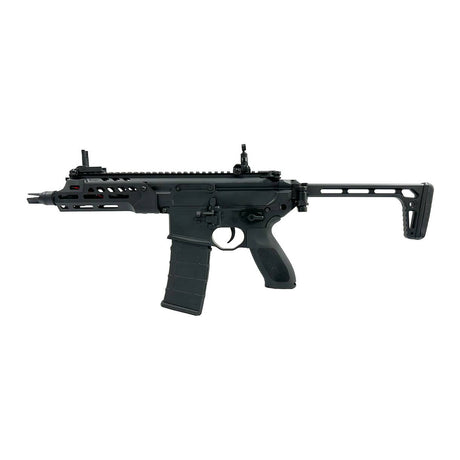
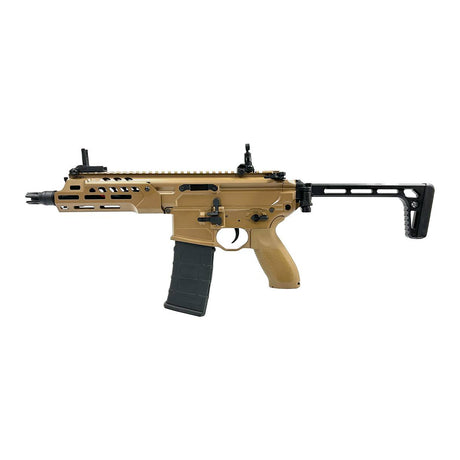
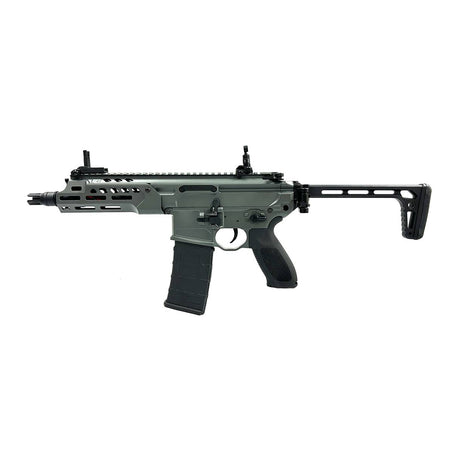
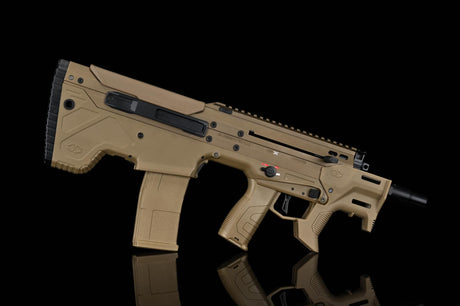
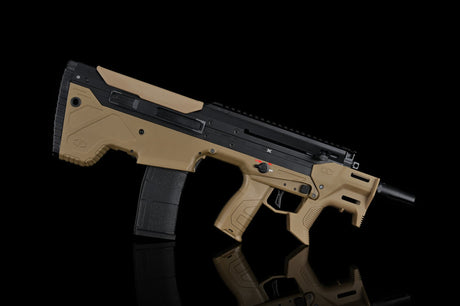
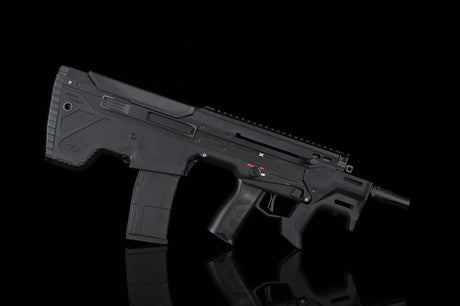
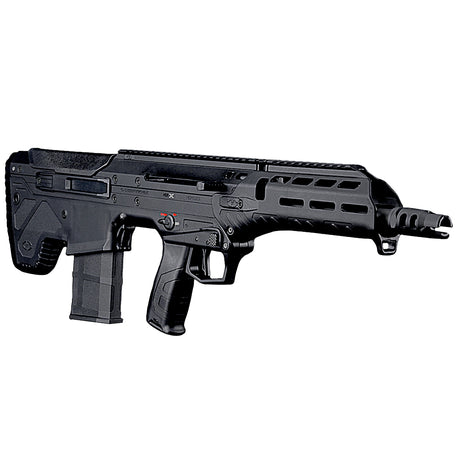
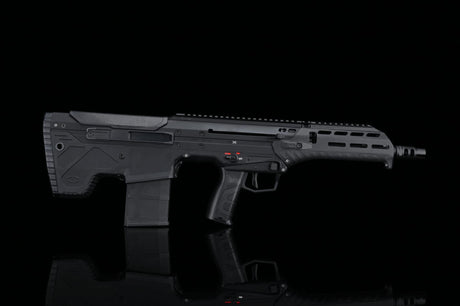
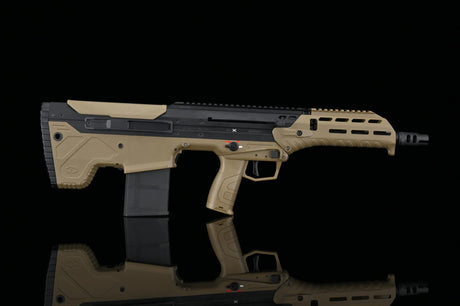
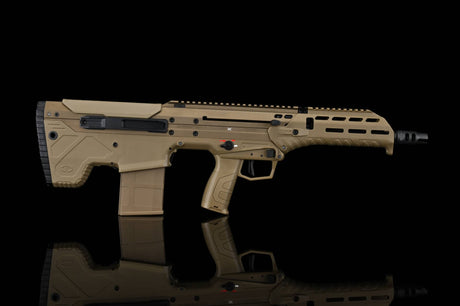
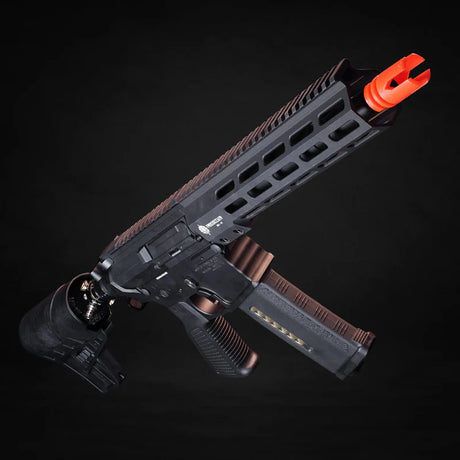
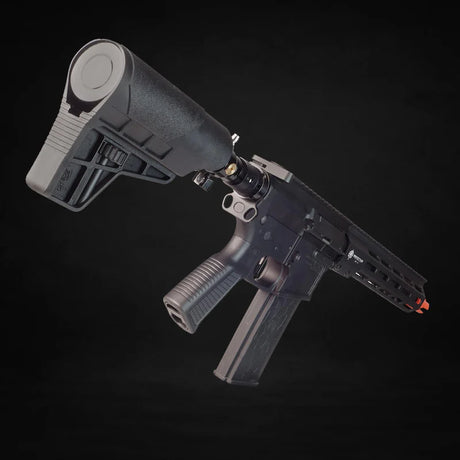
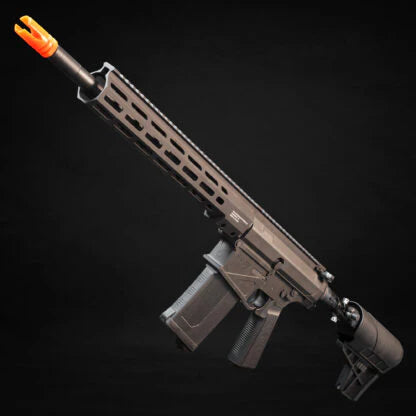
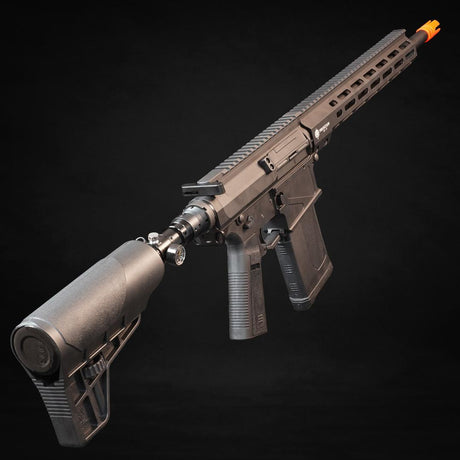
The Novritsch SSQ4 HPA / Gas Blowback Rifle has a 278 mm inner barrel with a 6.03 mm diameter, while the gas version comes with a 32-round magazine. Its muzzle energy is adjustable from approximately 1 joule to 2.5 joules, so the suitable setting depends on your site’s limits and the rifle’s firing mode. Those figures are a useful starting point, but the differences between the HPA and gas setups matter just as much when choosing your build.
It’s easy to focus on power and range, yet controls, dimensions, magazine weight and hop-up setup all affect how a rifle feels in play. This guide breaks down the SSQ4’s controls and rail attachments, barrel and bucking, construction, size and magazine capacity, then explains how to interpret its FPS and joule figures for UK airsoft. You’ll come away with a clearer picture of what each version offers and which details to weigh against your loadout and playing style.
Key Takeaways
- Compare the ambidextrous controls and adjustable stock with your preferred handling setup before choosing a configuration.
- Pair the hop-up’s strong effect with heavier BBs; the product listing recommends BBs weighing at least 0.36 g.
- The HPA system sits inside the magazine well. Connect its line only with the bolt open, and bear in mind that bolt lockback may be unreliable on this version.
- Compare measured joules with your site’s limit and the rifle’s firing mode; the suggested guidance differs for automatic, semi-automatic and bolt-action replicas.
- If you’re weighing up another platform, Socom Tactical Airsoft offers AEG Airsoft Rifles alongside Gas Blowback Pistols, Spring Sniper Rifles and Airsoft Shotguns.
Ambidextrous controls and rail attachments
Ambidextrous handling comes down to how easily you can reach the controls from either shoulder. With your usual grip, check the selector, magazine release and bolt catch on both sides. Shoulder the rifle on your dominant side, then repeat on your support side. Notice whether you need to move your firing hand to operate each control. This practical check shows whether the controls suit you, without assuming they are duplicated.
Check the rails just as practically. Identify the mounting interface and the accessories you intend to use, such as an optic or torch. Place each item so it does not block the sights, charging handle or support hand. An optic positioned too far forward or a torch crowded by other equipment can make handling awkward. Check clearance with the stock in your usual position instead of judging an attachment by appearance alone.
Compared with other HPA and gas blowback rifles, the SSQ4 offers two operating configurations, but performance depends on the setup. The gas version uses a gas magazine; the HPA system sits inside the magazine well. Its approximate fire rate is 20 rounds per second. Those facts describe the platform, but they don’t establish a direct performance advantage over other rifles. Compare controls, power source, magazine arrangement and site requirements to decide which configuration suits your play.
For UK buyers, the price depends on whether you choose the gas or HPA configuration and on the current listing. Compare the exact version and the components included, rather than treating different configurations as equivalent.
For reliability, avoid pulling the gas version’s trigger without a magazine inserted: the magazine supports the valve knocker. Allow approximately 200 BBs for the break-in period. The HPA version’s bolt lockback may not work reliably, as its system is fine-tuned for gas operation. Connect the HPA line only with the bolt open, and operate the HPA system at 130-160 PSI. These details matter during setup and routine handling.
UK buyers can purchase the relevant configuration from airsoft retailers. Compare the listing’s delivery and warranty terms with the magazine and power system specified for the version you are considering.
Before fitting accessories, use this sequence to check the controls:
- Shoulder the rifle on both sides and operate the selector without changing your grip.
- Practise releasing and seating the magazine, then check your reach to the bolt catch.
- Fit your chosen optic or torch and confirm it clears the sights and handling controls.
- Repeat the checks with the stock adjusted to your preferred position.
Barrel and bucking specifications
The SSQ4’s inner barrel measures 278 mm, with a 6.03 mm internal diameter. Those figures define the barrel’s length and bore, useful details when comparing replacement parts or checking the rifle’s specification. The gas version also has a 14 mm CCW muzzle thread. CCW means the thread tightens anticlockwise, so check direction before selecting a compatible muzzle attachment.
At 6.03 mm, the bore is relatively tight compared with wider airsoft barrel bores. Keep BB quality and cleanliness in mind: dirt inside the barrel or damaged BBs can interfere with a consistent shot path. A cleaning rod and a clean, lint-free patch help remove residue. Work gently, and avoid forcing debris towards the hop-up unit.
The Gas Version uses a Maple Leaf 60° bucking. The bucking is the rubber component that contacts the BB as it passes through the hop-up unit. Its pressure creates backspin, helping the BB maintain a flatter trajectory. The 60° figure identifies the bucking’s stated hardness, rather than the hop-up setting or a guarantee of range.
Novritsch recommends BBs weighing at least 0.36 g to make use of the SSQ4’s strong hop-up effect. Match the hop adjustment to the BB weight: if the setting applies too little pressure, the BB may drop sooner; too much can make it rise sharply. Make small adjustments, fire several shots, then assess the trajectory before changing the setting again.
Follow these steps to check the barrel and hop:
- Use suitable, undamaged BBs, starting with the recommended minimum weight of 0.36 g.
- Check the inner barrel for visible debris, then clean it carefully if needed.
- Adjust the hop-up in small increments and observe a short series of shots.
- Inspect the 14 mm CCW muzzle thread before fitting a threaded attachment.
When comparing the gas and HPA configurations, don’t assume every internal specification is identical. The Maple Leaf 60° bucking is specified for the Gas Version; avoid applying that detail automatically to the HPA setup. If replacing an inner barrel, match its length and diameter to the SSQ4’s 278 mm and 6.03 mm measurements, then confirm that the part suits the rifle’s configuration.
Barrel changes can affect the relationship between the hop-up, BB and muzzle assembly. Keep the original 278 mm length and 6.03 mm bore as your reference, and consider airsoft parts and upgrades when planning a compatible internal setup.
Construction and steel internals
Start with the SSQ4’s power-system layout. On the HPA version, the system sits inside the magazine well rather than in an external line-fed magazine arrangement. That integration changes how the rifle is configured and handled. It also means the magazine well is central to the HPA setup, not simply a space for a conventional gas magazine. Treat this as a practical construction feature when comparing the two versions.
“Steel internals” is a broad description, not a complete parts list. For a useful comparison, find out which specific component is described as steel and consider its role in the firing cycle. A steel bolt, trigger component or nozzle-related part would each have different implications. The material alone does not determine how the whole rifle performs, and one steel component does not mean every internal part is made from the same material.
For the SSQ4, separate confirmed configuration details from general claims about materials. The HPA system’s position inside the magazine well is a concrete design point. It doesn’t, by itself, prove that the rifle’s internal components are steel. That distinction helps you assess listings accurately and avoid treating a broad materials label as evidence about the entire gearbox or bolt assembly.
Construction also affects routine handling. Before a game, inspect the magazine well for debris, check that the magazine seats correctly, and look for visible damage around the interface. For an HPA setup, examine the line connection and confirm the rifle is in a safe state before connecting it. These checks focus on the interface and power system, the areas most directly affected by the SSQ4’s integrated HPA arrangement.
Keep gas and HPA configurations distinct during maintenance. The SSQ4 HPA system and gas magazine arrangement use different power sources, so don’t assume that a procedure or component for one version suits the other. Use the correct configuration when diagnosing feeding, cycling or power issues. A symptom such as inconsistent cycling needs a systematic check rather than an immediate assumption that a particular internal material has failed.
- Identify the exact component described as steel, rather than applying that label to the whole rifle.
- Check the magazine-well interface for damage or obstruction before fitting the HPA setup.
- Keep HPA and gas components separate when inspecting or servicing the rifle.
- Record changes to the setup so you can connect a new symptom with the part altered.
For buyers comparing construction, prioritise the power-system layout, the named components and their stated materials. The SSQ4’s integrated HPA arrangement is a clear design feature; steel should be assessed at component level. That approach gives a more accurate picture than relying on a general “steel internals” label, and it keeps inspection decisions tied to the actual part and configuration.

Dimensions, weight and magazine capacity
The rifle’s overall length can affect how easily it fits in storage and how it handles. Its supplied gas magazine holds 32 rounds, and the rifle weighs approximately 2.6 kg with that magazine fitted. For the HPA configuration, the stated weight is 2.46 kg with an HPA magazine. These figures help compare the two setups before adding your usual accessories.
That 18.5 cm difference between collapsed and extended measurements affects storage and handling. Check the rifle against your case or storage space with the stock in both positions. At 70 cm collapsed, it may be easier to stow than at its full 78.5 cm length. Shoulder it with the stock adjusted to your preferred position, then assess the reach and balance.
The gas magazine’s 32-round capacity gives you a clear planning figure for a game. Consider how many loaded magazines you prefer to carry, and account for the weight of each additional magazine in your loadout. The rifle’s stated 2.6 kg weight includes one gas magazine, so a fully equipped setup will weigh more once you add optics, a torch or spare magazines.
For compatibility, the Novritsch SSQ4 HPA / Gas Blowback Rifle gas version uses Novritsch SSQ4 gas magazines only. The HPA system is integrated inside the magazine well, so its setup differs from the gas magazine arrangement. Accessories must suit their mounting point: for example, a muzzle device needs to match the rifle’s 14 mm CCW thread. Don’t assume a gas magazine fits the HPA configuration, or vice versa.
Use this quick fit check before assembling your loadout:
- Measure your case against the rifle at 70 cm collapsed and 78.5 cm extended.
- Choose the correct magazine type for the gas or HPA configuration.
- Include the magazine and attachments when judging the rifle’s carry weight.
- Match muzzle attachments to the 14 mm CCW thread.
Magazine capacity also shapes how you manage ammunition during play. The supplied 32-round gas magazine means planning reloads around that capacity, rather than assuming a high-capacity AEG magazine will fit. Carrying spare compatible magazines adds weight, so balance reload availability against your preferred loadout. Check that each magazine seats securely before playing.
For a practical comparison, handle the rifle with its intended magazine fitted. The gas setup weighs 2.6 kg with its magazine, while the HPA setup weighs 2.46 kg with an HPA magazine. Those figures provide a baseline, not the weight of a complete loadout. Add your chosen sight and other accessories, then decide whether the balance suits your playing position and carry style.
Novritsch advises against pulling the Novritsch SSQ4 HPA / Gas Blowback Rifle gas variant’s trigger without a magazine inserted; the magazine supports the valve knocker and helps extend its lifetime.
FPS and joule guidance
The SSQ4’s muzzle energy is adjustable from approximately 1 joule to 2.5 joules. Novritsch states that its power variants were measured using 0.32 g BBs, so compare figures using the stated BB weight. FPS describes speed, whilst joules express energy; FPS alone doesn’t show the full energy relationship when BB weights differ.
Suggested retailer guidance sets an upper limit of 1.14 J for automatic replicas, based on 350 fps using a 0.20 g BB. For semi-automatic replicas, it gives 1.49 J, based on 400 fps using a 0.20 g BB. Bolt-action replicas have a suggested upper limit of 2.32 J, based on 500 fps using a 0.20 g BB. These are category-specific figures, not interchangeable targets.
Match the rifle’s firing mode and measured energy to the rules of the site where you play. The SSQ4’s adjustable output can exceed the suggested automatic and semi-automatic limits, so a high setting isn’t automatically suitable for every game. Use a chronograph with the BB weight you intend to use, record the joule reading, then adjust the output to meet the applicable limit.
For safe HPA setup, connect the line only with the bolt open. Novritsch recommends operating the HPA version at 130-160 PSI, and the HPA model comes with a US-spec connector. Set the regulator within the recommended pressure range, then chronograph the rifle and make careful adjustments while monitoring its energy. The pressure setting alone doesn’t establish the final joule output.
Before taking the rifle onto the field, follow this sequence:
- Confirm whether your setup fires automatically or semi-automatically.
- Check the applicable site limit for that firing mode.
- Connect the HPA line only with the bolt open, then set pressure within 130-160 PSI.
- Chronograph using the BB weight you’ll play with and compare the joule reading with the limit.
- Adjust the output and repeat the measurement until it meets the required setting.
Keep a note of the BB weight, pressure and joule reading for each setup. If you change the BB weight or HPA pressure, chronograph the rifle again rather than assuming the previous measurement still applies. The SSQ4’s broad adjustment range makes measured energy the key figure for a site-ready setup.
For other rifle platforms to compare alongside this setup, explore airsoft guns and assess each option against your preferred firing mode and site limits.
Socom Tactical Airsoft: AEG Airsoft Rifles
Socom Tactical Airsoft offers AEG Airsoft Rifles for players comparing rifle platforms after reviewing the SSQ4’s gas and HPA configurations. An AEG is an automatic electric gun, so its power system differs from the SSQ4’s gas or HPA setup. Consider which operating system, magazine arrangement and handling style best suits your loadout and preferred play.
If you are considering a different role, the range also includes Gas Blowback Pistols, Spring Sniper Rifles and Airsoft Shotguns. These suit different sidearm, precision and close-range setups, rather than serving as direct substitutes for a rifle.
For help choosing a suitable airsoft rifle or comparing options, contact Socom Tactical Airsoft.
Make your next setup count
Your next step is to match the platform to the way you want to play, then build a loadout around that choice. Think beyond the replica itself: handling, preferred power source and the role you want to fill should all work together. The Novritsch SSQ4 HPA or gas blowback rifle can be part of that decision, but it isn’t the only route to a field-ready setup.
If you are considering a different platform, compare AEG Airsoft Rifles with Gas Blowback Pistols or Spring Sniper Rifles, which suit different styles of play. Socom Tactical offers options to explore as you refine your setup. Choose gear that fits your role and feels right in your hands.
Explore your airsoft options at Socom Tactical Airsoft and get ready for your next game.
Frequently Asked Questions
What is the Novritsch SSQ4 and what are its key specifications?
The Novritsch SSQ4 is a rifle platform offered in gas blowback and HPA configurations. Its stated fire rate is approximately 20 rounds per second, and it has a six-position buffer tube. Product results report shots with 0.40 g BBs reaching distances up to 60 metres. These figures help frame its performance, but your BB weight, hop adjustment and power configuration affect how the rifle performs in use.
Is the Novritsch SSQ4 available in HPA and gas blowback versions?
The Novritsch SSQ4 HPA / Gas Blowback Rifle is available in both gas blowback and HPA configurations. The HPA connector is US-spec, so account for connector compatibility when preparing your air system. The HPA version’s bolt lockback may not work reliably because the system is fine-tuned for gas operation. For the gas model, use Novritsch SSQ4 gas magazines rather than assuming another magazine type will fit.
What are the SSQ4's FPS and joule limits with different BB weights?
For the Novritsch SSQ4 HPA / Gas Blowback Rifle, adjustable muzzle energy is approximately 1 J to 2.5 J, and Novritsch measured its power variants using 0.32 g BBs. Suggested guidance gives 1.14 J for automatic replicas, 1.49 J for semi-automatic replicas and 2.32 J for bolt-action replicas, with corresponding FPS figures based on 0.20 g BBs. Chronograph using your intended BB weight and compare the joule result with your site’s limit.
How does the Novritsch SSQ4 compare with other HPA and gas blowback rifles?
The SSQ4 offers gas and HPA configurations, with an approximate fire rate of 20 rounds per second. The gas version uses a gas magazine, while the HPA system sits inside the magazine well; compare those setups, controls and site requirements, as the figures don’t establish a direct performance advantage over other rifles.
What is the UK price of the Novritsch SSQ4 HPA and gas blowback rifle?
The price depends on the configuration and seller’s current listing.