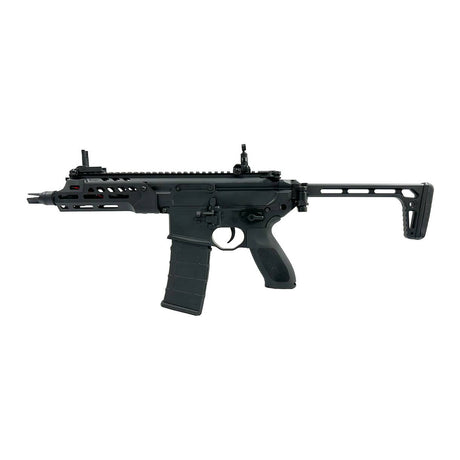
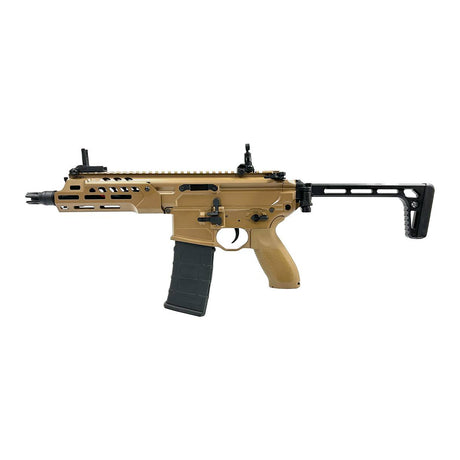
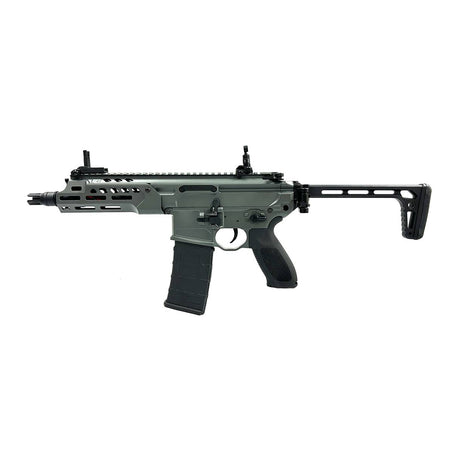
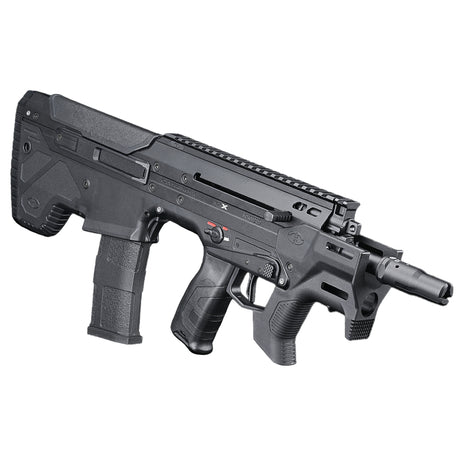
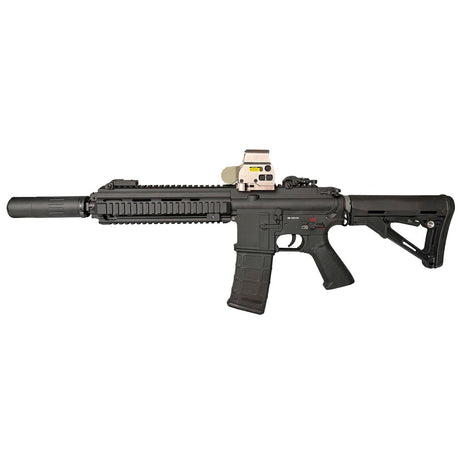
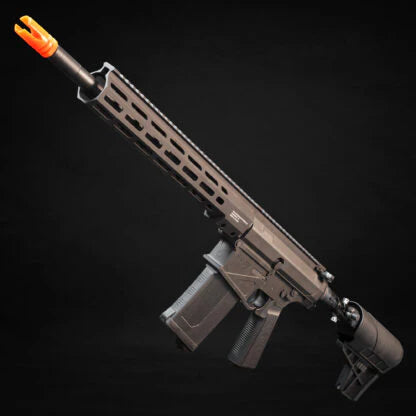
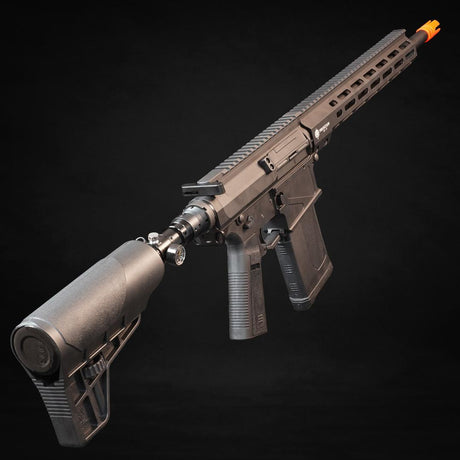
The Strike Carbon Silencers range includes airsoft suppressors in 38 mm and 50 mm formats, alongside forged-carbon HEX 40 models. Lengths include 4-inch, 4.5-inch and 6-inch options, giving you distinct profiles to consider for your build.
It’s natural to want a streamlined, balanced setup, but choosing Strike Carbon Silencers by appearance alone can mean overlooking practical details. This guide covers the available formats, what to consider when matching a silencer to an airsoft replica, and the difference between a quieter-looking setup and actual sound reduction. Compare profile, dimensions and intended use before deciding which configuration suits your loadout.
Key Takeaways
- Compare each alignment rod’s diameter with your setup to understand what the set contains and how to choose a suitable rod.
- Consider the suppressor’s length and width alongside your replica’s profile, rather than choosing on appearance alone.
- Separate the product’s dimensions and construction from assumptions about sound reduction; a suppressor’s look does not establish its acoustic effect.
- Use the listed UK product options to compare formats and decide which profile best suits your build.
- For a compatible platform to build around, explore AEG Airsoft Rifles from Socom Tactical Airsoft.
Package contents
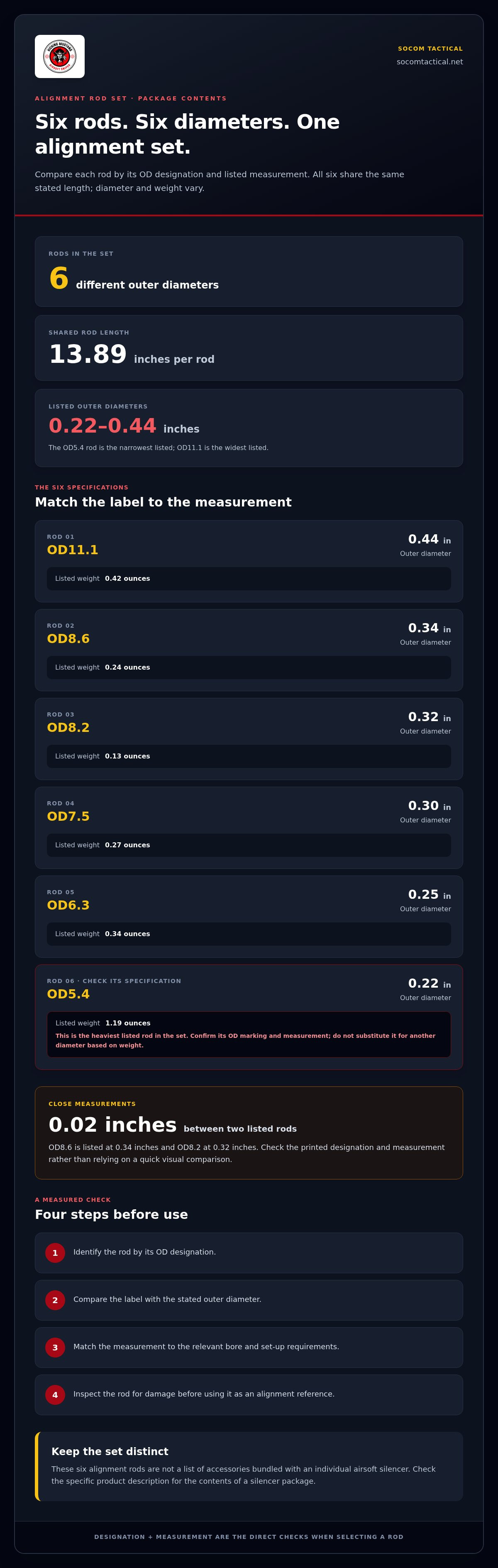
The Strike Carbon Fiber Suppressor Alignment Rods set contains six rods in different outer diameters. Each rod is 13.89 inches long. The set is intended to provide several diameter options for checking suppressor alignment, rather than a single rod size for every setup. Its contents should be understood separately from any airsoft suppressor package: the alignment rod set’s components do not establish what comes with an individual suppressor.
Read the OD label as the rod’s outer-diameter designation, then compare it with the listed measurement. The six rods are:
- OD11.1: 0.44 inches in outer diameter; weight 0.42 ounces.
- OD8.6: 0.34 inches in outer diameter; weight 0.24 ounces.
- OD8.2: 0.32 inches in outer diameter; weight 0.13 ounces.
- OD7.5: 0.30 inches in outer diameter; weight 0.27 ounces.
- OD6.3: 0.25 inches in outer diameter; weight 0.34 ounces.
- OD5.4: 0.22 inches in outer diameter; weight 1.19 ounces.
Those figures give you a practical way to identify each piece without relying on appearance. Several diameters are close together, so the printed designation and measurement matter more than a quick visual comparison. Keep each rod identifiable after unpacking, especially the OD8.6 and OD8.2 rods, whose listed outer diameters differ by only 0.02 inches.
Length is consistent across the set, while diameter and listed weight vary. That distinction helps when you’re checking the contents: the rods should share the stated length, but they aren’t interchangeable by diameter. For example, the OD11.1 rod measures 0.44 inches across, while the OD5.4 measures 0.22 inches. A smaller designation corresponds to a narrower listed rod in this set, but the correct choice depends on the equipment being checked.
Use a deliberate check before relying on a rod:
- Identify the rod by its OD designation.
- Compare that label with the stated outer diameter.
- Match the measurement to the relevant bore and setup requirements.
- Inspect that rod for damage before using it as an alignment reference.
This sequence reduces mix-ups between similar sizes. It also makes it easier to return each rod to its correct place after use. The listed weights offer another identification detail, though diameter and designation are the more direct checks when selecting a rod. For instance, the OD8.2 rod is listed at 0.13 ounces, whereas the OD7.5 rod is listed at 0.27 ounces. Don’t identify either solely by weight; confirm its OD marking and measurement.
One figure deserves extra care: the OD5.4 rod is listed at 1.19 ounces, heavier than the other five listed rods. Treat that as a specification to check against the individual rod, not as a reason to substitute it for another diameter. The set’s variety is useful only when the chosen rod matches the equipment and the task. A rod that is too large or too small won’t provide the intended alignment check.
Finally, distinguish an alignment tool from an airsoft silencer. The six-rod set is a named set of suppressor alignment rods; its contents are not a list of accessories bundled with a Strike Carbon airsoft silencer. Read the individual product description for the item you’re considering, and keep the rod set’s six diameters and shared 13.89-inch length as its own package specification.
Product price and availability
UK-listed prices differ by Strike Carbon silencer model, diameter and length. The listed options include four-inch, 4.5-inch and six-inch formats, with named designs such as HEX 40 and Fat Can. Compare the complete model name and dimensions before deciding; a similar label doesn’t mean two products are identical. The prices below belong to specific variants, so don’t transfer one figure to another size.
That list gives a useful comparison, but price alone doesn’t identify the right fit. For example, the 4-inch 38 mm model and 4-inch HEX 40 share a length, yet have different names and listed prices. The HEX 40 options are specifically described as forged carbon. Treat that construction detail as part of the model comparison, not as a substitute for checking its dimensions.
Narrow down the options step by step. First, note your replica’s intended fit and relevant mounting details. Next, decide whether a shorter or longer profile better suits your setup. Compare the chosen model’s diameter and full name with its listing, then use that variant’s price rather than a figure from a similar-looking model.
Length is an easy detail to overlook. A four-inch suppressor and a six-inch suppressor create different external profiles, even when their names share a range. Those prices apply to the stated models and lengths, not every 38 mm product.
The Fat Can examples show why the full specification matters too. Their shared 50 mm measurement doesn’t make their lengths or prices interchangeable. Read both dimensions together before comparing the two listings.
Availability is also variant-specific in practical terms: selecting a model name, length and diameter keeps the item you’re considering distinct from another option. Don’t assume that a listing for one size describes every size in the same range. For a clear comparison, note the exact model, both dimensions and its stated price together. That record makes it easier to revisit the same variant instead of comparing a 4-inch listing with a six-inch alternative.
Before settling on a configuration, match the suppressor’s dimensions to the replica and the look you want. A lower listed price doesn’t establish compatibility, just as a forged-carbon description doesn’t establish fit. Use the product name and measurements as your decision points, then compare like with like: 38 mm against 38 mm, or a four-inch option against another four-inch option. That keeps the price comparison grounded in the actual variant.
Keep that entry separate from the other options: its stated width and model wording identify the listing. When checking a product listing, match the complete FAT-CAN designation and both measurements before using its price for comparison. A shared length or range name alone does not mean two products have the same specification.
Before making your final selection, note the model and dimensions, then compare costs. A price comparison is useful only when each figure is tied to its exact variant; otherwise, you could apply a price to the wrong option. This gives you a consistent basis for comparing the choices without inferring details the listing doesn’t provide.
Socom Tactical Airsoft: AEG Airsoft Rifles
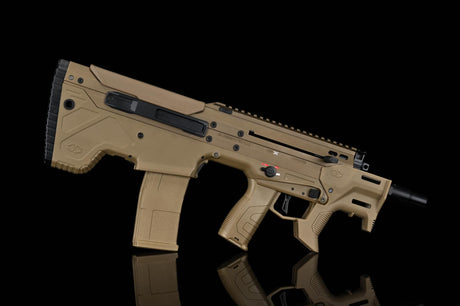
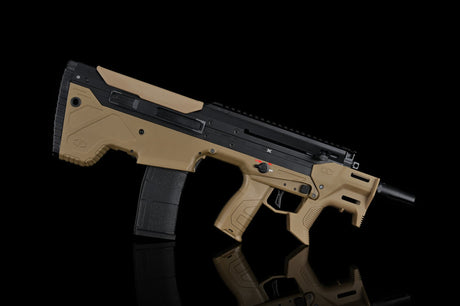
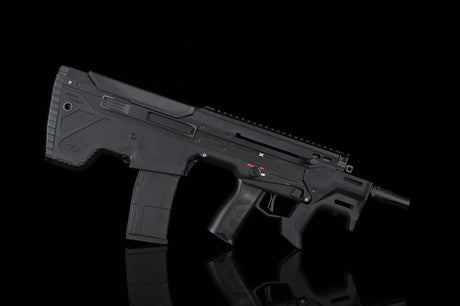
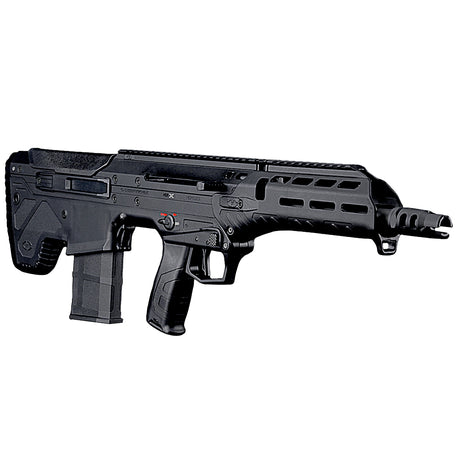
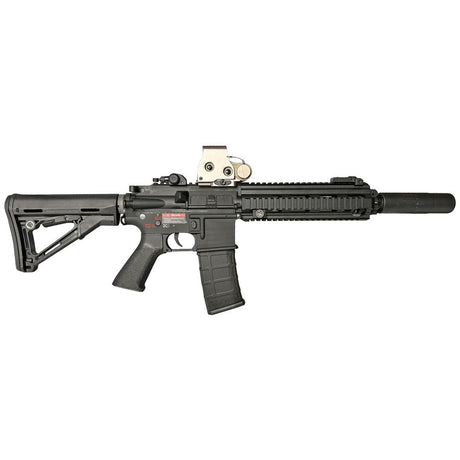
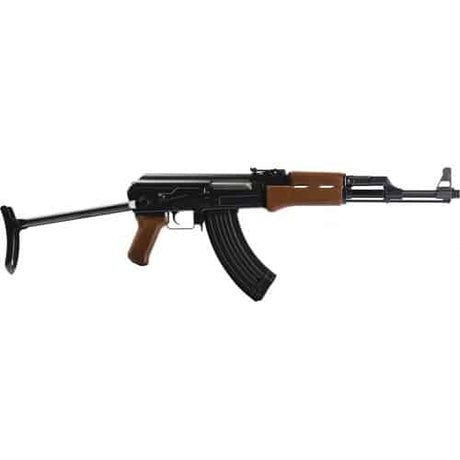
Socom Tactical Airsoft sells AEG airsoft rifles for players choosing a platform for their setup. After comparing silencer dimensions and narrowing down the profile you want, consider the replica itself: its intended use, handling and overall configuration should guide your choice. A silencer’s appearance alone doesn’t establish compatibility, so assess the rifle and accessory separately.
For a different platform, Socom Tactical Airsoft also offers Gas Blowback Pistols, Spring Sniper Rifles and Airsoft Shotguns. The right starting point depends on the style of play and replica you’re selecting, rather than the silencer’s finish. Explore the airsoft gun range to compare platform options, or contact Socom Tactical Airsoft with your airsoft equipment enquiry.
Build your next setup with purpose
Let your replica and play style guide your final choice. A silencer is one part of a considered build, alongside the platform you handle and the role you want it to fill. Strike Carbon Silencers can add a visual finishing touch, but your wider configuration, not the accessory alone, should shape your decision.
Socom Tactical sells AEG airsoft rifles, gas blowback pistols and spring sniper rifles, giving you different platforms to consider as you shape your setup. Focus on the replica that suits your approach, then choose accessories with fit and function in mind. A balanced build starts with choices that work together.
Ready to explore your next airsoft platform? Visit Socom Tactical Airsoft and take the next step towards a setup that feels right for your play.