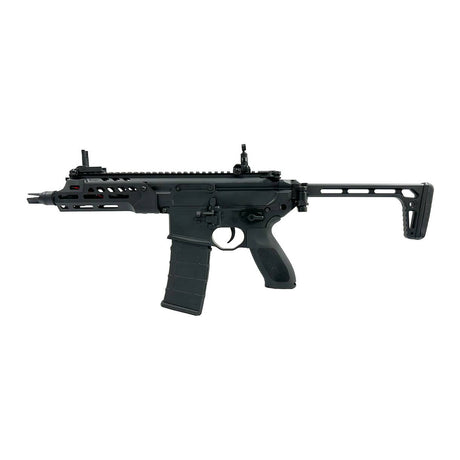
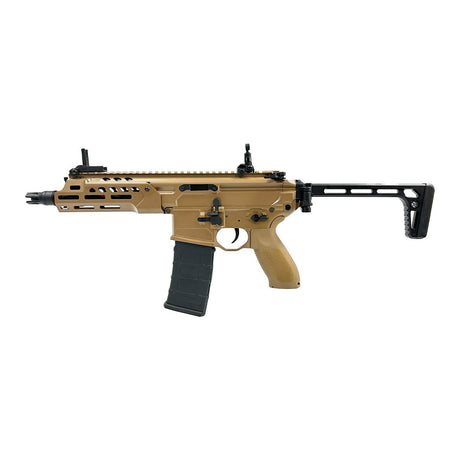
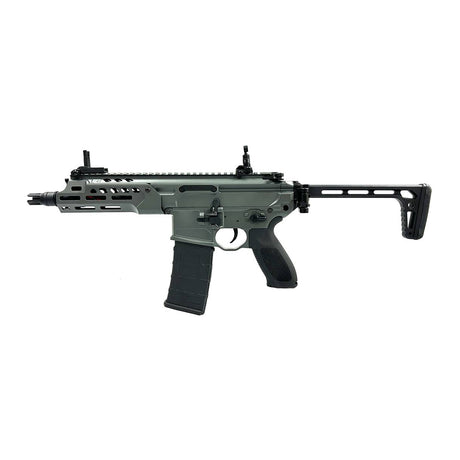
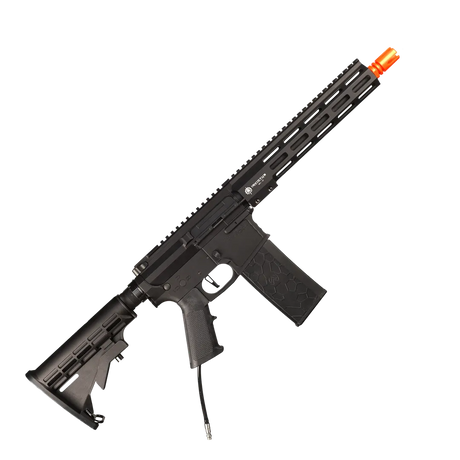
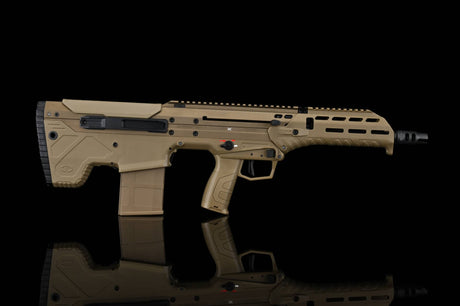
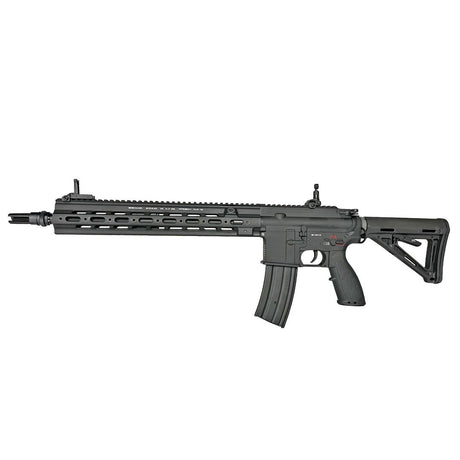
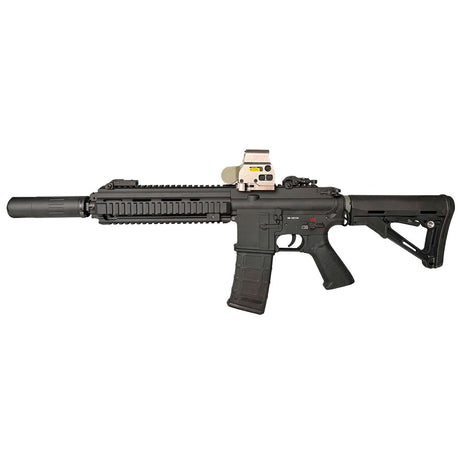
Before choosing an airsoft replica, check whether you can buy, transport and use it responsibly. Airsoft Safety & Legal Information can be confusing, especially when online explanations blur legal requirements, retailer checks and individual site rules. Understanding the difference is part of getting ready for your first game.
If you’re unsure what applies to realistic imitation firearms, two-tone replicas or carrying your kit in public, you’re not alone. This guide covers the key questions to check before buying equipment or heading to a skirmish. It offers general information, not a substitute for current legal advice.
We’ll outline the main legal distinctions, explain why purchase requirements matter, and cover responsible handling and transport. You’ll also find practical guidance on eye protection and the site rules to confirm before play. Use it as a pre-game briefing to help you arrive prepared.
Key Takeaways
- Separate legal requirements, retailer purchase checks and individual site rules.
- Check the requirements for realistic and two-tone replicas before choosing what to buy. Ask the retailer if anything is unclear.
- Make suitable, site-approved eye protection your first safety priority, then follow the venue’s rules for handling replicas during play.
- Plan how you’ll keep your replica covered and secured while travelling, and check current legal guidance before setting off.
- Before your first game, review the law, confirm purchase requirements and read the site briefing so you arrive ready to play responsibly.
Airsoft Safety & Legal Information: what beginners need to know first
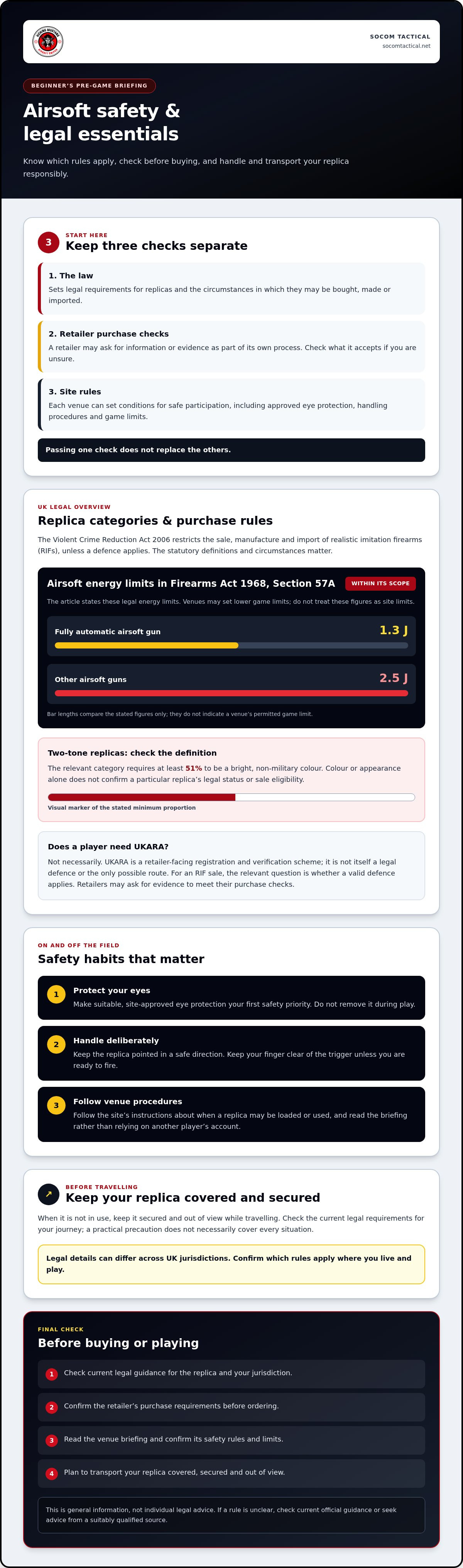
New to airsoft? Start by separating three things that are often mixed together online: what the law requires, what a retailer checks before a sale, and what a particular skirmish site expects from players. These checks are related, but they aren’t interchangeable. A site may set safety conditions for taking part, while completing a retailer’s purchase process doesn’t replace your responsibility to understand the law.
Airsoft is a recreational activity in which players use replica devices to fire BBs during organised games. Legal terms around those replicas matter, and the detail can depend on the circumstances. Treat this section as general information, not individual legal advice. If you’re unsure how a rule applies to you, check current official guidance or seek advice from a suitably qualified source before acting.
What counts as an airsoft replica?
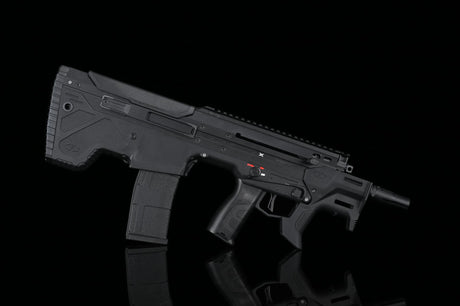
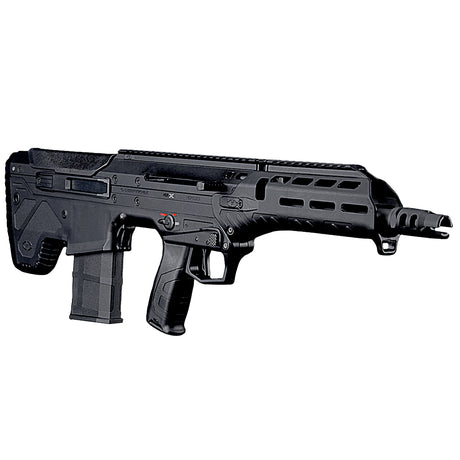
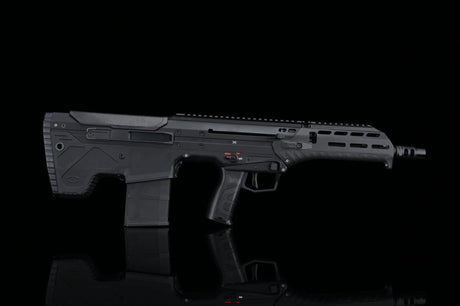
UK legislation and airsoft retail commonly use the terms realistic imitation firearm (RIF) and imitation firearm (IF). The Violent Crime Reduction Act 2006 is central to the rules on realistic imitation firearms, but a replica’s colour or appearance alone may not settle its legal status. The statutory wording and circumstances matter. For background, see this UK Airsoft Law Overview, then check current legislation and official guidance for the relevant jurisdiction.
Which rules apply: law, retailer checks or site rules?
Think of these as separate checks. The law sets legal requirements, a retailer may ask for information or evidence as part of its own purchase process, and a venue can set conditions for safe participation. Site rules may cover protective equipment and handling procedures, so read the briefing rather than relying on another player’s account. Legal details can also differ across UK jurisdictions, so confirm which rules apply where you live and play.
Build safe habits before game day. Keep the replica pointed in a safe direction, keep your finger clear of the trigger unless you’re ready to fire, and follow the site’s instructions about when it may be loaded or used. Wear the eye protection the venue approves, and don’t remove it during play. When the replica isn’t in use, keep it secured and out of view while travelling. Check the legal requirements for your journey rather than assuming a practical precaution covers every situation.
That’s the foundation of Airsoft Safety & Legal Information: know which rules you’re checking, handle your kit deliberately, and ask the retailer or site to clarify anything that isn’t clear. A calm pre-game check helps you focus on the game rather than last-minute uncertainty.
UK airsoft law: understand realistic replicas, purchase checks and defences
The key legal distinction isn’t simply “realistic replica versus toy”. The Violent Crime Reduction Act 2006 restricts the sale, manufacture and import of realistic imitation firearms (RIFs), unless a defence applies. A brightly coloured imitation firearm (IF) may be treated differently for sale, but colour alone isn’t a complete legal test. The statutory definitions and circumstances matter, so check current legislation and official guidance before buying, modifying or importing a replica.
The Firearms Act 1968 Section 57A sets the legal definition and energy limits for an airsoft gun within its scope. The limits stated there are 1.3 joules for a fully automatic airsoft gun and 2.5 joules for other airsoft guns. Don’t treat these figures as a site’s game limits. Venues may set their own lower limits, and the rules that apply can depend on where you are in the UK.
Does a player need UKARA to buy an airsoft replica?
Not necessarily. UKARA is a retailer-facing registration and verification scheme that can help demonstrate a player’s airsoft activity. It isn’t itself a legal defence, nor is it the only possible route. For an RIF sale, the relevant question is whether a valid defence applies. A retailer may ask for evidence to satisfy its own purchase checks, so confirm what it accepts before placing an order. For a wider overview, see a dedicated guide to two-tone airsoft guns and UK rules, then verify legal points against current official sources.
What should buyers know about two-tone replicas?
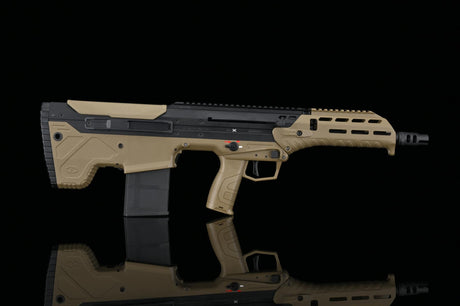
Two-tone treatment is intended to distinguish an imitation firearm from a realistic one for relevant legal purposes. The relevant category requires at least 51% to be a bright, non-military colour, but don’t rely on appearance alone to confirm a particular replica’s status or sale eligibility. Check the current legal definition and the retailer’s requirements. Socom Tactical Airsoft offers a two-tone painting service for customers without a valid skirmisher defence, subject to applicable legal requirements.
UKARA registration is one way retailers may verify a player’s status, but the scheme doesn’t replace understanding the law or checking what evidence a seller requires. For separate practical guidance on choosing a replica, use this UK airsoft guns buying guide. Treat retailer information as practical purchasing guidance, not a substitute for legal advice.
Airsoft safety rules that protect players on and off the field
Good safety habits start before the first BB is fired. Make eye protection your first equipment check: it must meet the venue’s stated requirements, fit securely and stay in place throughout play. Don’t assume eyewear accepted at one site will be accepted at another. Check the rules before travelling, and ask the venue if the required type or rating isn’t clear.
What protective equipment should a beginner check?
Eye protection needs to stay secure when you move, crouch or look through your sights. Face protection is also worth considering, particularly for new players who may be unfamiliar with close-range impacts. Some venues specify which face coverings are acceptable or required, so confirm the full kit list with the site rather than relying on general recommendations. Socom Tactical sells ballistic eye protection and mesh face masks, but the venue’s rules should guide your choice.
How should players handle an airsoft gun safely?
Treat every replica with care, whether you’re on the field or between games. Keep the muzzle pointed in a safe direction and your finger away from the trigger unless you’re ready to fire. Follow site instructions for safe zones, magazines and firing restrictions. If you’re unsure whether a replica should be unloaded, have its magazine removed or be handled in a particular area, pause and ask a marshal.
Briefings explain how the venue manages its layout, game boundaries and procedures, including any minimum engagement rules. These limits can vary between sites and replica types, so don’t assume a distance you’ve used elsewhere applies here. Listen closely, follow marshal instructions promptly, and raise questions before play rather than improvising mid-game.
- Before play: Check that your eye protection fits securely and meets the site’s stated requirements.
- During play: Observe firing restrictions, minimum engagement rules and marshal directions.
- Between games: Keep the replica pointed safely and follow the site’s magazine and safe-zone procedures.
On the way home, keep your replica secured and out of public view, then follow the relevant transport guidance. These routines reduce avoidable risks and help build trust across the player group. Airsoft safety involves more than rules on paper: consistent handling and respect for site procedures are part of being a dependable teammate.
Transporting and storing airsoft replicas responsibly
A replica that’s handled safely at a skirmish site still needs care on the journey there and at home. Keep it covered, secured and out of public view. These are responsible habits, but they don’t settle the legal position on their own. Check current official guidance for the rules that apply to your journey and where you live.
How can players prepare an airsoft replica for a journey?
Before setting off, check the destination site’s instructions and prepare your equipment so it stays secured throughout the trip. Current guidance for this article says replicas should be kept out of public sight in a secure, locked case or bag. Carrying an imitation firearm in a public place without a reasonable excuse, such as travelling to or from an organised airsoft event, can be an offence. Keep relevant booking or membership details accessible as supporting evidence, but check official sources for the precise legal requirements.
- Before leaving: Check the site’s arrival instructions and secure the replica in a suitable case or bag.
- During the journey: Keep it covered and out of public view. Don’t handle or display it in public.
- Before travelling: Check current official guidance, especially if your journey crosses a UK jurisdiction boundary.
This checklist combines practical steps with a reminder to verify the law. It isn’t a substitute for checking whether your specific circumstances meet any legal requirements.
What does responsible storage look like?
At home, store replicas securely so children and other unauthorised people can’t casually access them. Keep them out of sight and away from situations where someone could mistake one for a real firearm. Choose a storage approach that suits the equipment, and follow the manufacturer’s guidance for the replica and any associated components. If under-18s are present, check current official rules for storage rather than relying on general advice.
Good routines reduce confusion: put the replica away after use, keep it secured between games, and avoid leaving it visible in a vehicle or shared space. Airsoft Safety & Legal Information also covers these everyday decisions, not just what happens on the field. For more practical retailer guidance, read the airsoft FAQs, then verify legal questions against current official sources.
Your airsoft safety and legal checklist before buying or playing
Turn the guidance into a quick pre-game check. Airsoft Safety & Legal Information is easier to act on when you separate legal questions from retailer procedures and venue rules. Check each with the right source, and don’t guess if a requirement is unclear.
- Check current law: Use current legislation and official government guidance for legal questions, including purchase eligibility and the rules that apply where you live and play.
- Confirm retailer requirements: Before ordering, ask what information or evidence the retailer needs for your chosen replica. A retailer’s process doesn’t replace understanding the law.
- Read the site rules: Confirm the venue’s age policies, eye-protection requirements, safe-zone procedures and game-day instructions directly with the site.
- Prepare your kit: Pack equipment to match the venue’s rules, and make sure your eye protection fits securely and is suitable for the site.
What should a first-time player confirm before a skirmish?
Check the venue’s instructions before travelling, even if you’ve played elsewhere. Sites can set different conditions for protective equipment and game procedures. Find out what to do with your replica in safe zones, listen carefully to the briefing, and ask a marshal to clarify anything you’re unsure about before play starts. Asking in advance can prevent confusion on the day.
Where can readers check current information and get help?
For legal questions, prioritise current legislation and official government guidance. For purchase processes and equipment details, a specialist retailer can explain its own requirements and provide practical product guidance, but that isn’t definitive legal advice. Socom Tactical is an independent UK airsoft retailer specialising in replicas, protective equipment and accessories.
To compare equipment, browse airsoft guns, or contact the Socom Tactical team with product questions. For legal uncertainties, check an appropriate official source before making a purchase or travelling to a game.
Make your next skirmish a safer one
Airsoft Safety & Legal Information comes down to a few habits: check current legal guidance before buying, confirm what evidence your retailer requires, and read the venue’s rules before game day. Choose site-approved eye protection, handle your replica responsibly, and keep it secured and out of sight when travelling.
Law, retailer procedures and site conditions serve different purposes, so don’t rely on assumptions or advice intended for another venue or situation. If a purchase or safety requirement isn’t clear, ask the retailer or site to explain it, and use official sources for legal questions.
Socom Tactical is an independent UK airsoft retailer founded in 2009, specialising in airsoft guns, protective equipment and accessories. Browse airsoft guns and prepare your loadout for your next skirmish. Check your requirements, pack with care and enjoy joining the airsoft community.
Frequently Asked Questions
Is airsoft legal in the UK?
Airsoft activity may be lawful, but the answer depends on the circumstances and the rules that apply to the replica and its use. Taking part at a skirmish site is distinct from buying, possessing or transporting a replica, which may involve separate requirements. Check current legislation and official guidance for the relevant UK jurisdiction before acting. This overview is general information, not a decision on whether a specific situation is lawful.
Do you need UKARA to buy an airsoft gun?
No single answer applies to every purchase. UKARA is an industry scheme retailers can use to help verify a player’s skirmishing status, but it isn’t legislation and shouldn’t automatically be treated as the only possible defence for buying a realistic imitation firearm. A retailer may request evidence to check eligibility. Before ordering, confirm its current requirements and check official sources to understand which legal defence, if any, applies to your circumstances.
Can you carry an airsoft gun in public?
Don’t carry or display an airsoft replica in public without first checking the rules that apply to your circumstances. A realistic-looking replica can be mistaken for a real firearm, creating serious concern and risk. As a practical precaution, keep it covered, secured and out of public view, and avoid unnecessary handling. Check current official guidance on carrying imitation firearms and any relevant legal requirements before travelling with one.
What is the difference between a two-tone airsoft gun and a realistic imitation firearm?
A realistic imitation firearm is designed to look like a real firearm, whilst a two-tone replica has a substantial area in a bright, non-military colour. Under the guidance provided for this article, at least 51% must be a qualifying bright colour for an imitation firearm to be sold to someone without a defence. Colour alone doesn’t settle every legal question. Check current legislation and the retailer’s purchase guidance for the specific replica.
What eye protection do you need for airsoft?
Choose eye protection that meets the individual site’s stated requirements, fits securely and stays in place throughout play. Accepted types or standards can differ between venues, so don’t rely on another site’s rules or a general recommendation. Before attending, ask the venue what protection it accepts and whether it has any additional requirements. If your eyewear doesn’t fit securely or the site hasn’t approved it, clarify this before game day.
How should you transport an airsoft gun safely?
Keep the replica covered and secured during your journey, and avoid handling it unnecessarily or displaying it in public. These are responsible precautions, not a complete statement of the law. Check the destination site’s arrival instructions before setting off, then consult current official guidance for the legal transport requirements that apply to your circumstances and jurisdiction. If you’re unsure, resolve the question before travelling rather than making assumptions on the day.
Can children play airsoft in the UK?
Children may be able to participate, but site age policies and other conditions vary, so there isn’t one universal minimum age to rely on. Participation rules are separate from purchase requirements: in the UK, a person must be at least 18 to buy an airsoft gun. Parents or guardians should contact the specific venue about supervision, age limits and safety rules, and check current official guidance before making arrangements.
What should you do if an airsoft replica is mistaken for a real firearm?
Prioritise safety and follow instructions from the authorities. Don’t make sudden movements or reach for the replica, and avoid handling it unless instructed. Don’t try to settle the situation by relying on your own view of its appearance. Once safe, follow relevant official guidance and consider how the replica was exposed. Keeping it covered and secured during transport helps reduce the chance of alarm or misunderstanding in public.