The strongest gas isn’t always the right choice. For a gas blowback RIF, choosing a propellant that suits the temperature and your replica matters more than reaching for a higher-pressure canister. Get that balance wrong and you could face sluggish cycling, inconsistent FPS or extra strain on internal components.
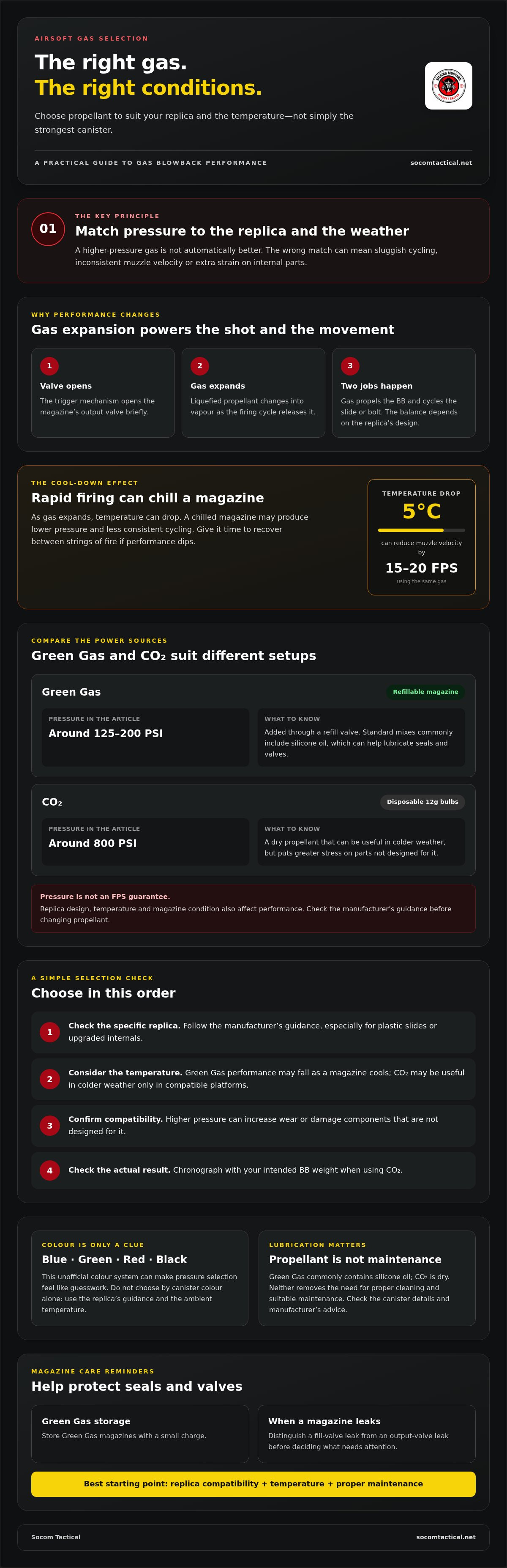
It’s frustrating when a magazine leaks or a pistol loses power as the temperature drops. Green Gas and CO2 behave differently in the cold, while the unofficial blue, green, red and black colour system can make pressure selection feel like guesswork. A 5°C temperature drop can reduce muzzle velocity by 15 to 20 FPS when using the same gas, so conditions can change your setup’s performance.
This guide explains gas pressures, seasonal selection and the cool-down effect, then covers magazine care to help prevent leaks and protect valves. You’ll be better equipped to choose a suitable propellant, support reliable cycling and maintain consistent performance. Socom Tactical Airsoft offers airsoft consumables and technical repair services to help players prepare and maintain their equipment.
Key Takeaways
- Understand how gas expansion powers a blowback cycle and why rapid firing can affect consistency.
- Compare refillable Green Gas magazines with CO2 bulbs, then check your replica’s compatibility before choosing a power source.
- Use the Gas) pressure guide as a starting point, then select a suitable pressure for your replica and conditions.
- Learn how to store Green Gas magazines with a small charge and distinguish a fill-valve leak from an output-valve leak.
- Match Green Gas or CO2 consumables to your airsoft gun for dependable field performance.
Understanding Airsoft Gas: The Science Behind the Power
A gas blowback replica turns stored propellant into forward motion and mechanical action. Inside the magazine, liquefied gas changes into vapour as the firing cycle releases it. The expanding gas drives the BB down the barrel and cycles the slide or bolt, creating the movement that makes a gas blowback system feel responsive. For a general overview of airsoft guns and their power mechanisms, see the linked reference.
How Gas Blowback Systems Work
When you pull the trigger, the hammer or striker pushes the knocker into the magazine’s output valve. The valve opens briefly, releasing gas into the replica. Some gas travels through the nozzle to propel the BB, while some enters the blowback housing to push the slide or bolt rearwards. The exact balance depends on the design.
The cool-down effect is the rapid temperature drop that occurs as gas expands. During sustained rapid fire, a chilled magazine can produce lower gas pressure and less consistent cycling. For example, a 5°C temperature drop can reduce muzzle velocity by 15 to 20 FPS when you use the same gas. If performance starts to dip, allow the magazine time to recover between strings of fire.
Replica Construction and Pressure Choice
A realistic imitation firearm (RIF) describes a replica’s appearance, not the strength of its slide or the pressure it can safely handle. Some replicas have metal slides; others have plastic slides and are designed for lower-pressure propellant. Don’t assume all RIFs need the same gas. Check the manufacturer’s guidance for your specific model, particularly if you’ve fitted internal upgrades.
Excessive pressure can make components cycle harder than intended, increasing stress on the slide, nozzle, seals and valves. In an extreme mismatch, parts can crack or fail. For Gas) selection, use the replica’s guidance and the ambient temperature as your starting points, not the canister colour alone.
Propellant vs Lubricant: What Is Inside the Bottle?
Green Gas is generally a propane-based propellant with silicone oil added to lubricate parts of the system. As gas passes through the magazine and replica, the oil can help maintain seals. It doesn’t replace proper cleaning or targeted maintenance.
CO2 is a dry propellant and doesn’t provide the same silicone-oil lubrication. With dry gas, seals and moving components may need more deliberate maintenance using products suitable for the replica. Don’t assume every gas mix contains lubricant: check the canister details and follow the manufacturer’s maintenance advice to protect seals.
Green Gas vs CO2: Which Power Source Wins?
Neither propellant is right for every setup. Green Gas comes in a can and is added through a refill valve on a compatible magazine. CO2 is supplied in disposable 12g bulbs fitted into compatible magazines. The difference affects how you reload, how the replica feels and what you need to check before firing.
Pressure helps explain the contrast, but figures vary with temperature and other conditions. Green Gas commonly operates around 125 to 200 PSI, while CO2 is around 800 PSI. Those figures don’t guarantee a particular FPS: replica design, magazine condition and temperature all influence the result. CO2’s higher pressure can give a firmer recoil impulse, but it also puts greater stress on components not designed for it. Check the manufacturer’s guidance before switching propellant.
The Advantages of Green Gas
Green Gas is convenient for many compatible gas blowback pistols. Refillable magazines can be topped up between rounds, so you don’t need to replace a bulb after each use. Standard Green Gas mixes also commonly include silicone oil, which can help lubricate seals and valves as gas passes through the system. This isn’t a substitute for cleaning or maintenance, but it can support routine seal care.
Compatibility still comes first. Green Gas suits a broad range of platforms, but its pressure must match the replica’s design and the conditions. When weighing Green Gas against CO2, check your pistol’s specifications rather than choosing based only on recoil or perceived power.
When to Choose CO2 Bulbs
CO2 can be useful in colder weather, when Green Gas pressure and performance may fall as the magazine cools. It can also deliver a harder kick in platforms designed for CO2. That doesn’t make it a safe upgrade for every pistol: excess pressure can accelerate wear or damage a slide, nozzle, seals or other internal parts. Confirm CO2 compatibility first, and chronograph the replica with your intended BB weight.
CO2 is a dry propellant, so don’t rely on it to lubricate magazine seals. Follow the manufacturer’s instructions for applying suitable lubricant and maintaining O-rings. To compare running costs, divide the price of a canister by the shots it delivers in your replica, then compare that with the price of a bulb and the shots you actually get from it. Green Gas can provide approximately 750 to 900 shots per canister, depending on the replica and canister size. CO2 shot count varies by platform and use, so track your own results rather than assuming.
Choose a propellant your replica is built for, then consider temperature, maintenance and your firing pattern. Socom Tactical stocks Green Gas and CO2 consumables for players preparing their kit for a skirmish.
Choosing Airsoft Gas (Gas): From Blue to Black
Gas colours offer a quick pressure guide, not a universal standard. Formulations and ratings vary, so check the canister and your replica manufacturer’s guidance rather than relying on colour alone. As a rough reference, blue gas is around 0.8 MPa (116 PSI), standard green around 1.0 MPa (145 PSI), red around 1.2 MPa (174 PSI), and some black gases exceed 200 PSI.
- Blue or 134a: Lower pressure, often suited to replicas that require gentler gas, including some plastic-slide Japanese pistols.
- Green: A versatile starting point for many metal-slide pistols, provided it matches the model’s specifications.
- Red: Higher pressure that may suit colder conditions or heavier recoil systems designed to handle it.
- Black: Very high pressure, generally reserved for cold-weather use in replicas with suitable reinforced components.
This colour scale is a guide, not permission to use a stronger propellant. Gas) pressure selection should account for the replica, ambient temperature and any internal upgrades.
Matching Gas to Ambient Temperature
Temperature changes how gas performs. In warm summer conditions, a high-pressure propellant can raise system pressure beyond what the replica is designed to manage. The result may include harsh cycling or venting, where gas escapes through the valve instead of completing a normal firing cycle. If this happens, stop firing and check compatibility rather than forcing the cycle.
In colder weather, pressure can fall and cycling may become sluggish. Higher-pressure red or black gas may help only if the manufacturer allows it. Standard Green Gas is a practical middle ground for many setups, but there’s no single temperature range that applies to every pistol. Match the gas rating to both the conditions and the specific model.
RIF Material Compatibility
Some Tokyo Marui replicas use plastic slides and may be intended for lower-pressure gas. Don’t assume every model from a manufacturer shares the same limits: check the guidance for the exact replica before changing propellant. Red gas in an unapproved standard alloy-slide pistol can drive the slide harder than intended, putting extra stress on the slide, nozzle and blowback unit.
Reinforced nozzles and blowback units can be difficult to identify reliably by appearance alone. Check the part specifications or ask a knowledgeable technician to confirm what’s fitted. If you can’t verify that the internals are rated for higher pressure, stick with the manufacturer’s recommended gas. Protect the replica first; a stronger kick isn’t worth a failed component.
Essential Maintenance: Keeping Your Magazines Leak-Free
A reliable magazine needs more than a quick top-up before play. Make leak checks part of your post-game routine, and note which valve or seal is causing trouble so you can spot recurring faults. For Green Gas magazines, follow the manufacturer’s storage guidance. A small storage charge is commonly recommended to help prevent seals from drying out.
The location of a leak can help narrow down the fault. A hiss at the base usually points towards the fill valve or its seal, while gas escaping from the top suggests the output valve. Don’t keep filling a magazine to confirm a leak. Stop, let it settle safely and inspect it before its next use.
Step-by-Step Valve Maintenance
- Inspect the valve area: Look for grit or residue around the fill valve, as contamination can interfere with the seal.
- Check for movement: If a valve seems loose, use the correct valve key and follow the manufacturer’s instructions. Don’t force it.
- Assess the O-ring: Use only compatible silicone lubricant as directed. If a seal is cracked, misshapen or still leaking, arrange a suitable replacement rather than relying on oil to repair it.
Green Gas may contain silicone oil, but that doesn’t guarantee every seal receives the right care. Check the gas formulation and your magazine guidance, and don’t add lubricant where the manufacturer advises against it.
If the fault persists or you’re unsure about dismantling the valve, leave the repair to a professional. Socom Tactical provides technical labour for leaking magazines. Use the technical repair contact page to ask about a persistent fault.
Storing Your Consumables Safely
For canisters and CO2 bulbs, follow the storage and handling instructions on the packaging. Keep pressurised consumables away from heat, direct sunlight and anything that could damage or press a valve. Store used CO2 bulbs intact and follow local disposal guidance; never puncture one to release pressure.
Consistent Gas) maintenance means catching problems early, using compatible products and following the equipment maker’s instructions. This routine helps keep magazines ready for the next game.
Choosing the Right Consumables at Socom Tactical
The right propellant is the one your replica is designed to use in the conditions you’ll be playing in. Socom Tactical stocks Green Gas and CO2 bulbs alongside a range of airsoft equipment. Compare the canister’s pressure guidance with your RIF manufacturer’s instructions, and consider the temperature and how often you’ll be firing. A higher-pressure option isn’t automatically an upgrade.
Before ordering, check your replica’s model and magazine requirements. Browse airsoft guns to help identify the platform you’re matching consumables to. Buying enough gas for a game day can help you avoid running short, but estimate your needs from your replica and firing habits rather than assuming every canister delivers the same number of shots.
Why Quality Matters
Use a compatible, reputable propellant and keep magazine fill valves clean. Contamination or unsuitable gas may interfere with valve operation, while inconsistent pressure can contribute to uneven cycling and FPS readings. Neither guarantees a particular level of accuracy: your replica’s condition, BBs and shooting technique matter too. Socom Tactical provides expert advice to help players make informed choices about RIF performance and consumables.
Don’t treat gas as a substitute for maintenance. Check seals, follow the manufacturer’s lubrication guidance and avoid using a pressure rating your replica can’t handle. This is especially important if your pistol has internal upgrades. Confirm compatibility before changing propellant to protect those components.
Your Next Steps for Field Readiness
- Identify the replica and magazine: Check the manufacturer’s recommended gas and pressure range.
- Factor in conditions: Reassess your choice if the temperature changes, and test performance safely before a skirmish.
- Get advice if you’re unsure: Socom Tactical can offer guidance on RIF performance and suitable consumables.
Make your Gas) choice with compatibility first, then prepare enough consumables for the day. Explore airsoft gas and CO2 consumables to plan your loadout, and check your setup before heading out.
Get Your Gas Setup Ready for the Next Skirmish
Reliable gas blowback performance starts with a propellant suited to your replica and the conditions. Choose Green Gas or CO2 only after checking your model’s compatibility, and remember that pressure colour alone doesn’t tell the whole story. Temperature and magazine maintenance also affect cycling, so care for seals and investigate leaks before game day.
Make Gas) selection part of your setup checks, especially if your RIF has internal upgrades. Socom Tactical offers expert advice and technical repair support for leaking magazines. Its airsoft consumables are available for customers across the UK.
Browse the full range of Airsoft Gas and CO2 at Socom Tactical, then match your choice to your replica before heading out. Check your setup in advance so you can focus on the game.
Frequently Asked Questions
Can I use Green Gas in a CO2 magazine?
No, unless the magazine manufacturer specifically confirms it’s compatible. CO2 magazines are designed for CO2 bulbs, while Green Gas magazines use a refill valve made for gas from a canister. The fittings, valves and operating pressures differ, so using the wrong propellant may cause leaks or unreliable operation. Check the manual for your exact magazine and replica before filling or changing its power source.
How many shots can I get from one 12g CO2 bulb?
There isn’t one reliable shot count for every 12g bulb and replica. The result depends on the magazine and pistol design, temperature, maintenance and firing pace. Rapid firing can cool a magazine and affect cycling, while leaks waste propellant. Track how many shots your own setup delivers during testing, then carry spare bulbs accordingly. Stop using a bulb if its magazine leaks or behaves abnormally.
Why is my gas magazine leaking from the bottom?
A leak at the bottom usually points to the fill valve or its seal. Listen for a hiss and check whether the valve is dirty, loose or has a worn O-ring. Don’t overtighten it, as that can damage the valve or threads. If cleaning and careful inspection don’t solve the leak, stop filling the magazine and seek competent technical help rather than continuing to use it.
Is it safe to store airsoft gas in a hot car?
No. Don’t leave pressurised gas canisters in a hot car or direct sunlight, as heat can increase pressure inside the container. Store them in a cool, dry place and follow the handling and temperature instructions printed on the canister. Keep them secure and away from sources of heat or accidental damage. If a canister is damaged, leaking or distorted, follow its safety instructions and don’t use it.
What happens if I use Red Gas in a plastic-slide pistol?
Red Gas may put more pressure on a plastic slide than the replica is designed to handle. That can cause harsh cycling, accelerate wear or damage the slide and other components. Gas colour alone doesn’t confirm compatibility, so check the manufacturer’s recommendation for your exact model and consider the temperature too. If the replica isn’t rated for higher-pressure gas, don’t use it.
Does Green Gas ever expire or go off?
There isn’t one universal expiry period that applies to every Green Gas canister. Check its label for a use-by date or storage guidance, and keep it sealed and stored as directed. Avoid using a canister that’s damaged, corroded or leaking. If the gas or canister seems unusual, don’t test it in your replica; follow the manufacturer’s safety advice and replace it if needed.
Should I empty my gas magazines after every game?
No, Green Gas magazines are generally best stored with a small amount of gas inside to help prevent the O-rings from drying out. Don’t leave them fully charged indefinitely either; follow the magazine manufacturer’s storage instructions. CO2 magazines may have different requirements, so check their guidance rather than applying Green Gas storage advice to them. Before storing any magazine, check for leaks and deal with faults promptly.
Which airsoft gas is best for winter play in the UK?
There’s no single best gas for every winter setup. Cold weather can reduce gas pressure and slow cycling, so a replica-approved higher-pressure gas may help. CO2 can perform more consistently in colder conditions, but its high pressure can stress components not designed for it. For reliable Gas) performance, check your model’s compatibility, account for the temperature and test the replica safely before a game.