Few things are more frustrating on a skirmish day than an AEG that starts misfiring mid-game, or a gearbox that locks up during rapid semi-auto. Very often the cause is burnt trigger contacts, especially in guns running 11.1v LiPo batteries, and a good MOSFET is the fix. You need a gun that's skirmish-ready, not a liability that fails when the pressure is on.
This guide explains what an airsoft MOSFET does, how it protects your internals and battery, and how it can unlock features like burst fire or binary triggers. We'll compare the main types of unit and explain how to choose and fit the right one for your AEG.
Key Takeaways
- Understand how a MOSFET acts as a high-speed electronic switch, protecting your trigger contacts from burnout whilst improving battery efficiency.
- Get a faster trigger response and a slightly higher rate of fire by reducing electrical resistance in your AEG.
- Compare basic hard-wired units with advanced ETUs to find the best upgrade path for your gun.
- Learn how to check gearbox compatibility and space so your new electronics fit in your buffer tube or handguard.
- See why reliability matters more than flashy stats when you choose a unit.
What is an Airsoft MOSFET and Why Is It an Essential Upgrade?
Every skirmisher knows the frustration of a trigger that feels sluggish or a gearbox that suddenly dies mid-game. To understand why, it helps to know what a MOSFET (metal-oxide-semiconductor field-effect transistor) is. In your AEG, a MOSFET is a high-speed electronic switch that manages the current flowing from your battery to your motor. Instead of forcing the full power of your battery through delicate trigger contacts, the MOSFET acts as a heavy-duty relay, protecting your internals and improving trigger response.
As players moved from bulky, low-voltage NiMH batteries to LiPo batteries, the limits of traditional mechanical trigger contacts became a glaring weakness. Modern setups, especially on 11.1v, need better electrical management to survive a full day at the site, which is why a MOSFET is one of the first upgrades most players make.
The Problem with Standard Mechanical Trigger Contacts
Traditional AEG triggers rely on two copper plates that physically touch to complete the circuit. Every time you pull the trigger, a small electrical spark, known as "arcing", jumps across the gap just before the plates make contact. Over time, this creates carbon deposits and pits the copper surface.
Using an 11.1v LiPo battery without protection speeds this up. Higher-voltage batteries produce larger arcs, which wear standard trigger contacts out much faster. You'll notice the symptoms quickly: your gun might fire intermittently, need a harder trigger pull, or eventually fail to cycle at all. Burnt contacts are one of the most common reasons an AEG dies on the day.
How a MOSFET Redirects Electrical Flow
Fitting a MOSFET changes how power reaches your motor. A signal wire separates the high-current path from the trigger. The trigger no longer carries the heavy current needed to turn the motor; instead, it sends a tiny signal to the MOSFET, which then lets the full current flow from the battery to the motor through thick, low-resistance wiring.
- Reduced Resistance: Electricity takes the most direct path, increasing motor efficiency.
- Component Protection: Your trigger now carries only a tiny signal current, so the contacts no longer arc and burn.
- Battery Efficiency: Less energy is wasted as heat, giving you more shots per charge.
The Technical Advantages: Protection, Efficiency, and Response
Standard mechanical trigger contacts act as a bottleneck. The arcing every time you pull the trigger causes carbon buildup and adds electrical resistance over time. By routing the high current directly from the battery to the motor, a MOSFET removes that bottleneck. Less resistance means more power reaches the motor, so you'll usually see a slightly higher rate of fire and a snappier trigger.
Heat is another factor. In a traditional setup, the trigger contacts and wiring can get hot during rapid semi-auto fire, and that heat is wasted energy. A MOSFET keeps current flowing efficiently, so the wiring runs cooler during long engagements.
Maximising Battery Efficiency and Lifespan
LiPo packs are sensitive. If a LiPo drops below its safe voltage, usually around 3.0v per cell, it can be permanently damaged. Many programmable MOSFETs and ETUs monitor battery voltage and give a low-voltage cut-off or warning when your cells get too low, stopping you from accidentally ruining a battery mid-game.
This matters most with high-discharge batteries, which can deliver large current spikes. A MOSFET handles these surges easily and gives the motor a cleaner supply, helping you get the most out of every charge.
Achieving the Perfect Trigger Response
Mechanical triggers can feel mushy. A MOSFET gives a crisper response, and programmable units with cycle detection make sure the gearbox completes a full cycle every time. Many also add active braking to stop the motor as soon as the shot is fired. This prevents the gears from over-spinning or stopping half-cocked, which is a common cause of gearbox lock-ups.
To make sure your upgraded gun has the power it needs, browse our airsoft batteries, and see our airsoft battery guide for help choosing one.
Comparing MOSFET Types: From Basic Protection to Advanced ETUs
Your choice decides whether you're simply protecting your trigger contacts or completely changing how your gun fires. Different guns suit different units, so it's worth understanding the options.
Standard hard-wired units are the reliable workhorses. They're soldered to the trigger contacts and motor wiring, and take the high current away from the contacts. It's a fit-and-forget solution for players running 11.1v LiPo batteries on a budget. Plug-and-play units are a different route: they connect between your battery and the existing wiring. While some add features like burst fire, they don't protect your trigger contacts from arcing. For longevity, hard-wiring is the better choice.
Electronic trigger units (ETUs) replace the mechanical trigger contacts with a circuit board and sensors. When choosing an ETU, you'll come across two main sensor types:
- Optical Sensors: These use light to detect the trigger and gear position. With no contacts to wear, they're very durable.
- Micro-switch Sensors: These give a tactile click when firing. Many players like this physical feedback for rapid semi-auto shooting, as it gives a clear reset point.
Advanced Programmable Features Explained
Active braking stops the motor instantly after each shot by briefly short-circuiting it. This prevents the over-spin common in high-speed builds, where the gun might fire twice on a single semi-auto pull. Pre-cocking stops the piston at the rear of the gearbox, so the shot goes off with almost no delay when you pull the trigger. Binary triggers fire on both the pull and the release, where your site allows them.
Top Brands
Gate is a leading brand with its Titan and Aster units, which you can set up in detail through Gate's GCS app. Perun is another popular choice, known for compact designs that fit cramped gearboxes. Browse our full range of airsoft MOSFETs and ETUs, or our Gate and Perun ranges.
Selecting the Right MOSFET for Your Gun
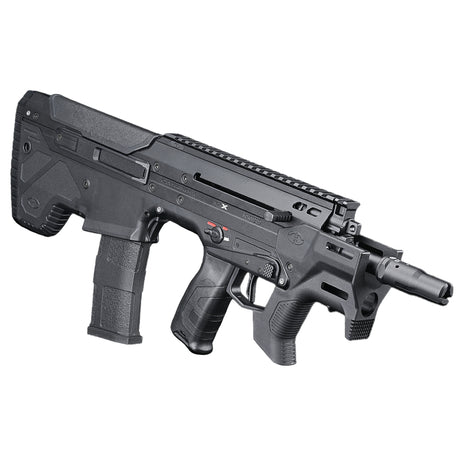
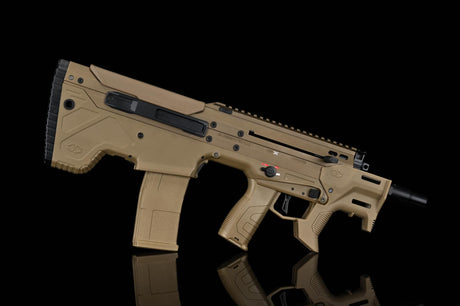
Choosing a MOSFET isn't just about picking the one with the most features. It has to fit your gun. Most M4 and MP5 replicas use a Version 2 gearbox, whereas AK and G36 replicas typically use a Version 3. These have different trigger layouts and wiring paths. If you're running a proprietary system, such as a Tokyo Marui Next Gen Recoil Shock, or a bullpup like the P90, you need a unit designed specifically for it.
Space is often the biggest problem. A front-wired M4 with a slim handguard has very little room for a bulky external unit, so an internal drop-in board is usually best. If you're rear-wired, the buffer tube offers more room, but you still need to fit your battery alongside the wiring. Always check the space before buying.
Your build also affects the electronics. A high-speed setup with short-stroke gears draws current differently from a heavy-spring DMR, and a high-torque motor draws a lot of current the moment you pull the trigger. Make sure your MOSFET can handle the peak current of your motor and gear set. Balance the cost against your goals, too: a top-end optical ETU might be overkill for a backup gun.
V2 vs. V3 Gearbox Considerations
V2 and V3 gearboxes differ in trigger layout and wiring routes; for example, an AK needs longer motor leads that wrap around the gearbox shell, whereas M4 wiring is more direct. Bullpups are the hardest, as their long trigger linkages often need an external MOSFET or a specific microswitch conversion to get rid of the heavy trigger pull.
Installation: DIY vs. Professional Technician
Fitting a MOSFET yourself is a rite of passage for many players, but it carries risks. Static electricity can damage a processor if you aren't grounded, and you'll need a fine-tip soldering iron, a steady hand and good heat shrink to avoid short circuits. If opening your gearbox makes you nervous, send it to a technician, who'll make sure the shimming is right and the wires are clear of the pinion gear.
MOSFET Installation and Technical Support at Socom Tactical
Cracking open a gearbox isn't for everyone, and a botched installation can lead to fried electronics or a dead gun. Our technical labour service takes care of it for you: we make sure every shim is right and every wire is routed safely. We'd rather give you a reliable gun than one with a high rate of fire that breaks in its first game. If you buy your unit from us and book the installation at the same time, you have one place to go if anything isn't right.
Every MOSFET we install is tested, including battery compatibility checks and trigger response calibration. Contact our tech team for a quote.
Complete Your Build
A MOSFET is only one part of a good build. Consider pairing it with one of our high-torque motors for a faster trigger response, and stock up on consumables before your next game. Visit our shop or contact us online to start your next build.
Frequently Asked Questions
Do I need a MOSFET if I only use 7.4v LiPo batteries?
It's still a good idea. Every trigger pull creates a small arc that deposits carbon on your contacts, and over time this increases resistance and can stop your AEG from firing. A MOSFET takes the high current away from the contacts, so they last far longer.
Will a MOSFET increase the range of my airsoft gun?
No. Range depends on your hop-up, barrel, BBs and power. A MOSFET improves trigger response and rate of fire, which helps you get shots off faster in close engagements.
What is active braking and does it wear out my motor faster?
Active braking briefly short-circuits the motor after each shot so it stops instantly. It does make the motor work a little harder, but most modern motors handle it well, and it stops the gearbox over-spinning, which can cause double-feeding on semi-auto in high-speed builds.
Can I install a Gate Titan in any airsoft rifle?
No. The Gate Titan comes in versions for specific gearboxes, mainly Version 2 and Version 3. You'll need the V2 model for most M4 and MP5 replicas, and the V3 for AK and G36 replicas. Always check your gearbox before you buy.
What happens if my MOSFET gets wet during a rainy skirmish?
Water can cause a short circuit that damages your electronics. Some high-end units have a protective coating on the board to resist moisture, but none are waterproof. If you're caught in a downpour, dry your gun thoroughly after the game, and never plug a battery into a damp AEG.
Is it worth upgrading to an optical unit like the Gate Aster?
For players who want the best trigger response, yes. Optical sensors have no contacts to wear out, and you can adjust the trigger sensitivity to set up a very short trigger pull for rapid semi-auto fire.
How do I change my MOSFET settings?
Most programmable units are set up with a sequence of trigger pulls or selector changes, and some use an app. Each brand uses its own method, so check your unit's manual for how to enter programming mode.
Does a MOSFET prevent my gearbox from locking up on semi-auto?
A unit with cycle detection does. Standard AEGs can lock up when the trigger is pulled very quickly, leaving the sector gear stopped part-way. A unit with cycle detection makes sure the sector gear completes its full rotation every time.
What's the difference between a MOSFET and an ETU?
A basic MOSFET is a switch: your original trigger contacts still decide when the gun fires, but the heavy current goes through the MOSFET instead. An ETU (electronic trigger unit), such as a Gate Titan or Perun unit, replaces the mechanical trigger contacts with sensors, which lets it add features like cycle detection, active braking, pre-cocking, burst and binary modes.
Is a MOSFET worth it on a stock AEG?
For most players, yes. It protects your trigger contacts, gives a snappier trigger response and, with a programmable unit, can protect your LiPo from over-discharge. If you're on a tight budget and still running a low-voltage battery, it can wait, but it's one of the first upgrades worth making.